Brand activation with a simulator: measuring the effect
Brand activation with a simulator: the four things that can actually be measured, the cost per interaction and the comparison that decides whether it was worth it.
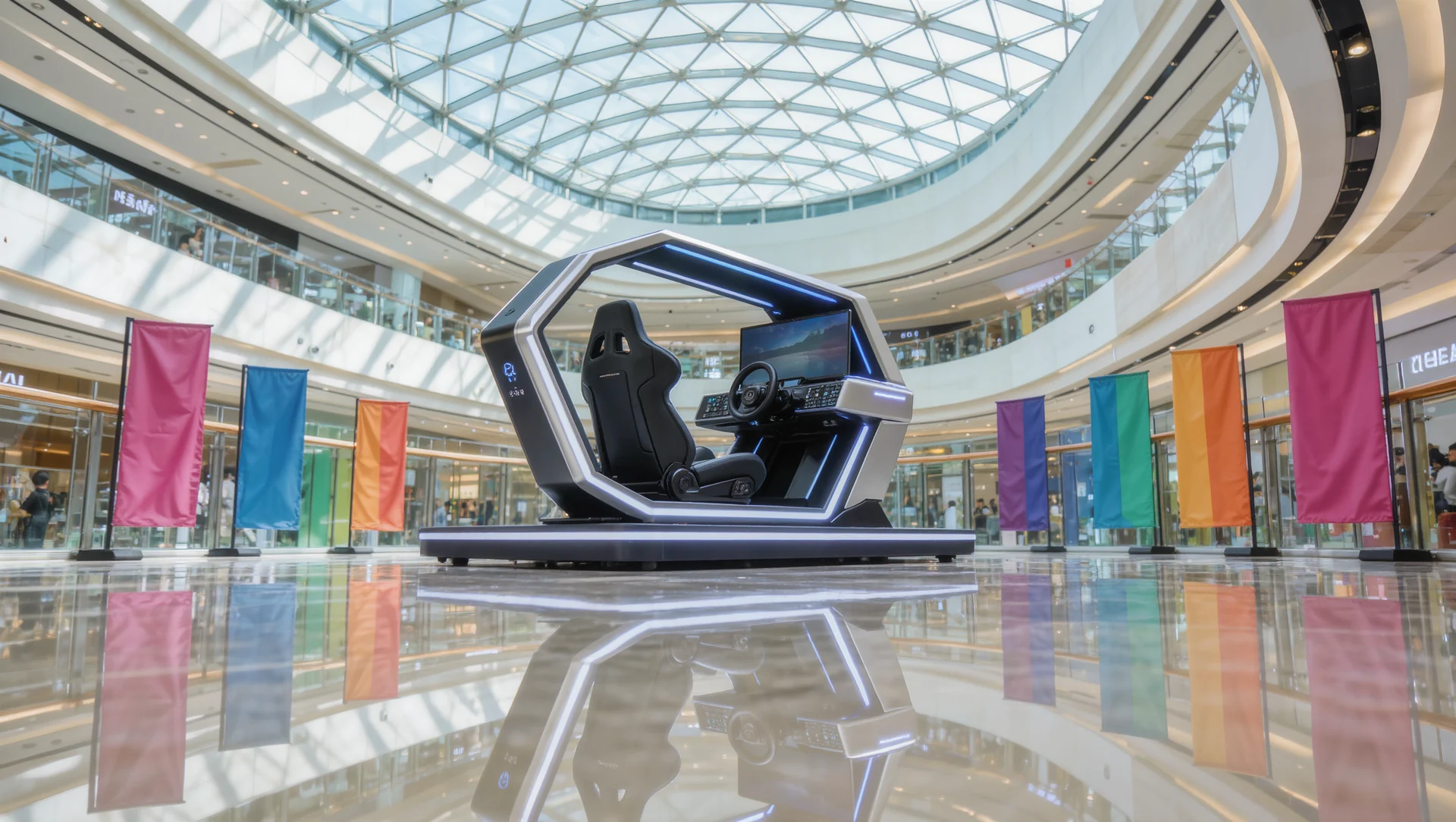
An activation nobody measured is an activation nobody can repeat. Four numbers are available from any simulator activation, and they are enough to compare it against every other thing the budget could have bought.
The four measurable outputs
Completed runs, which the machine counts for you. This is the only figure that is exact, and it is the denominator for everything else.
Captured names, which the leaderboard produces as a by-product. A board that asks for a name before the run converts an anonymous crowd into a countable one, and the ratio of names to runs is a quality measure of the activation itself.
Dwell time, which is measured at the queue rather than at the seat. A visitor who waits 12 minutes and drives 5 has spent 17 minutes with the brand, and the 12 is the part that the marketing brief usually forgets to claim.
And content produced, which is the only output that outlives the day. A run recorded and delivered to the driver is an asset that travels on their channel rather than yours, and counting those deliveries is counting reach you did not pay for twice.
| Item | Figure |
|---|---|
| Run plus changeover | 5 plus 2, so 7 minutes per visitor |
| Visitors per station | about 8 an hour, about 64 a day |
| Runs across 3 days | about 192 from one station |
| Cost per run at a 12,000 activation | 62.50 |
| Cost per qualified conversation | about 125 |
| Sponsorship comparison | 10,000 against 147,357 hours watched, about 68 per 1,000 hours |
| Trade fair cost split | 30 per cent stand build, 16 per cent personnel |
| Dwell time per visitor | 12 minutes waiting plus 5 driving, so 17 |
| Audience per station | the driver plus a queue of about 6 |
| Exit survey | 2 questions, 50 respondents |
The cost per interaction, worked through
Start with the throughput. At 5 minutes of driving plus 2 of changeover, 1 station manages about 8 visitors an hour, about 64 across an 8 hour day and about 192 across 3 days.
Then divide the whole cost. An activation costing 12,000 across those 3 days is 62.50 per completed run, and if half the visitors are relevant to the business, about 125 per qualified conversation.
Then compare it honestly. A season sponsorship of 10,000 against 147,357 hours watched works out at about 68 per 1,000 hours, which is a completely different unit of attention. One buys 192 conversations, the other buys a very large number of very shallow impressions, and only your product decides which is worth more.
Designing the activation so the numbers mean something
Fix the run so the times compare. The same car, the same circuit, the same 3 laps for everybody, because a leaderboard where people drove different things is a decoration rather than a measurement.
Staff it so the conversation happens. The cost split of a typical trade fair participation runs to 30 per cent for stand construction and equipment against 16 per cent for personnel, and an activation that follows that ratio has bought a machine and not the people who make it produce anything.
And decide the follow up before the event. A name captured with no plan for what happens on day 4 is a name that decays, and the follow up window is the difference between 192 runs and 192 contacts.
What cannot be measured, and what to do about it
Brand perception, which no leaderboard captures. The honest answer is a short survey at the exit rather than an inference from lap times, and 2 questions answered by 50 people is worth more than 192 runs with no questions at all.
The people who watched and did not drive. A queue of 6 around each station is 6 times the audience of the seat, and counting only drivers undercounts the activation by most of its actual reach.
And the effect that arrives late. A visitor who remembers the brand 4 months later will never appear in the day's figures, which is why the content produced on the day is the measurement that keeps working after everybody has gone home.
Sources
Frequently asked questions
What can a simulator activation actually measure?
Completed runs, captured names, dwell time and content produced. The first is exact and is the denominator for the rest.
What does an interaction cost?
At about 192 runs across 3 days, a 12,000 activation is 62.50 per run and about 125 per qualified conversation.
How does that compare to sponsorship?
A 10,000 season sponsorship against 147,357 hours watched is about 68 per 1,000 hours. Different unit, different depth, and only your product decides which fits.
What gets undercounted?
The queue. A crowd of about 6 around each station is most of the actual audience, and counting only drivers misses it.
More in Business & Events
Dashboards and telemetry overlays without the clutter
Dashboards and telemetry overlays without the clutter: what the software does, which four readouts earn their place and where an overlay costs more than it gives.
Opening a sim racing centre: the numbers before the dream
Opening a sim racing centre: the throughput arithmetic, the electrical and space requirements and the costs that only appear after the first month.
Simulator rental: logistics, pricing, damage
Renting simulators out: what a load actually weighs, how long a build really takes, how to price it and who pays when something breaks.