Simulator rental: logistics, pricing, damage
Renting simulators out: what a load actually weighs, how long a build really takes, how to price it and who pays when something breaks.
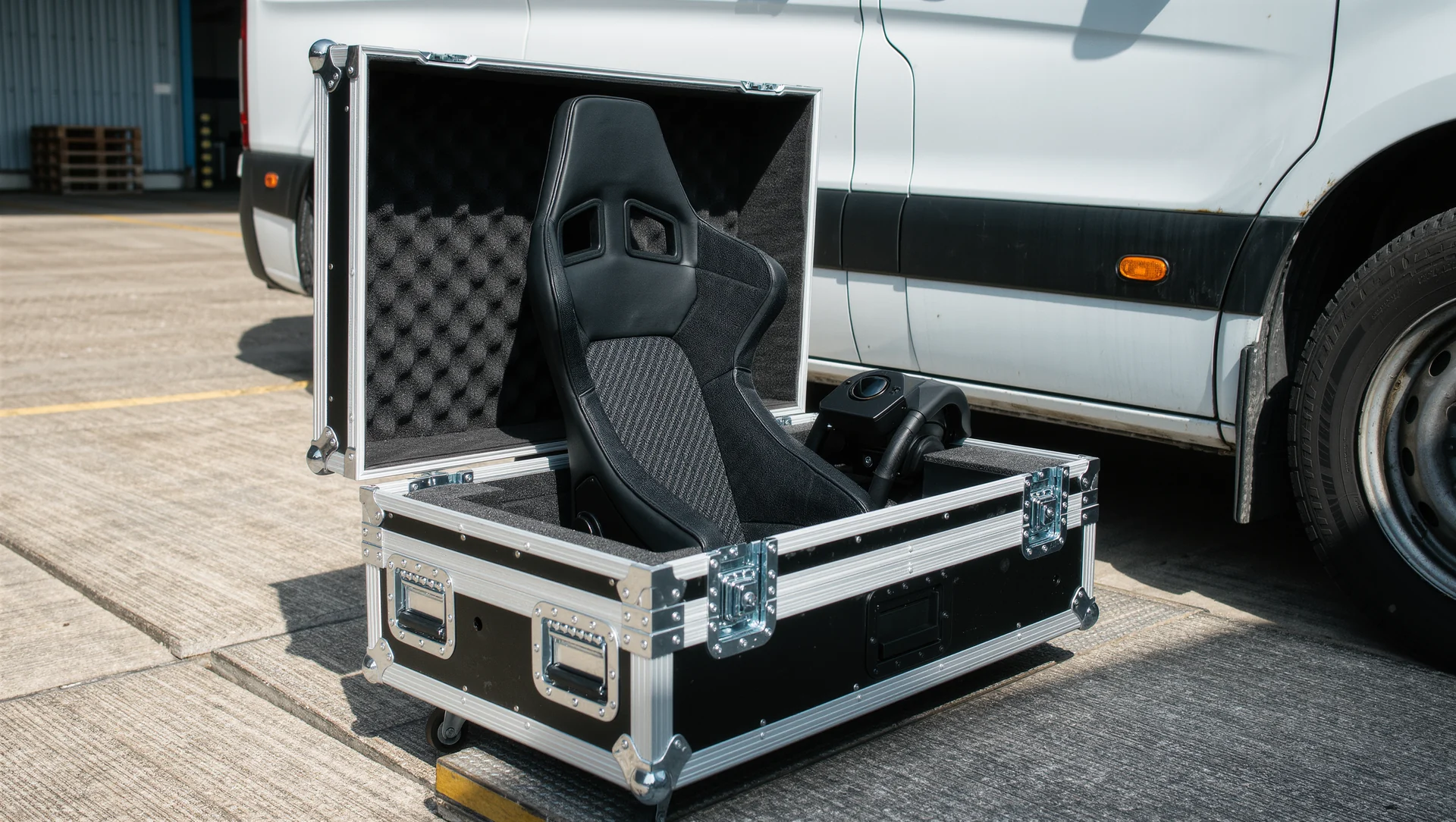
Simulator rental is a haulage business with a racing game attached, and almost every unprofitable job is unprofitable because of the drive rather than the day. Price the logistics or the logistics will price you.
What a load actually is
A single station is heavier and bulkier than it looks. A profile frame, seat, wheel base, pedals, three screens, a machine and cabling lands in the region of 100 kilograms split across 4 or 5 pieces, and none of them is a one person carry.
The vehicle decides the job size. A standard car licence covers vehicles up to 3,500 kilograms and trailers up to 750, or a combination that still stays inside 3,500. That ceiling, not the van's floor area, is what limits how many stations one driver can move.
And volume runs out before weight does. Screens travel in cases, frames do not stack, and a van that theoretically carries 6 stations by mass will usually take 4 by shape.
| Item | Figure |
|---|---|
| Weight of one station | around 100 kilograms in 4 or 5 pieces |
| Standard car licence limit | 3,500 kilograms, trailer up to 750, combination within 3,500 |
| Practical van capacity | about 4 stations, limited by volume not mass |
| Build time | 30 minutes per station for 2 people |
| Access, unloading and carrying | about 60 minutes |
| Testing before the first guest | about 30 minutes |
| Real length of an 8 hour event | about 13 hours, 17 with a 2 hour drive each way |
| Power per station | around 700 watts |
| One 16 ampere circuit at 230 volts | about 3,680 watts, so roughly 5 stations |
| Condition photographs | 2 per station at build and at strike |
The time nobody bills for
Build is not the whole job. Plan 30 minutes per station for 2 people once the load is at the door, plus 60 minutes for parking, unloading and carrying, plus a further 30 for testing every station before the first guest arrives.
For 4 stations that is roughly 2 hours of build after 1 hour of access, and the same again in reverse at the end of the night. An 8 hour event is really a 13 hour day, and quoting it as 8 is how rental companies lose money on their busiest weekends.
Travel is the third block. Two hours each way turns that 13 hour day into 17, and any price per station that ignores distance will be wrong for exactly the jobs that are furthest away.
Pricing that survives a bad day
Price the day, not the hour. A client who books 4 hours still costs a full build, a full strike and a full journey, so an hourly rate below half a day is a rate that loses money every time it is taken up.
Separate the distance. A flat kilometre rate on top of the day rate keeps the near jobs competitive and stops the far ones being subsidised by them, and it makes the quote easy to explain.
And charge for power and access when they are abnormal. Plan around 700 watts per station, so 5 stations approach the roughly 3,680 watts a single 16 ampere circuit at 230 volts carries, and a venue that cannot offer a second circuit is a venue that needs a generator line in the quote.
Damage, and who pays for it
Public use breaks things that private use does not. Pedal sets, wheel rims and seat upholstery take the wear, and a fleet without an annual replacement budget is a fleet that degrades invisibly until a client notices first.
Write down the condition before and after. Two photographs per station at build and at strike takes 8 photographs for a 4 station job and settles every argument that would otherwise be a conversation about memory.
And put a named limit in the contract. A clause that states what the client is liable for, with a figure, is more likely to be honoured than a vague expectation of care, and it is the difference between an insurance claim and an invoice nobody pays.
Sources
Frequently asked questions
How many stations fit in one van?
About 4 in practice. Volume runs out before weight does, because frames do not stack and screens travel in cases.
How long does a four station job really take?
Around 13 hours for an 8 hour event, and 17 with a 2 hour drive each way.
Should I quote by the hour?
No. A 4 hour booking still costs a full build, strike and journey, so anything below a half day rate loses money.
Who pays for damage?
Whoever the contract names, with a figure. Two photographs per station at build and at strike settle the rest.
More in Business & Events
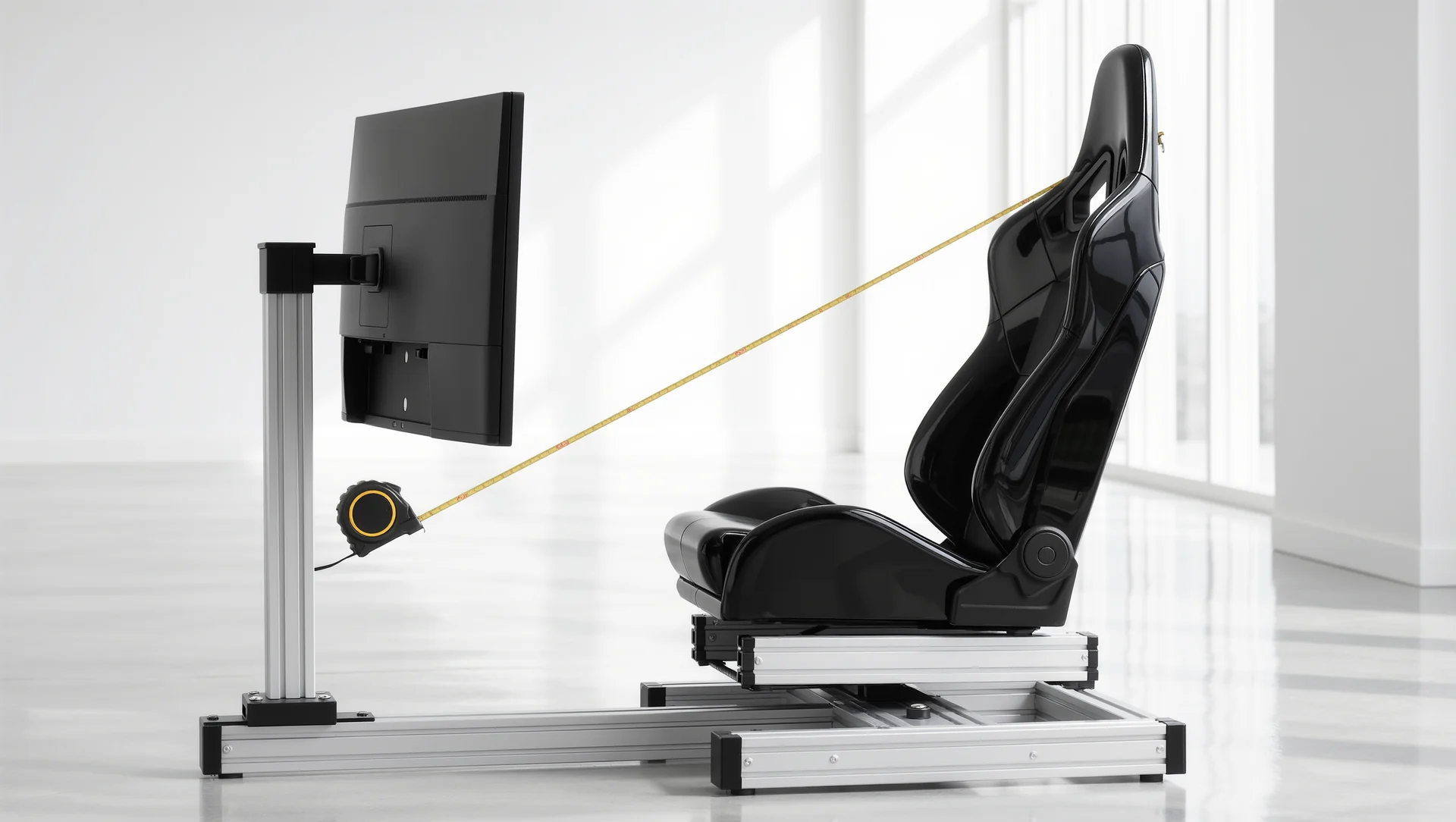
Field of view: the calculation, not the preference
Field of view is a calculation, not a preference: the formula, what a wrong setting costs you and why the correct number always feels too narrow at first.

Refresh rate and latency: where milliseconds hide
Refresh rate and latency: where the milliseconds actually hide, which ones you can remove and which published thresholds tell you where the problem is.
Motion platforms: degrees of freedom explained honestly
Motion platforms explained honestly: what each degree of freedom adds, where the threshold of usefulness sits and what the published travel figures mean.