From sim to seat: what a shootout really tests
What transfers from the simulator to a real car, what does not, and the licence steps that stand between a fast sim driver and a race entry.
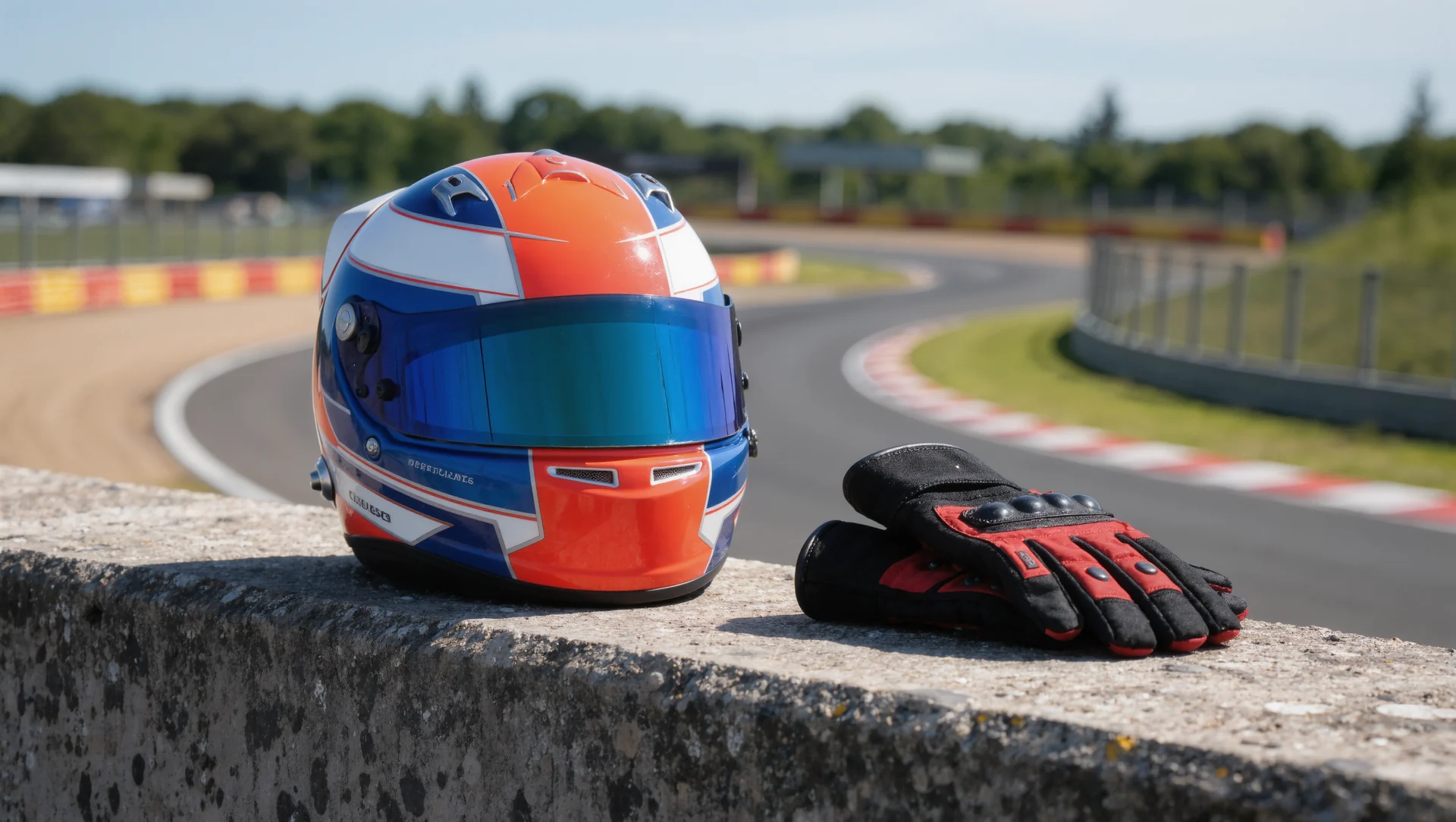
The simulator teaches the racing and withholds the fear, and the second half of that sentence is why the transfer is never as clean as the highlight reels suggest. Everything that transfers is knowledge; almost everything that does not is physical.
The pathway that actually exists
It is real but narrow. The Porsche Esports Supercup is explicitly positioned as a route toward real world motorsport, running a qualification path that begins in May at national level, moves through global and regional stages and narrows to 32 drivers for the World Championship.
Put that against a subscriber base in the tens of thousands and the funnel is obvious: 32 places for a population three orders of magnitude larger. Treating it as a career plan misreads the arithmetic; treating it as one possible outcome of doing the thing well does not.
The more common route is quieter. Sim experience shortens the learning curve at a track day, in a rental series or in karting, and none of those require winning anything at all.
| Element | Transfers | Why |
|---|---|---|
| Track knowledge | fully | identical geometry, 200 sim laps carry over |
| Racecraft | fully | decisions rather than sensations |
| Concentration | fully | 40 lap discipline is practised |
| Consequence management | not at all | no reset button in a real car |
| Physical endurance | not at all | fatigue arrives around lap 8 |
| Seat feel | partly | sim gives sound and steering weight only |
| Licence | not at all | Starter Pack plus ARDS, BARS or ARKS test required |
What transfers
The track knowledge, completely. Braking points, apexes, gear selections and the shape of every corner are the same geometry, and a driver arriving having done 200 laps in the simulator skips the part of the day everybody else spends learning where the circuit goes.
The racecraft. Judging a gap, defending without weaving, managing a restart and knowing when a pass is not on are decisions, and decisions transfer intact.
And the discipline. A sim driver used to running 40 lap races without a mistake has practised concentration, which is the single most underrated thing a novice brings to a first real session.
What does not transfer
The consequence. A simulator has a reset button and a real car does not, and the difference shows up as a driver who is 2 seconds slower than their sim pace for the first 3 sessions and cannot explain why.
The physical load. Sustained cornering forces, heat inside a suit and helmet and the effort of a car without power steering are all absent from the desk, and the fatigue arrives around lap 8 for somebody who has never felt it.
And the seat feel. Every warning a real car gives through the seat and the body is missing in the simulator, so a sim driver reads slip through sound and steering weight alone and has to learn a second, richer channel from scratch.
The steps before a first entry
A licence, which is a process rather than a purchase. In the British system, race disciplines require buying a Starter Pack and then passing the ARDS test, with the equivalent BARS test for rally and ARKS for karting.
A medical, because the same governing bodies gate entry on fitness rather than pace. Under-18 applicants additionally need a parent or legal guardian to hold an entrant licence.
And an honest budget. A licence, a test, a medical, equipment and a first entry is a sequence of 5 separate costs before a single competitive lap, which is the part the simulator never prepares anybody for.
Sources
Frequently asked questions
Does sim racing make you faster in a real car?
It makes you faster to learn. Track knowledge and racecraft transfer intact; consequence management and physical endurance do not.
Why are sim drivers slower than their sim pace at first?
Because a real car has no reset button. Expect roughly 2 seconds off for the first 3 sessions.
What do I need before entering a real race?
A licence obtained through a Starter Pack and the relevant test, plus a medical. Under-18 applicants also need a guardian to hold an entrant licence.
Is an esports series a realistic career route?
As one possible outcome, not as a plan. A flagship series narrows to 32 World Championship places from a population thousands of times larger.
More in Esports & Competitions
Qualifying setup against race setup: the honest trade
Qualifying setup against race setup: what actually differs, how much a grid position is worth and when one setup for both is the right answer.
The sim racing PC: where the money actually belongs
The sim racing PC: where the money actually belongs, what the published requirements ask for and the component most drivers overspend on.
VR or triples: the honest comparison
VR or triple screens: the honest comparison, what the published resolutions and system requirements mean and which one suits which kind of racing.