VR or triples: the honest comparison
VR or triple screens: the honest comparison, what the published resolutions and system requirements mean and which one suits which kind of racing.
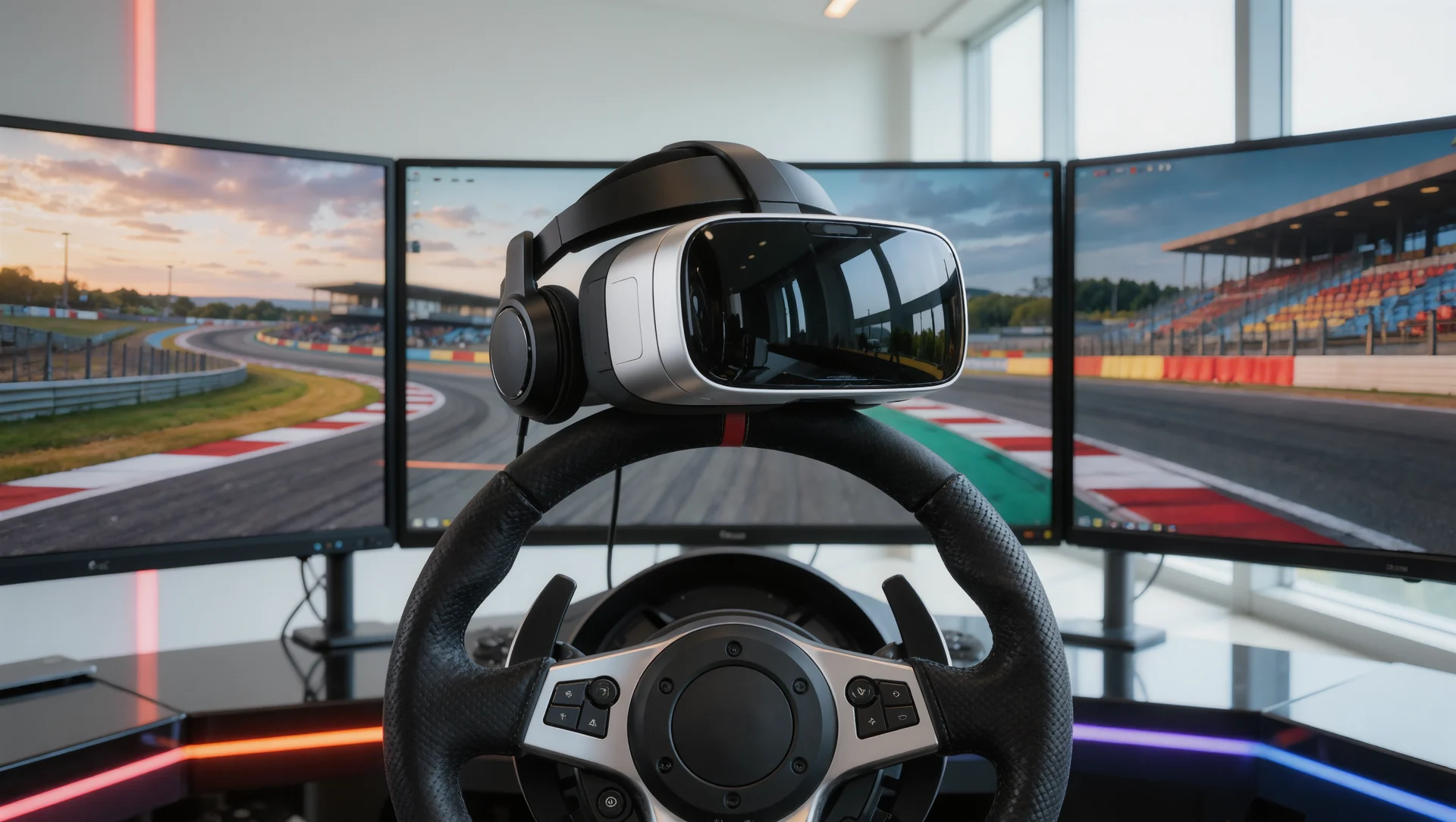
VR gives you depth perception and correct geometry for free; triples give you a picture you can look at for four hours. Both statements are true, which is why the argument never ends and why the answer depends on what you race rather than on which is better.
What the numbers actually are
Resolution per eye is the figure that matters, not the total. The Pimax Crystal Light is published at 2880 by 2880 per eye, the Meta Quest 3 at 2064 by 2208 per eye, and the Crystal Super at 3840 by 3840 per eye. Those are per eye, so a headset renders that twice every frame.
Angular resolution is the number that decides whether you can read a braking board. The Crystal Light is stated at 35 pixels per degree against roughly 25 for the Quest 3, and that difference is what you see when you look at a distant apex rather than when you look at a menu.
The system cost is published too. iRacing states that VR headsets require minimum PC specifications matching its recommended tier, which is a 6 core processor and 8 GB of dedicated video memory, rather than the minimum tier that a single screen can use.
| Item | Figure |
|---|---|
| Pimax Crystal Light | 2880 by 2880 per eye, about 35 pixels per degree |
| Meta Quest 3 | 2064 by 2208 per eye, roughly 25 pixels per degree |
| Pimax Crystal Super | 3840 by 3840 per eye |
| iRacing requirement for VR | the recommended tier, 6 cores and 8 GB vRAM |
| Recommended tier examples | Intel i5-11600 or Ryzen 5 5600X, RTX 2070 |
| Field of view calculation | not needed in VR, required on flat screens |
What each one is genuinely better at
VR wins on depth and on geometry. Distance to an apex, closing speed to a car ahead and the shape of a corner are all judged from stereo depth, and no flat screen reproduces that. It also removes the field of view calculation entirely, because the optics fix the geometry and the simulator matches it.
Triples win on endurance and on peripherals. You can wear glasses, drink, glance at a button box and race for four hours without heat, weight or sweat becoming the limiting factor. For a driver whose racing is measured in hours rather than in laps, that is not a small advantage.
Triples also win on the parts of the setup you already own. A single screen driver moving to triples keeps their wheel, their pedals and their seating position; the same driver moving to VR keeps all of that and gains a component that has to be charged, cleaned and replaced on a shorter cycle.
The costs nobody mentions
For VR it is the rendering load. Two eyes at 2880 by 2880 is far more pixels than three 1080p screens, and the frame rate has to stay high or the discomfort starts. That is why the published requirement is the recommended tier rather than the minimum.
For triples it is the physical space and the geometry. Three screens need the correct angles to keep the picture continuous, they need a stand rated for the load, and they take up floor area that a headset does not.
And for both it is the second driver. A headset is a personal item that fits one head and needs adjusting for another; three screens are set for one seating position and are wrong for a driver 20 cm taller.
Choosing by discipline
For sprint racing and time attack, VR is the stronger tool. Sessions are short, depth perception is worth the most in traffic and at corner entry, and the physical cost never has time to matter.
For endurance racing, triples are the safer answer. A stint measured in hours puts weight, heat and eye strain against depth perception, and most drivers find the trade goes the other way after about ninety minutes.
And for a driver who is not sure, the honest advice is to fix the field of view on the screen they already have first. A correctly calculated single screen is closer to a triple than most people expect, and it costs nothing to find out.
Sources
Frequently asked questions
Which is faster over one lap?
For most drivers, VR, because depth perception improves corner entry judgement. Over a long stint the advantage often reverses.
Do I need a better PC for VR?
Yes. iRacing states that headsets require the recommended tier rather than the minimum, which is 6 cores and 8 GB of video memory.
What does pixels per degree mean in practice?
Whether you can read a distant braking board. About 35 against roughly 25 is the difference between reading it and guessing.
Should I fix my single screen first?
Always. A correctly calculated field of view on the screen you own costs nothing and is closer to triples than most people expect.
More in Technology
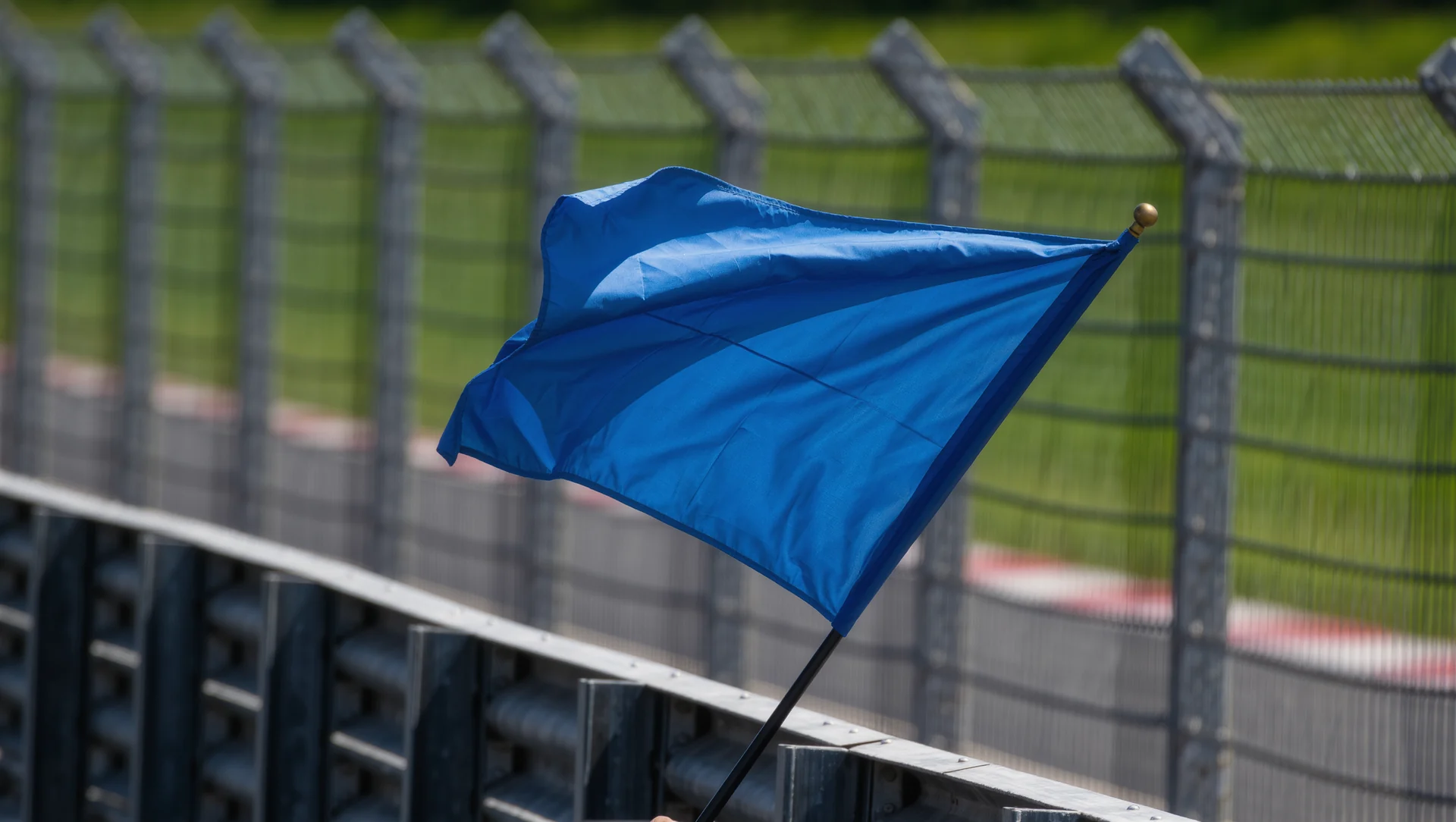
Flags and etiquette: the rules nobody explains
Flags and etiquette: what each flag actually means in the rulebook, what it obliges you to do and the unwritten rules that come with them.
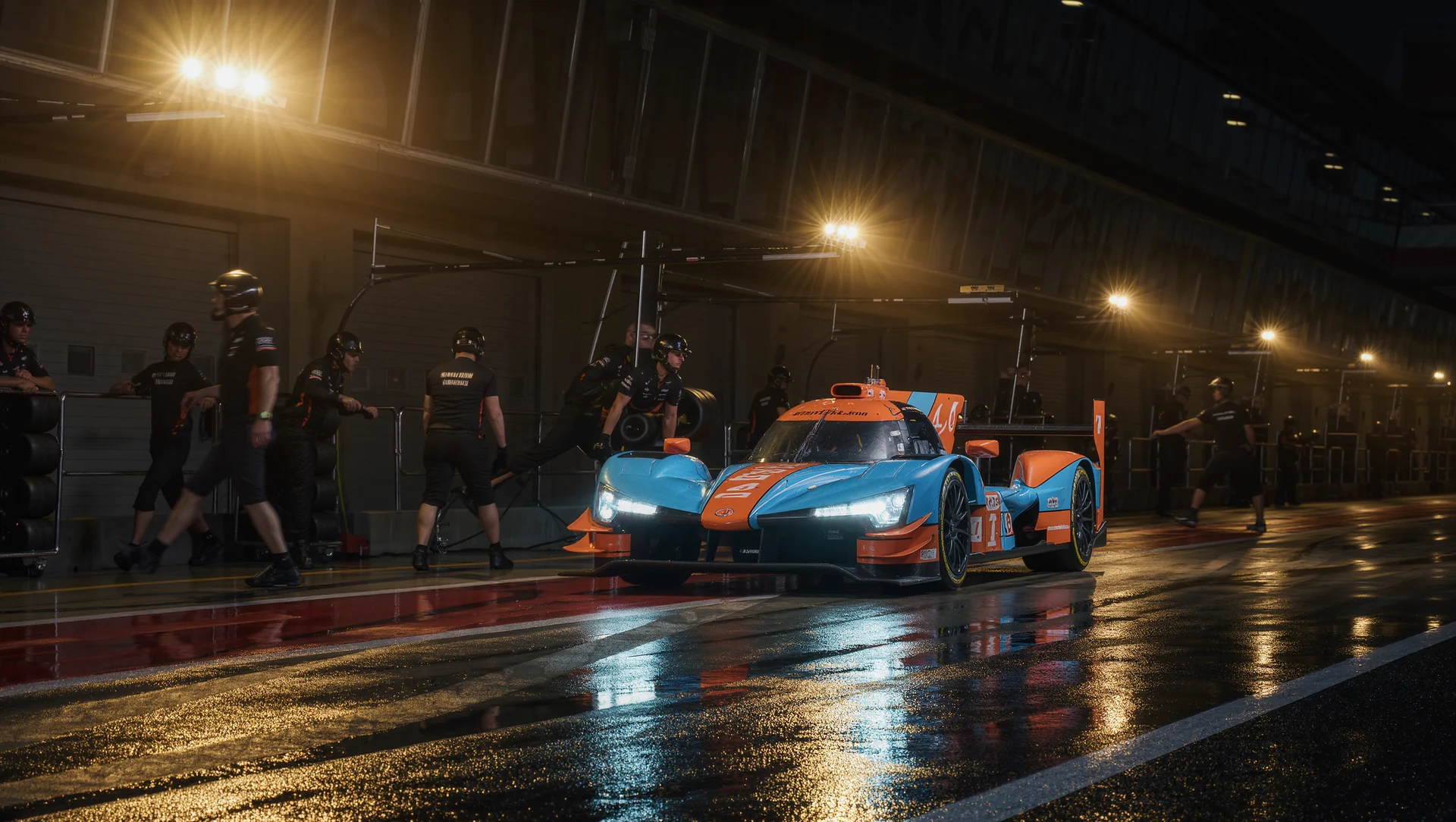
Driver swaps: the choreography that loses or wins hours
Driver swaps: the rule that disqualifies teams, the arithmetic behind a fair share and the choreography that loses or wins hours.
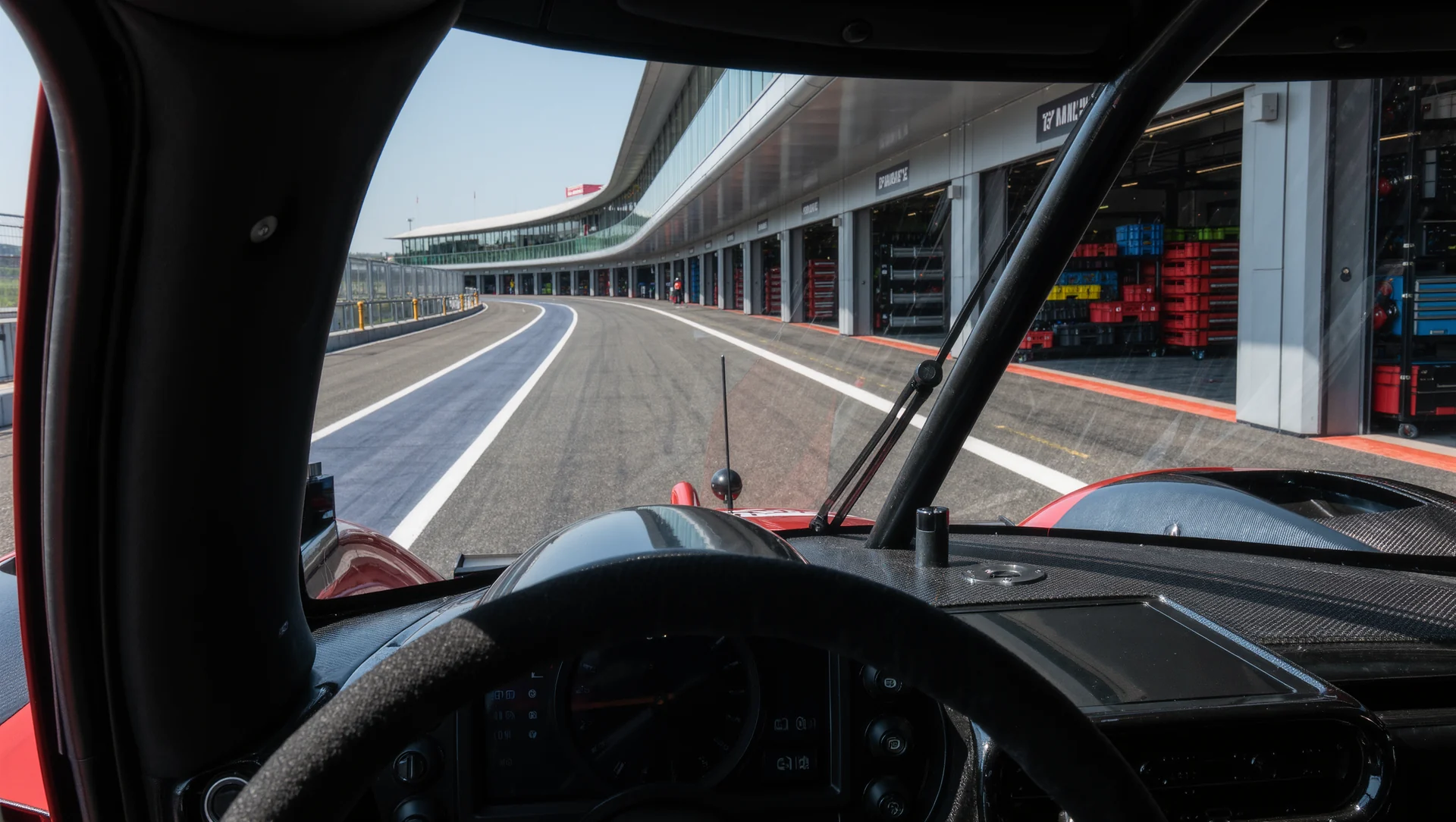
Pit strategy: undercut, overcut and the safety car
Pit strategy: undercut, overcut and the safety car, with the arithmetic that decides each one and the published rules that limit your options.