Ultimate Sim Racing Gear for Immersive Experience
So, you’re looking to dive headfirst into the world of sim racing and want to know how to get the most immersive experience possible? The short answer is: it’s a combin…
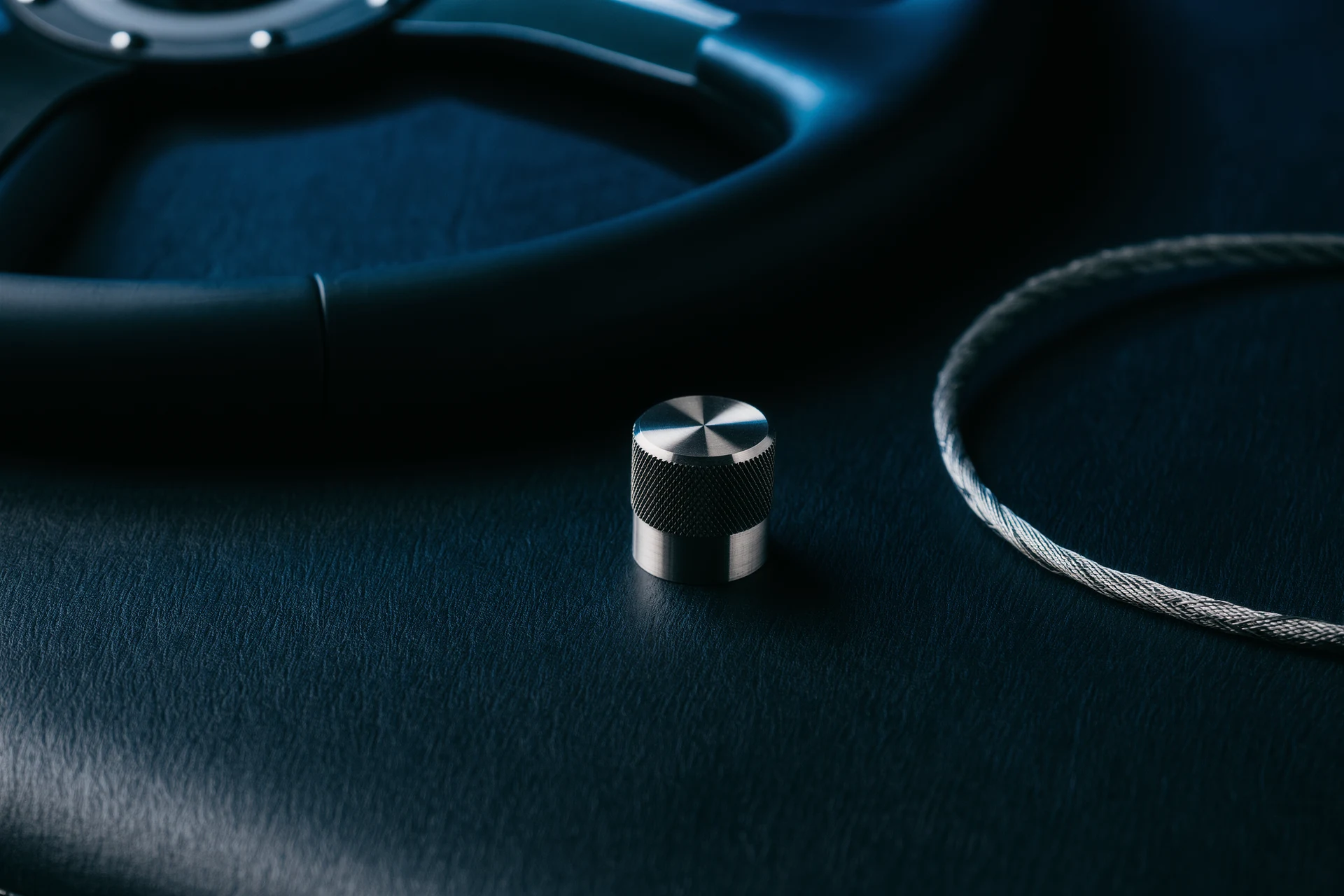
So, you’re looking to dive headfirst into the world of sim racing and want to know how to get the most immersive experience possible? The short answer is: it’s a combination of high-quality, responsive gear that accurately mimics a real car’s feel, paired with excellent visual and audio feedback. We’re talking about more than just a joypad here; it’s about connecting with the virtual road.
This is where it all begins. A good wheel and pedal set isn’t just about steering; it’s about communicating with the car, feeling the grip, the bumps, and the limits.
Direct Drive Wheel Bases
Forget belt-driven or gear-driven wheels if you’re serious about immersion. Direct drive is the gold standard.
- How They Work: In a direct drive system, the motor is directly attached to the wheel shaft. This means there are no belts or gears to introduce slop, dampen feedback, or create latency. You get a raw, unadulterated connection to the sim’s physics engine.
- Benefits: The main benefit is incredibly realistic force feedback (FFB). You’ll feel every nuance, tire slip, curb vibrations, chassis flex, and even the weight transfer of the car. This level of detail allows you to react faster and more precisely, genuinely making you feel like you’re fighting the car, not just a mechanism. The fidelity is unmatched, and once you try it, lesser systems feel like toys.
- Key Considerations: Direct drive units can be quite powerful, sometimes up to 20-25 Nm of torque. This means they need to be securely mounted to a sturdy rig. They also come with a higher price tag, but for immersion, they’re worth the investment. Think about what torque level you really need; 8-12 Nm is often plenty for a realistic feel without being overkill.
- Popular Brands/Models: Fanatec (CSL DD, ClubSport DD, DD1/DD2), Moza Racing (R5, R9, R12, R16, R21), Simagic (Alpha Mini, Alpha, Alpha Ultimate), Asetek SimSports (Invicta, Forte, La Prima). Each offers different torque levels and ecosystems of wheels and pedals.
Performance Pedals
Your feet are just as important as your hands. You need pedals that accurately translate your inputs and provide realistic resistance.
- Load Cell Brakes: This is the most crucial upgrade for pedals. Unlike potentiometer-based pedals that measure travel distance, load cell pedals measure the actual force you apply. This mimics a real car’s brake pedal, where the pressure is what matters, not how far the pedal moves.
- Benefits: Load cell brakes dramatically improve consistency. You learn to modulate braking force based on muscle memory, just like in a real car. This leads to cleaner, more confident braking zones and fewer lock-ups. You can trail brake with far greater precision.
- Key Considerations: Good load cell pedals often allow for adjustable stiffness and travel, so you can dial in the feel to your preference. Pay attention to the maximum weight rating of the load cell (e.g. 100kg, 200kg) and ensure the construction is robust. They also require secure mounting.
- Clutch and Throttle: While the brake is paramount, good quality clutch and throttle pedals also contribute. Hall effect sensors are preferred for durability and precision over potentiometers. A progressive throttle feel, mimicking the resistance build-up in a real car’s pedal, is a nice touch for finer control.
- Popular Brands/Models: Fanatec (ClubSport Pedals V3, CSL Elite Pedals LC), Heusinkveld (Sprint, Ultimate+), Asetek SimSports (Invicta, Forte, La Prima), VRS DirectForce Pro Pedals, Simagic P2000.
Wheel Rims
The rim you choose attaches to your direct drive base and is your primary interface with the car.
- Form Factor: Choose a rim that suits the type of racing you do most. Formula-style wheels are open-top and designed for single-seater and prototype cars, offering quick access to numerous buttons. GT-style wheels are round or D-shaped, more versatile for touring cars, GT racing, and rally.
- Button Layout and Ergonomics: Look for well-placed buttons, rotary encoders, and shifter paddles that are comfortable and easy to reach without taking your hands off the wheel. The feel of the buttons and shifters matters; tactile, positive feedback is preferred over mushy buttons.
- Materials: Leather, Alcantara, or rubber grips, it’s a personal preference. Alcantara feels great but can wear quicker without gloves. Metals like aluminum or carbon fiber are common for spokes and plates, adding to the premium feel and rigidity.
- Quick Release Systems: Direct drive wheels use sturdy quick-release mechanisms to attach the rim. Ensure it’s robust and provides a flex-free connection.
Seeing the Road: Visual Immersion
What you see is just as critical as what you feel. A realistic visual environment is key to fooling your brain into thinking you’re really there.
Triple Screens
This is often considered the sweet spot for immersive visuals without the potential motion sickness of VR.
- Setup: Three monitors arranged in an arc around your seating position. The side monitors are angled towards you, providing peripheral vision.
- Benefits: You gain crucial peripheral awareness, seeing cars alongside you, apexes more naturally, and feeling the sense of speed as objects pass by. This significantly reduces the need for spotter apps or looking left/right constantly. The field of view (FOV) is much closer to what you’d see in a real car.
- Key Considerations: Graphics card performance is paramount. You’re effectively driving three times the pixels of a single monitor. Resolution and refresh rate are important here. You’ll need monitor stands, either desktop or integrated into your sim rig, for proper positioning. Calibration for bezel compensation in software is essential to make the image seamless.
- Resolution and Refresh Rate: 1440p monitors are often a good balance of detail and performance. 1080p is still viable for 24-27 inch screens. Aim for at least 120Hz refresh rate for smooth motion. Avoid mixing resolutions or refresh rates as it complicates setup.
Virtual Reality (VR) Headsets
For many, VR offers the ultimate level of immersion, at least in terms of being “in” the car.
- How it Works: The headset provides a stereoscopic 3D view, tracked to your head movements. When you turn your head, you look around the virtual cockpit.
- Benefits: Unparalleled sense of presence. You feel like you’re physically sitting in the car. Depth perception is realistic, making judging distances to apexes and other cars much easier. You can naturally look into corners or check your mirrors with head movements.
- Key Considerations: Performance is critical. VR demands a powerful graphics card to render two high-resolution images at a high frame rate. Some users experience motion sickness, especially initially. Comfort is also a major factor for long sessions, weight, fit, and ventilation. Screen door effect (seeing the individual pixels) and resolution are continually improving but can still be a factor.
- Popular Headsets: Valve Index, HP Reverb G2, Meta Quest 3 (PC VR via Link or Airlink), Pimax Crystal. Each has its pros and cons regarding resolution, FOV, comfort, and price.
Feeling the Car: Haptic Feedback and Motion
Beyond what you see and feel through the wheel, adding more physical feedback truly elevates immersion.
Bass Shakers (Tactile Transducers)
These are relatively affordable and provide fantastic feedback for vibrations and low-frequency effects.
- How They Work: Mounted to your seat or pedal plate, bass shakers convert low-frequency audio signals into vibrations. They don’t move the entire rig like a motion platform, but they create localized tactile sensations.
- Benefits: You feel engine vibrations, road texture, gear shifts, curb strikes, impacts, and tire slip. This adds an incredible amount of information that your body interprets as being part of the car. Feeling the engine rev up through your seat is surprisingly effective.
- Setup: You’ll need an amplifier (stereo or multi-channel, depending on how many shakers you use) and a sound card with multiple audio outputs, or a dedicated DAC. SimHub software is almost universally used to interpret telemetry from the sim and send appropriate signals to the shakers.
- Placement: Common placements include under the seat (for general chassis/engine vibrations), under the pedal plate (for brake lock-up, ABS, tire slip), and even directly under a specific corner of the rig or seat to simulate individual wheel slip (though this requires more sophisticated setup).
- Popular Brands: Buttkicker (Racer, Gamer2, Mini LFE), Dayton Audio Pucks, inexpensive car audio transducers.
Motion Platforms
If budget allows, a motion platform is the ultimate enhancement for physical immersion.
- How They Work: These systems physically move your seat or the entire rig to simulate car movements like pitch, roll, heave, and surge.
- Benefits: This takes immersion to another level. You feel acceleration, braking, cornering forces, bumps, and elevation changes. Your inner ear (vestibular system) gets involved, making your brain truly believe you’re moving. This also helps with depth perception in VR by syncing visual movement with physical movement.
- Key Considerations: These are expensive and require a very sturdy mounting surface or a dedicated rig. They add complexity to the setup and take up more space. You need to consider how many degrees of freedom (DOF) you want (2DOF for pitch/roll is common, 3DOF adds heave, 6DOF is full movement).
- Popular Brands: D-BOX, SimXperience (AccuForce, Stage Series), Next Level Racing (Motion Platform V3, Traction Loss Platform), SFX-100 (DIY open-source solution).
The Cockpit: Where You Sit and Command
A comfortable and rigid cockpit is often overlooked but crucial for long, immersive sessions.
Sim Racing Cockpits/Rigs
Your gear needs a stable home. A dedicated cockpit ties everything together.
- Rigidity: This is paramount. A flex-free rig ensures that all the force feedback from your direct drive wheel and the pressure from your load cell pedals is transmitted accurately to you, not absorbed by a wobbling frame. Aluminium profile rigs (“80/20”) are the gold standard for adjustability and rigidity.
- Adjustability: You need to be able to fine-tune your seating position, pedal distance, wheel height, and monitor placement. This ensures comfort and puts you in the optimal driving position, mimicking a real race car.
- Integrated Solutions: Many rigs offer integrated monitor stands (for single or triple screens), keyboard/mouse trays, and shifter mounts, creating a cohesive setup.
- Popular Brands: Trak Racer, Sim-Lab, GT Omega, Next Level Racing, Fanatec (various mounting solutions). Consider DIY 80/20 rigs as well for ultimate customization.
Racing Seats
Your comfort and connection to the rig start with the seat.
- Comfort and Support: A good racing seat offers excellent ergonomic support, especially during extended sessions. It should hold you snugly in place, preventing you from sliding around under heavy braking or cornering.
- Realism: Many sim racers opt for real racing seats (bucket seats or recliners) from brands like Sparco, Recaro, or OMP. These provide an authentic feel and look, often with mounting points ready for bass shakers.
- Material: Fabric, synthetic leather, or real leather, choose based on comfort, breathability, and durability. Fabric is often more breathable for long sessions.
- Mounting: Ensure your chosen seat is compatible with your rig’s seat sliders and mounting brackets.
The Details: Shifters, Handbrakes, and Audio
These components might seem minor, but they significantly enhance specific racing disciplines and overall feel.
Shifters
A H-pattern or sequential shifter can transform the experience for certain types of cars.
- H-Pattern Shifter: Essential for classic cars, rally cars, and some older touring cars. A satisfying, mechanical feel with distinct gates is key for immersion.
- Sequential Shifter: Great for modern GT cars, rally cars, and anything with a sequential gearbox. A heavy, positive “clunk” when shifting brings the car to life.
- Quality: Look for robust all-metal construction and realistic resistance. Load cell or magnetic-based mechanisms generally offer the best feel and durability.
- Popular Brands: Fanatec (ClubSport Shifter), Thrustmaster (TH8A), Heusinkveld (Sim Shifter Sequential), SHH Shifter (affordable, high-quality).
Handbrakes
For rally, drifting, or even adjusting balance in some circuit cars, a handbrake is invaluable.
- Analog Input: Similar to load cell pedals, an analog handbrake provides progressive control, allowing you to modulate the braking force precisely. This is far superior to a simple on/off button.
- Ergonomics: A comfortable grip and a good range of motion are important for quick, precise inputs.
- Mounting: Secure mounting to your rig is essential, as you’ll be applying significant force.
- Popular Brands: Fanatec (ClubSport Handbrake), Heusinkveld (Sim Handbrake), Moza Racing (HGP Shifter/Handbrake).
Immersive Audio
Don’t neglect your ears! Sound is a massive part of a car’s feedback loop.
- Quality Headphones: Good over-ear gaming headphones (closed-back for better isolation) or high-fidelity open-back studio headphones are critical. They allow you to hear engine notes, tire squeal, opposing cars’ proximity, and critical audio cues with clarity.
- Surround Sound (Virtual or Real): While debatable for competitive advantage, virtual surround sound or even a good stereo soundstage can help with directional audio, letting you pinpoint where other cars are.
- Key Aspects: Look for clear highs, distinct mids, and punchy but not overwhelming bass. Comfort for long sessions is also very important.
- Avoid: Cheap earbuds or desktop speakers if you’re aiming for true immersion. The detail and directional cues are simply not there.
Pulling It All Together: Software and Adjustments
Even with the best hardware, proper software setup and tweaking are what make it all sing.
Sim Racing Titles
Choose titles known for their realistic physics and strong community.
- Assetto Corsa Competizione (ACC): Best for GT3/GT4 racing with incredibly detailed tire physics and force feedback.
- iRacing: Subscription-based, but renowned for its hyper-realistic physics, laser-scanned tracks, and competitive multiplayer. Covers a vast range of disciplines.
- Assetto Corsa: Older but extremely moddable, offering a huge variety of cars and tracks. Great for drifting and casual racing too.
- Dirt Rally 2.0: Excellent rally physics and challenging stages.
- Automobilista 2: Great force feedback, beautiful graphics (especially in VR), and a diverse car list.
- Rfactor 2: Highly customizable physics engine, also very popular for competitive leagues.
SimHub
If you’re using bass shakers, a sophisticated fan setup, or even some external dashboards, SimHub is absolutely essential.
- Telemetry Processing: It takes telemetry data directly from your sim (tire slip, engine RPM, gear changes, suspension movement, etc.) and translates it into signals for your hardware.
- Customization: You can fine-tune exactly what effects you want to feel and how strongly. This fine-tuning is crucial for avoiding noisy or distracting feedback and getting truly useful information.
Fine-Tuning Force Feedback
This is an art form. Every wheel base, every sim, and every car will require some tweaking.
- In-Game Settings: Start with recommended settings from the sim or wheel base manufacturer.
- Wheel Base Software: Your wheel’s control panel will have its own settings for strength, dampening, friction, and other effects.
- Feel vs. Overload: The goal isn’t necessarily max strength, but rather clarity and detail. You want to feel the subtle nuances, not just clipping (where the FFB motor hits its maximum and loses detail). Experiment with lower forces initially and build up.
- Community Resources: YouTube guides, forums, and Discord servers are invaluable for finding good starting points and understanding how to adjust FFB for specific sims and wheels.
Achieving true sim racing immersion is a journey, not a destination. It’s about building a system that engages as many of your senses as possible, tricking your brain into believing you’re actually in the driver’s seat. While it can be an expensive hobby, focusing on quality foundational components first, and then gradually adding enhancements like tactile feedback and motion, will get you there. Happy racing!
FAQs
What is sim racing equipment?
Sim racing equipment refers to the hardware and software used for simulating real-life racing experiences. This can include racing wheels, pedals, cockpits, virtual reality headsets, and racing simulation software.What are the essential components of sim racing equipment?
The essential components of sim racing equipment include a racing wheel, pedals, and a sturdy cockpit or racing seat. These components are necessary for a realistic and immersive racing experience.What are the benefits of using sim racing equipment?
Using sim racing equipment allows enthusiasts to experience the thrill of racing from the comfort of their own homes. It also provides a safe and cost-effective way to practice and improve racing skills.What are some popular brands of sim racing equipment?
Some popular brands of sim racing equipment include Logitech, Thrustmaster, Fanatec, and SimXperience. These brands offer a range of products catering to different budgets and levels of realism.How can I set up a sim racing rig at home?
Setting up a sim racing rig at home involves choosing the right equipment, assembling the components, and connecting them to a gaming PC or console. It’s important to ensure that the rig is stable and comfortable for long racing sessions.More from Equipment & Gear
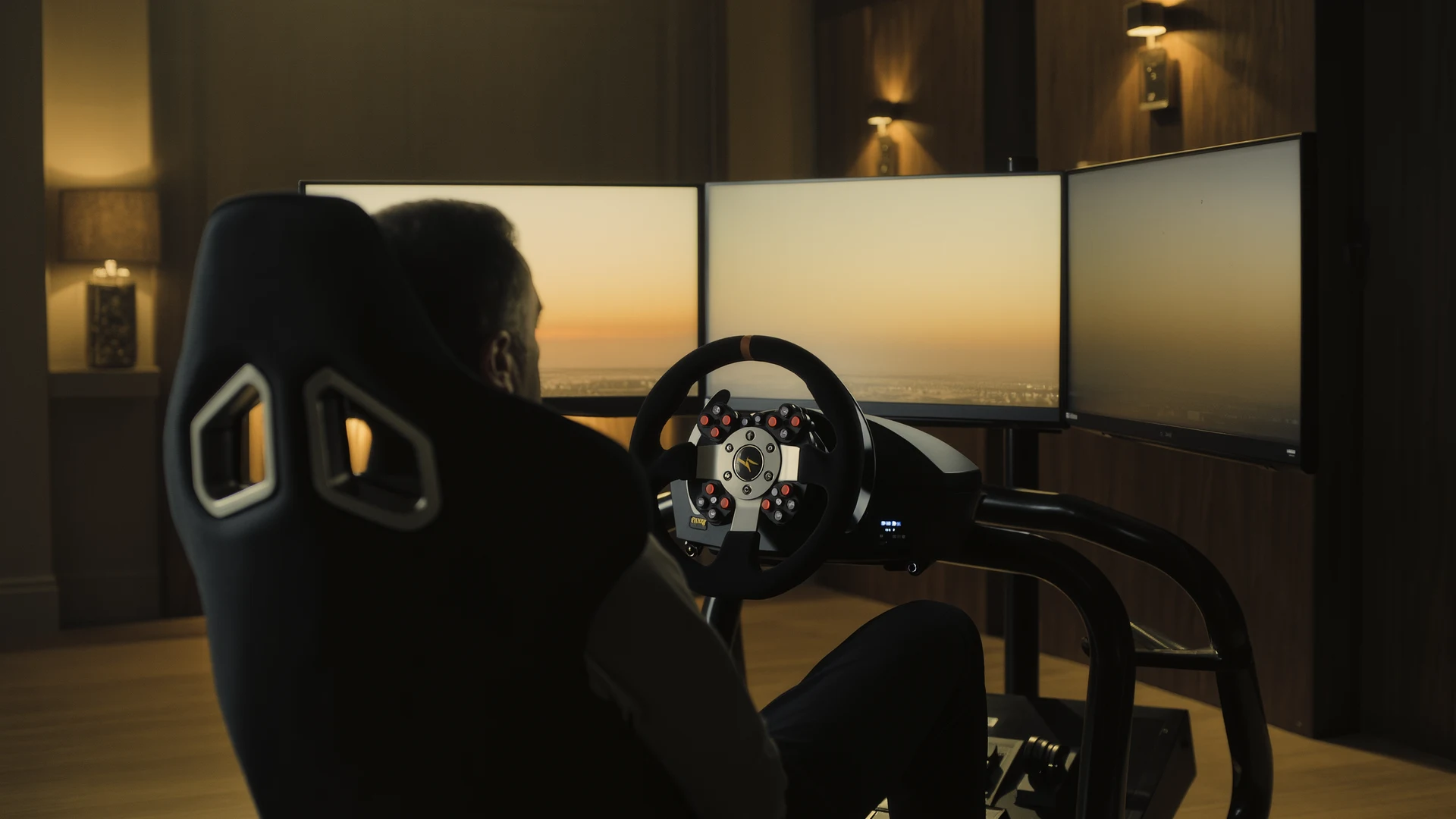
Sim Racing PC Build Guide
Sim racing PC build guide: why the AMD Ryzen 7 7800X3D wins on single-thread cache, how to match your GPU to your display, plus four complete budget b…
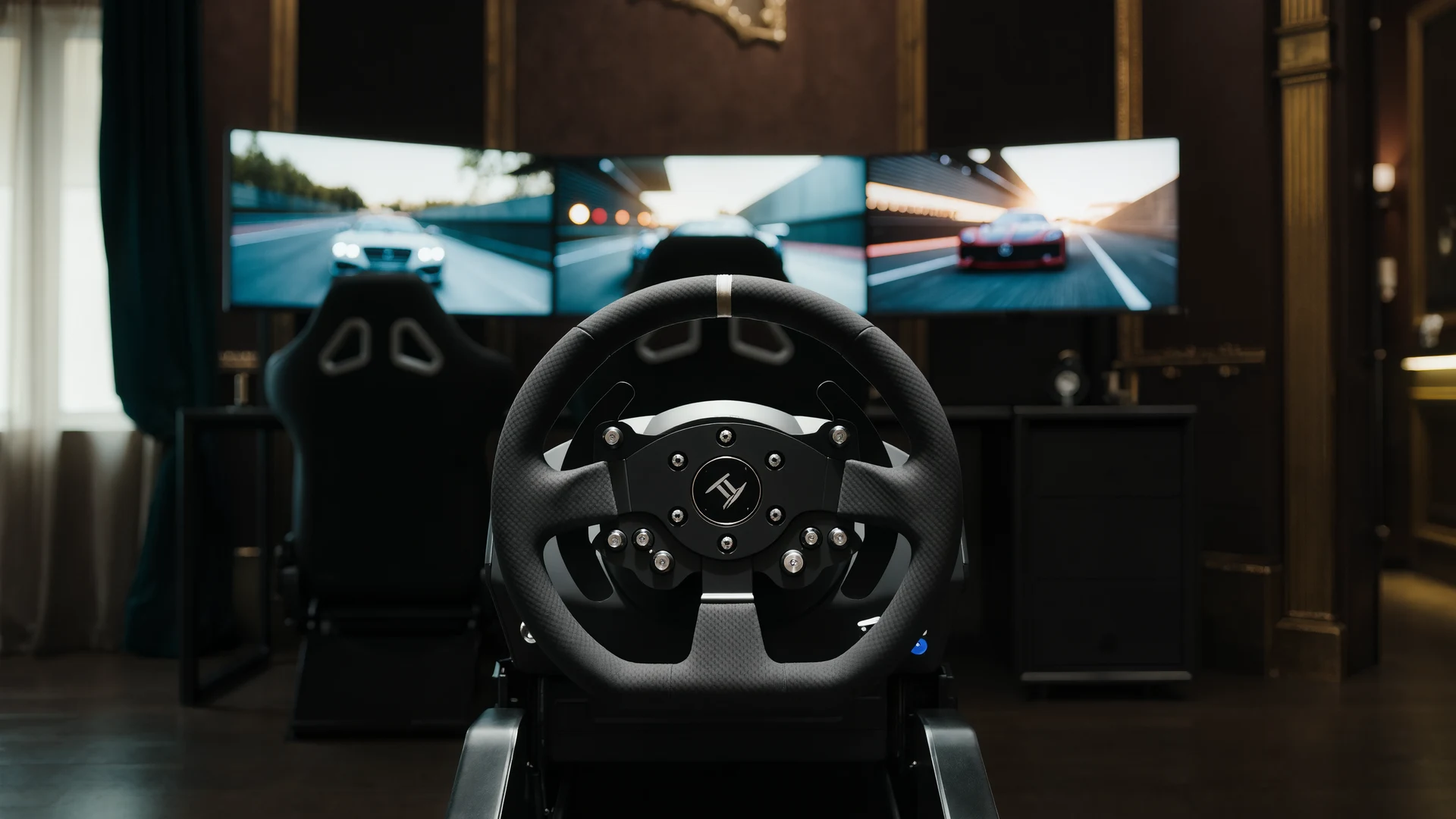
Sim Racing VR vs Triples Guide
VR vs triple monitors for sim racing in 2026: compare Quest 3, Pimax Crystal Light and triple 1440p setups on field of view, depth, comfort, cost and …
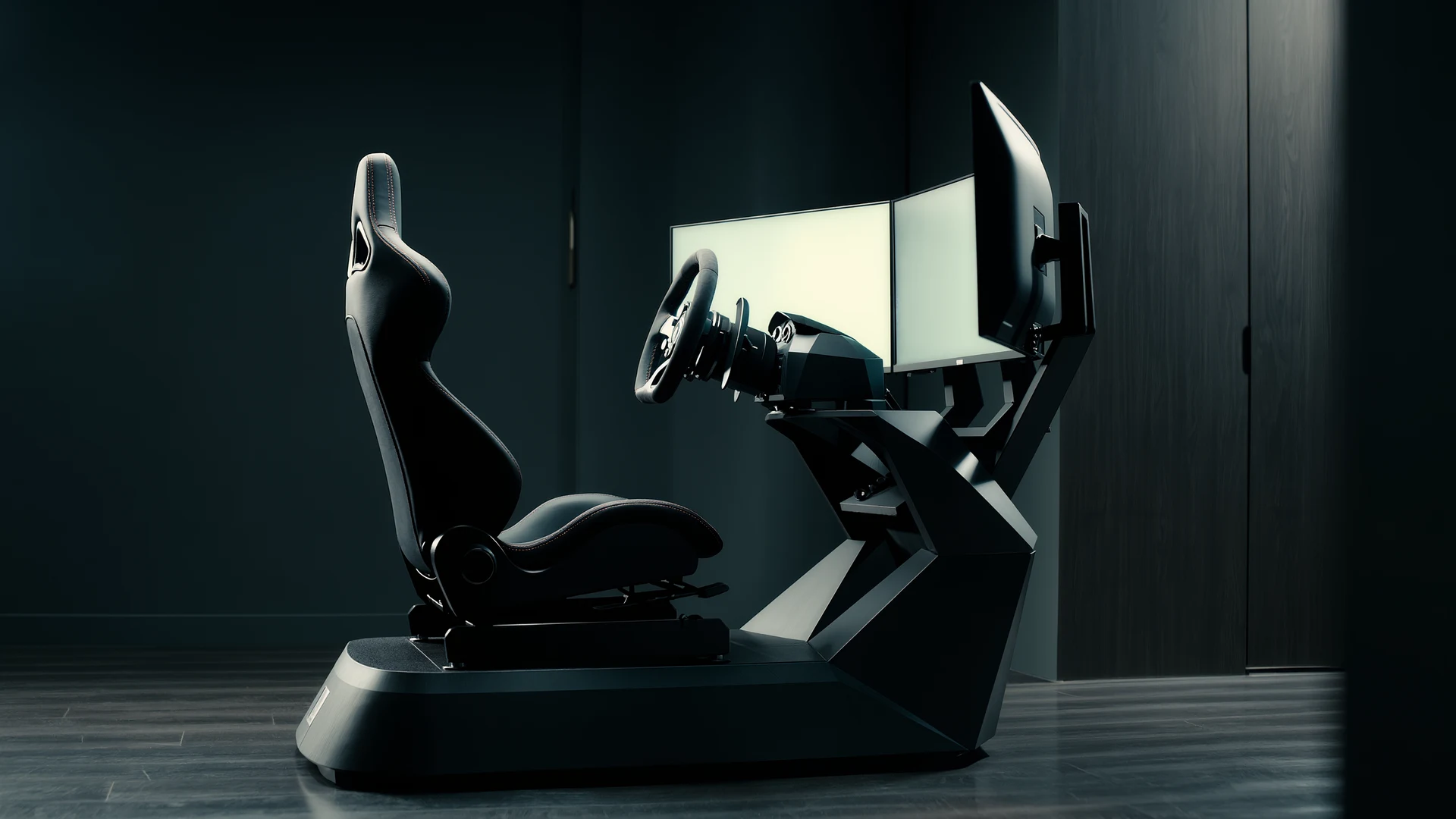
Sim Racing Motion Platforms Guide
Sim racing motion platforms guide: compare seat movers, chassis movers, D-BOX, PT Actuator, and bass shakers, with prices from $150 to $20,000-plus an…