Unleash Your Racing Potential with Direct Drive Wheelbase
Tired of your sim racing wheel feeling a bit… mushy? If you’re serious about your racing and crave a more realistic, immersive experience, a direct drive wheelbase is l…
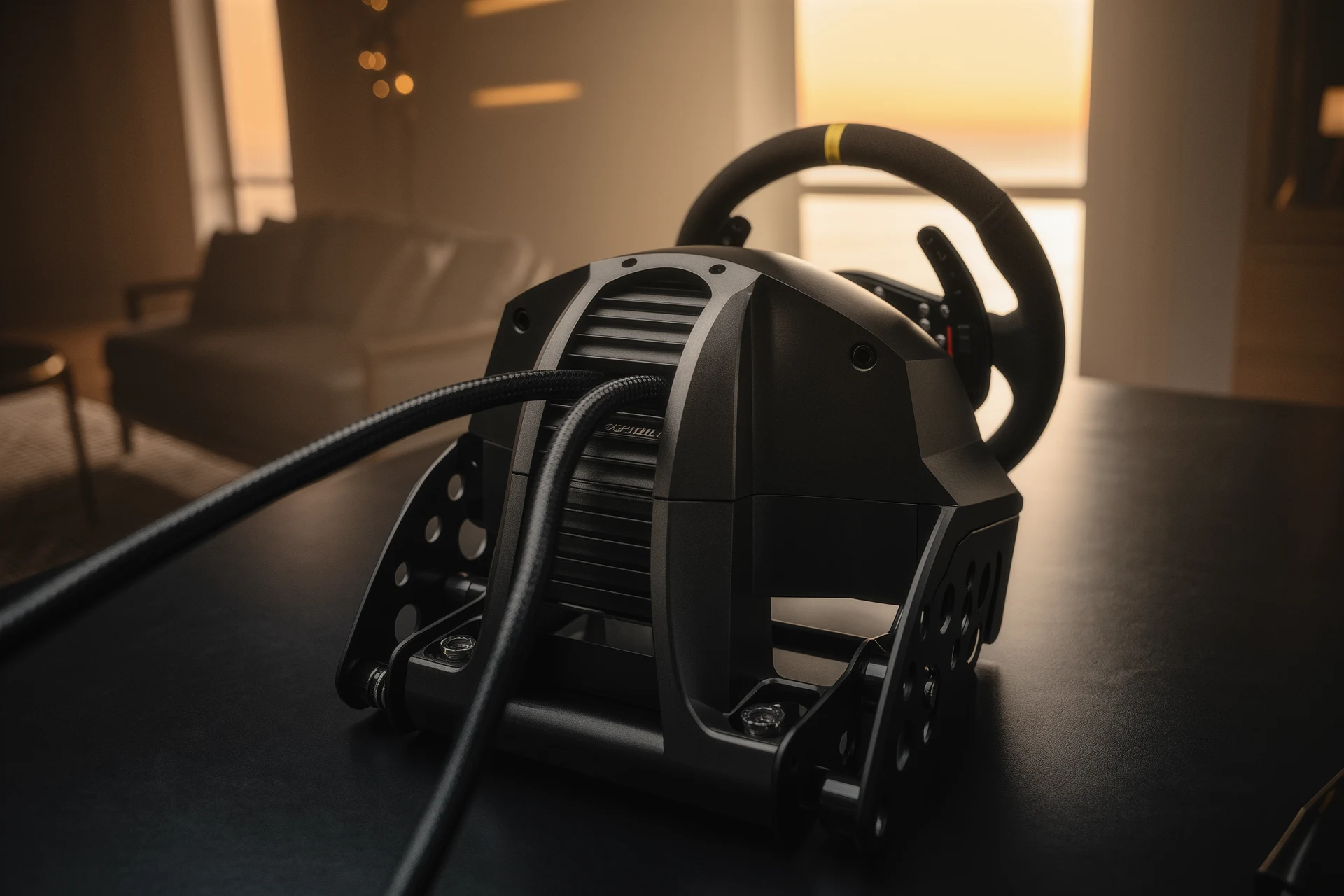
Tired of your sim racing wheel feeling a bit… mushy? If you’re serious about your racing and crave a more realistic, immersive experience, a direct drive wheelbase is likely what you’re looking for. It offers a level of force feedback detail and strength that gear or belt-driven wheels simply can’t match, directly translating the nuances of the track into your hands. This means better car control, more consistent lap times, and a deeper connection to the virtual asphalt.
What Makes Direct Drive Different?
Unlike traditional force feedback wheels that use gears or belts to transfer motor output to the wheel shaft, direct drive systems connect the motor directly to the wheel. This eliminates all the mechanical slop, friction, and lag associated with intermediate components.
No More Mechanical Muddle
Think of it like this: with a gear-driven wheel, you’re feeling the motor’s output through a series of cogs. Each cog adds a tiny bit of play, a slight delay, and some loss of detail. Belt-driven wheels are better, using a belt to transmit power, which reduces some of that mechanical noise. But direct drive? It’s a straight shot. The motor is the wheel.
Instant, Unfiltered Feedback
This direct connection means virtually zero latency and incredibly precise force feedback. You’ll feel every bump, every ripple on the track, the exact moment your tires lose grip, and the nuanced resistance of your car’s steering. It’s like having a direct line to the car’s suspension and tire physics.
Power and Detail in Spades
Direct drive motors are generally much stronger than those found in consumer-grade gear or belt-driven wheels. This isn’t just about raw strength; it’s about the ability to deliver fine details at high force outputs without clipping (when the motor can’t produce the requested force, leading to a loss of information). This power, combined with the lack of mechanical overhead, allows for incredibly subtle and detailed force feedback effects.
The Game-Changing Benefits of Direct Drive
Moving to a direct drive wheelbase isn’t just an upgrade; it’s a fundamental shift in your sim racing experience. The immediate, unfiltered feedback fundamentally changes how you perceive and react to the virtual track.
Unparalleled Immersion and Realism
This is arguably the biggest selling point. When the wheel in your hands accurately replicates what an actual race car driver would feel, your brain buys into the simulation much more readily.
Feeling the Road’s Texture
Forget vague vibrations. With direct drive, you’ll distinguish between a smooth patch of tarmac and a slightly worn, abrasive section. You’ll feel painted lines, the subtle undulations of an old track, and even the grit from off-track excursions. This micro-detail is crucial for anticipating car behavior.
Intuitive Grip Cues
One of the most critical aspects of real-world racing is feeling the tires. Direct drive excels here. You’ll truly feel the tire scrub as it approaches its limit, the gentle elasticity of a perfectly balanced corner, and the sudden lightness when grip is lost. This allows you to react proactively, catching slides before they become unrecoverable, rather than reacting to visual cues alone.
Car-Specific Characteristics
Different cars feel different in real life. A direct drive system can more accurately convey these nuances. The heavy steering of a prototype car, the lighter feel of a single-seater, or the specific suspension characteristics of a GT car, these become palpable through the wheel, adding another layer of realism to your driving.
Enhanced Driver Performance and Consistency
This isn’t just about feeling good; it’s about driving better. The detailed feedback translates directly into better car control and more consistent lap times.
Precision Car Control
Because you’re receiving so much more information, you can make finer, more accurate adjustments to your steering inputs. This means hitting apexes more consistently, carrying more speed through corners, and maintaining control during unexpected slides.
Quicker Reaction Times
When you feel a loss of grip as it happens, rather than a split-second later, your reaction time significantly improves. This can be the difference between expertly saving a car and spinning out into the gravel trap.
Better Muscle Memory Development
The consistent and accurate feedback helps you develop superior muscle memory for specific cars and tracks. You’ll instinctively know how much steering input a corner requires, how the car will react to throttle application, and how to manage tire slip, purely based on feel.
Durability and Reliability You Can Count On
While initially a larger investment, direct drive systems are generally built to last.
Fewer Moving Parts, Less Wear
Without gears or belts to wear out, direct drive systems have fewer components that can degrade over time. This translates to a longer lifespan and less chance of performance degradation or outright failure due to mechanical wear.
Robust Construction
Direct drive wheelbases are typically engineered with high-quality, durable materials designed to withstand the significant forces they generate. They’re built for sustained, powerful operation, unlike some consumer-grade wheels that might show signs of wear and tear after extended heavy use.
Consistent Performance Over Time
The performance of a direct drive system remains consistent throughout its life. You won’t experience the gradual loosening or degradation of feedback that can sometimes occur with belt or gear-driven wheels as their components age.
Choosing Your Direct Drive Wheelbase: Key Considerations
Stepping into the direct drive world can feel a bit overwhelming with the number of options available. Don’t worry, here’s a breakdown of what to keep in mind.
Torque Output: How Much Power Do You Need?
Torque, measured in Newton-meters (Nm), indicates the maximum rotational force the wheelbase can produce. This is a crucial factor, but “more is better” isn’t always the full story.
Entry-Level (5-8 Nm)
These are great starting points. They offer a significant upgrade over traditional wheels and provide plenty of detail. You’ll feel the forces, but they might not be as intense as a real car. For many racers, especially those new to DD, this range is perfectly adequate and allows for comfortable, extended racing sessions without excessive arm fatigue. Think brands like Moza R5, Fanatec CSL DD (5Nm), Simagic Alpha Mini, or VRS DirectForce Pro (when detuned).
Mid-Range (10-15 Nm)
This is the sweet spot for many serious sim racers. Here, you get enough power to replicate strong forces felt in real cars, providing a very immersive and demanding experience. You’ll likely need to dial down the maximum force for comfort, but having that headroom ensures you’ll never “clip” or lose detail when the game demands high forces. Fanatec CSL DD (8Nm with boost kit), ClubSport DD (12Nm), Moza R9/R12/R16, Simagic Alpha, Asetek Forte.
High-End (18+ Nm)
These are for the most dedicated enthusiasts and competitive racers who want the absolute closest experience to a real race car. These wheelbases can deliver truly brutal forces, requiring significant physical endurance. Often used by professional sim racers and those dedicated to replicating specific real-world car feels. You’ll almost certainly run these significantly below their maximum output to avoid injury or fatigue, but the fidelity and headroom are unmatched. Fanatec Podium DD1/DD2, Moza R21, Simagic Alpha Ultimate, Asetek Invicta, VRS DirectForce Pro, SC2 Sport/Pro/Ultimate.
Finding Your Balance
The key is to find a torque level where you can comfortably feel all the detail without fatiguing too quickly, especially during longer races. Most advanced users don’t run their DD wheels at 100% force feedback; they leave headroom to ensure no clipping and to feel the subtle nuances.
Ecosystem Compatibility: Your Choice Matters
Many direct drive manufacturers offer their own “ecosystems”, meaning their wheelbases are designed to work seamlessly with their own brand of wheels, pedals, and accessories.
Fanatec Ecosystem
Fanatec is a major player, offering a wide range of wheelbases, wheels (including officially licensed racing wheels), and excellent pedals. Their “Quick Release” (QR) system for attaching wheels is widely used and generally robust. They have a well-integrated driver software suite.
Moza Racing Ecosystem
Moza has quickly gained popularity for offering feature-rich direct drive systems at competitive price points. They have a growing range of wheelbases, wheels, and pedals, all integrated through their own software.
Simagic Ecosystem
Simagic is another strong contender known for high-performance direct drive options. Like others, they offer a full ecosystem of wheelbases, wheels, and pedals with proprietary connectors and software.
“Open” Ecosystems (VRS, Simucube, Asetek)
Some brands, like VRS (Virtual Racing School), Simucube, and Asetek, focus primarily on the wheelbase itself, often providing a more “open” architecture. This means you might need to acquire wheels from third-party manufacturers (e.g. using a universal Quick Release adapter) and integrate pedals from different brands. This offers maximum flexibility but might require a bit more technical knowledge for setup.
The “Walled Garden” Effect
Choosing an ecosystem can dictate your future upgrade path. If you buy a Fanatec wheelbase, you’ll likely stick to Fanatec wheels for ease of use. If you want to mix and match individual components from different manufacturers, you might lean towards a more open system, but be prepared for potential compatibility quirks or the need for adapters.
Software and Customization: Fine-Tuning Your Feel
The software that accompanies your direct drive wheelbase is crucial for extracting the best performance and feel.
Driver Software Suites
Manufacturers provide dedicated software that allows you to adjust a plethora of settings: overall force, damping, friction, inertia, interpolation, low-pass filters, and many more. These settings fine-tune how the wheel behaves and how the force feedback effects are delivered.
Community Presets and Guides
Don’t feel overwhelmed by all the settings. The sim racing community is a fantastic resource. Many users share their preferred settings for specific wheelbases, games, and car types. These community presets can be an excellent starting point.
Game-Specific Optimization
Some wheels and their software are optimized for popular racing titles. While most direct drive wheels work well across the board, checking for game-specific profiles or recommendations can yield a superior experience. The ability to save different profiles for different games or even different cars within a game is a highly desirable feature.
Setting Up Your Direct Drive Rig
Unpacking a direct drive wheelbase is just the start. Proper mounting and setup are key to maximizing its potential and your comfort.
Sturdy Mounting is Non-Negotiable
This is perhaps the most critical aspect of a direct drive setup. These wheelbases generate significant forces, and anything less than a rock-solid mounting solution will result in flexing, rattling, and a compromised force feedback experience.
Wheel Stand Considerations
If you’re using a wheel stand, ensure it’s a heavy-duty, reinforced model designed to handle direct drive forces. Flimsy stands will wobble and flex, negating much of the benefit of direct drive. Bolting the wheelbase directly to a thick, rigid base plate is recommended.
Cockpit Integration
For the ultimate experience, a dedicated sim racing cockpit (rig) is the way to go. Aluminum profile rigs (like 80/20 extrusion) are highly popular for their adjustability and strength. They allow for direct mounting without any flex, ensuring all the force feedback detail is transmitted to your hands.
Desk Mounting (with caution)
Some entry-level direct drive wheelbases can be desk-mounted, but this requires a very substantial desk. Even then, expect some desk movement and potential damage over time. It’s generally not recommended for anything above 5-8Nm. If you must desk mount, use proper clamps and reinforcing.
Power and Connectivity
Direct drive wheelbases are powerful devices and require proper power delivery.
Dedicated Power Supply
Ensure you’re using the manufacturer-provided power supply and that it’s correctly connected. These units often draw significant current, so avoid cheap power boards or extensions unless they are rated for the load.
USB Connectivity
Most direct drive wheelbases connect to your PC via a USB cable. Ensure it’s a reliable, good-quality cable and connected directly to a USB port on your motherboard where possible, avoiding front-panel hubs if they cause issues.
Driver Installation
Always install the latest drivers and firmware from the manufacturer’s website before your first use. This ensures optimal performance and access to the newest features and bug fixes.
Ergonomics and Comfort
Racing with high forces can be demanding, so setting up your ergonomics correctly is vital for long-term comfort and avoiding injury.
Wheel Height and Distance
Adjust your wheel’s height and distance so your arms have a slight bend at the elbow when holding the wheel, similar to a real race car. This allows for better leverage and reduces strain.
Seating Position
Your seat should be comfortable and provide good support, especially for your back. Ensure your feet can comfortably reach the pedals. A proper racing seat can make a huge difference in immersion and endurance.
Force Feedback Strength
Start with conservative force feedback settings and gradually increase them. Don’t feel pressured to run maximum forces if it causes discomfort or fatigue. The goal is to feel the detail, not to engage in an arm-wrestling contest with your sim. Listen to your body. Intense force feedback can lead to wrist or shoulder strain if not managed properly.
Is Direct Drive Worth the Investment?
This is the big question, and for anyone serious about sim racing, the answer is usually a resounding “yes.”
The Cost vs. Experience Equation
Direct drive wheelbases represent a significant investment compared to entry or mid-range gear/belt-driven wheels. However, the step up in realism, immersion, and ultimately, driving performance, is transformative. It’s often cited as one of the most impactful upgrades a sim racer can make.
Longevity and Future-Proofing
Given their robust construction and lack of wear-prone components, a good direct drive wheelbase is a long-term investment. It’s likely to last for many years and remain relevant as sim racing technology evolves, especially if you choose a model with good torque headroom.
Elevating Your Skill Level
The detailed feedback from a direct drive system can genuinely help you become a better, more consistent sim racer. It provides the information you need to understand car behavior at a much deeper level, translating into better decision-making and finer control on track.
The Ultimate Sim Racing Upgrade
If you’ve spent hundreds or thousands of hours in sim racing and are looking for the next level of authenticity and performance, direct drive is the logical and most effective upgrade path. It bridges the gap between a “game” and a genuine simulation, redefining what you expect from your virtual driving experience.
FAQs
What is a direct drive wheelbase?
A direct drive wheelbase is a type of force feedback steering system used in racing simulators. It directly connects the steering wheel to the motor without any belts or gears, providing more precise and realistic force feedback.
How does a direct drive wheelbase work?
A direct drive wheelbase works by using a powerful motor to directly drive the steering wheel without any mechanical reduction. This allows for more accurate and detailed force feedback, providing a more realistic driving experience for sim racers.
What are the advantages of a direct drive wheelbase?
The advantages of a direct drive wheelbase include higher torque and faster response times, resulting in more realistic and detailed force feedback. This can improve the overall driving experience and help sim racers to better understand and control the vehicle.
What are the potential drawbacks of a direct drive wheelbase?
Potential drawbacks of a direct drive wheelbase include higher cost, larger size and weight, and increased complexity compared to other types of force feedback systems. Additionally, some users may find the increased force feedback to be too intense for extended use.
What are some popular direct drive wheelbase brands?
Popular direct drive wheelbase brands include Simucube, Fanatec, and AccuForce. These brands offer a range of direct drive wheelbases with varying features and price points to suit different sim racing needs.
More from Equipment & Gear

Sim Racing PC Build Guide
Sim racing PC build guide: why the AMD Ryzen 7 7800X3D wins on single-thread cache, how to match your GPU to your display, plus four complete budget b…

Sim Racing VR vs Triples Guide
VR vs triple monitors for sim racing in 2026: compare Quest 3, Pimax Crystal Light and triple 1440p setups on field of view, depth, comfort, cost and …
Sim Racing Motion Platforms Guide
Sim racing motion platforms guide: compare seat movers, chassis movers, D-BOX, PT Actuator, and bass shakers, with prices from $150 to $20,000-plus an…