Corporate racing events that are not just a queue
Corporate simulator events that are not just a queue: the rotation arithmetic, the formats that include everybody and the mistakes that empty the room by hour two.
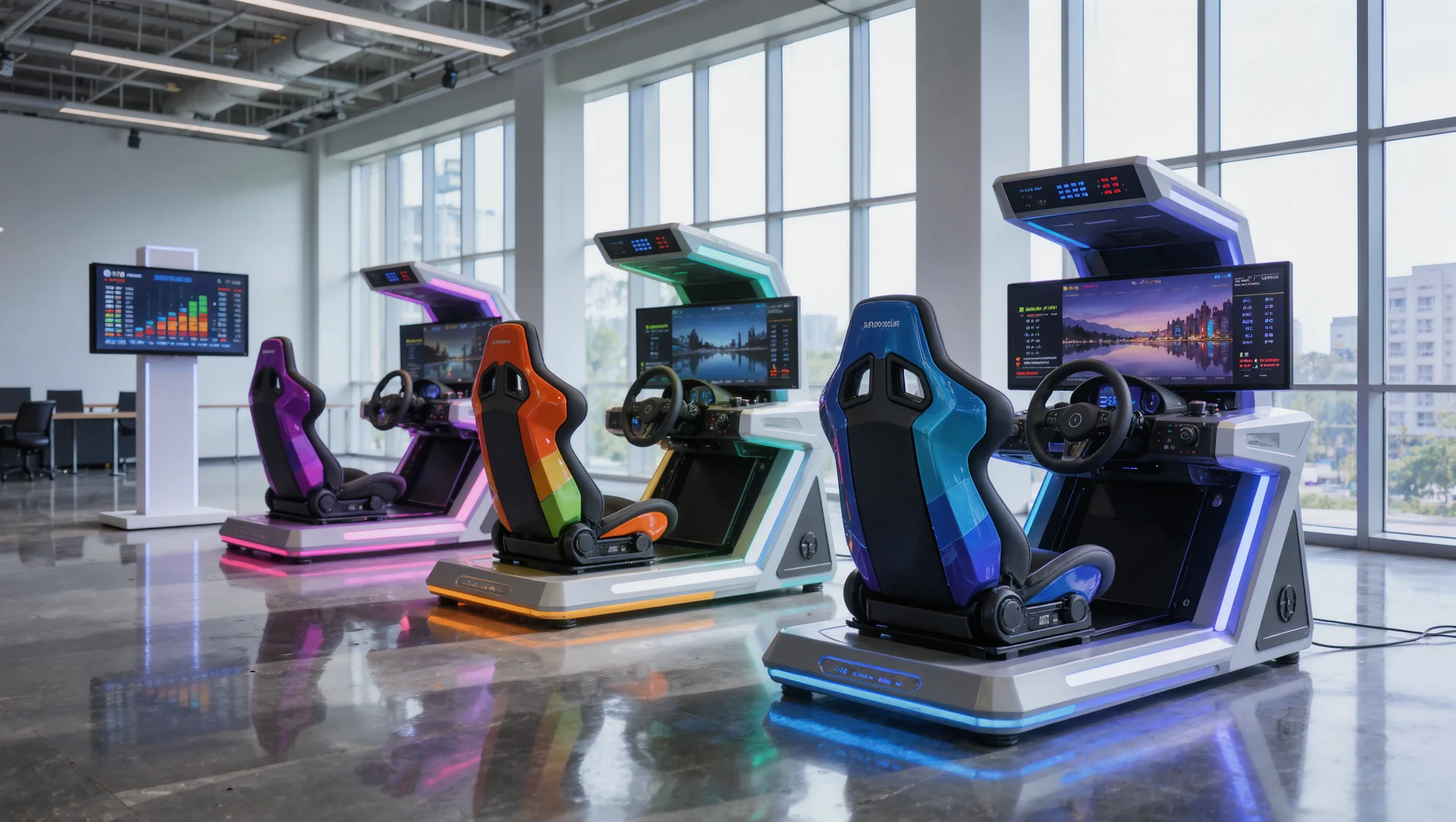
Every failed corporate racing event fails the same way: 60 guests, 4 simulators and no plan for the 56 people who are not driving. The arithmetic is unforgiving and it is also easy.
The rotation arithmetic
Start from the total, not the hardware. 4 stations across a 3 hour window offer 720 station minutes, and 60 guests divide that into 12 minutes each. That is the honest number, and it already assumes nobody sits idle for a second.
Then subtract the changeover. Two minutes per guest to swap, adjust and brief turns 12 usable minutes into 10 and cuts throughput from 20 guests an hour to about 17. Sixty guests now need 3 and a half hours of continuous rotation rather than 3.
Which means the fix is arithmetic rather than enthusiasm. Either add stations, shorten the slot, stagger the arrivals across the evening, or accept that a third of the room will never drive. Those are the only 4 options.
| Item | Figure |
|---|---|
| Total station time | 720 minutes |
| Time per guest before changeover | 12 minutes |
| Changeover per guest | about 2 minutes |
| Usable driving time | about 10 minutes |
| Throughput | about 17 guests an hour |
| Time actually needed for 60 guests | about 3 and a half hours |
| Team format | 10 teams of 6 |
| Track length that fits | a lap under 90 seconds, 3 laps per guest |
| Penalty that needs no steward | 5 seconds per off track |
| Power for five stations | approaching 3,680 watts on one circuit |
Formats that include the people who are not driving
The time trial with a live leaderboard is the reliable default. Every guest drives the same 3 laps on the same car and track, the board updates in public, and the 56 people waiting have something to watch and argue about.
The team relay scales better with a large room. Splitting 60 guests into 10 teams of 6 gives each team a total and gives the slowest driver a role, and it converts a personal score into a shared one, which is usually the actual point of the evening.
The head to head final closes it. Take the fastest 4 from the board, run a single short race, and the whole room watches the same event at the same time for the first time all evening.
Making it fair enough to be fun
Use assists and say so. A room where 55 people have never driven a simulator and 5 have is not a competition, and driving aids turned on for everybody keep the spread small enough that the leaderboard stays interesting.
Borrow the incident logic rather than the incident points. Official rules assess contact at 4 points and a spin at 2, with 17 ending a race, and a corporate version that simply adds 5 seconds per off track keeps the driving honest without needing a steward.
And pick a short track. A lap under 90 seconds means 3 laps fit inside the slot with time to spare, while a long circuit turns the same 3 laps into an overrun that pushes every later guest back.
The venue checks people forget
Power, first. Plan around 700 watts per station, so 5 stations approach the roughly 3,680 watts a single 16 ampere circuit at 230 volts carries, and a function room with one free socket is a room that will trip in the first hour.
Escape routes, second. Workplace rules require emergency exit doors to open outwards and escape routes to match the use and dimensions of the space, and a row of simulators placed across a corridor is exactly the arrangement that breaks that.
And noise, third. Four stations with sound running is louder than a conversation, and an event where the 56 waiting guests cannot talk to each other has removed the one thing corporate evenings actually exist for.
Sources
Frequently asked questions
How many simulators do 60 guests need?
Four stations across 3 hours give each guest about 10 usable minutes. For more than that, add stations or stagger the arrivals.
What format includes everybody?
A time trial with a live leaderboard, then a team relay, then a head to head final for the fastest 4.
How do I keep it fair between beginners and experienced drivers?
Turn the driving aids on for everybody and add 5 seconds per off track. That keeps the spread small without needing a steward.
What is the most common venue problem?
Power. Five stations approach the 3,680 watts a single 16 ampere circuit carries, and one free socket will trip in the first hour.
More in Business & Events
Refresh rate and latency: where milliseconds hide
Refresh rate and latency: where the milliseconds actually hide, which ones you can remove and which published thresholds tell you where the problem is.
Motion platforms: degrees of freedom explained honestly
Motion platforms explained honestly: what each degree of freedom adds, where the threshold of usefulness sits and what the published travel figures mean.
Simulator sickness: causes you can actually remove
Simulator sickness: the causes you can actually remove, in the order that removes the most, and the ones that are a hardware limit rather than a settings problem.