Mental training: concentration for a two hour stint
The mental side of sim racing measured rather than described: sleep, attention budgets, the routine before a race and what to do after a bad one.

Concentration is a budget, not a virtue, and the drivers who win long races are the ones who spend it deliberately. Everything in this article is either a number you can check or a routine you can run.
Sleep is the setting nobody adjusts
Experts recommend that adults sleep between 7 and 9 hours a night, and sleep deficiency impairs learning, focusing and reacting. Every one of those three is the job description of a race driver.
The scale of the problem is ordinary rather than exotic. Nearly 40 per cent of adults report falling asleep during the day without meaning to at least once a month, which means a substantial share of any grid arrives already short.
This is the cheapest performance gain available. A driver who sleeps 6 hours before a race and then spends 2 hours hunting for a tenth in the setup has the priority backwards, and the 1 hour of extra sleep is free.
| Item | Figure |
|---|---|
| Recommended adult sleep | 7 to 9 hours a night |
| Adults falling asleep unintentionally by day | nearly 40 per cent, at least monthly |
| Incident points for contact | 4 |
| Incident points for a spin | 2 |
| Automatic disqualification | 17 points in a race |
| Careless moments that end a race | 4 contacts |
| Fixed pre race routine | the last 30 minutes, same order every time |
| Corrections to take from a debrief | 1, not 5 |
| Replays of a bad race | 1, within 24 hours |
The attention budget in a race
A 40 lap race is not 40 equal laps. The first 3 and the last 5 carry most of the risk, the middle 32 are where mistakes come from boredom, and treating all of them the same is how a driver with the pace to win finishes 9th.
Against an incident limit of 17 that disqualifies automatically, a single lapse costs 4 points for contact or 2 for a spin. That turns concentration into arithmetic: 4 careless moments and the race is over regardless of pace.
So spend attention where it pays. Full alertness through the opening laps and the closing stint, deliberate routine through the middle, and a decision made in advance about which battles are not worth the incident points.
A routine that works before the green flag
Fix the last 30 minutes. The same warm up laps, the same tyre pressure check, the same seat position, in the same order, every time. A routine that never varies removes 5 or 6 small decisions from a moment when the mind should be empty.
Decide the first corner before you get there. Whether you defend, lift or yield on lap 1 is a decision better made 10 minutes early than at 200 km/h in a pack, and it is the single most common place a season is thrown away.
And separate practice from racing. A driver who tests a setup change in the race has spent attention on an experiment, and experiments belong to the 3 solo sessions before the round.
What to do after a bad race
Watch it once, within 24 hours, and stop. A single replay finds the mistake; the fourth replay only rehearses the feeling, and rehearsing the feeling is how one bad race becomes three.
Write down 1 thing rather than 5. A driver who leaves a debrief with 5 corrections applies none of them, while 1 correction carried into the next 3 sessions actually changes something.
And separate the result from the process. Finishing 14th after a clean race with 0 avoidable contacts is a better week than a podium collected through somebody else's retirement, and a driver who cannot tell those apart is measuring the wrong thing.
Sources
Frequently asked questions
How much does sleep actually matter?
It is the cheapest gain available. Adults are advised 7 to 9 hours, and sleep deficiency impairs learning, focusing and reacting, which is the whole job.
Where in a race should I concentrate hardest?
The first 3 laps and the last 5. The middle stint is where boredom produces mistakes, and it needs routine rather than intensity.
How many corrections should I take from a debrief?
One. A driver leaving with 5 applies none of them.
How often should I rewatch a bad race?
Once, within 24 hours. The fourth replay rehearses the feeling instead of finding the mistake.
More in Esports & Competitions
The sim racing PC: where the money actually belongs
The sim racing PC: where the money actually belongs, what the published requirements ask for and the component most drivers overspend on.
VR or triples: the honest comparison
VR or triple screens: the honest comparison, what the published resolutions and system requirements mean and which one suits which kind of racing.
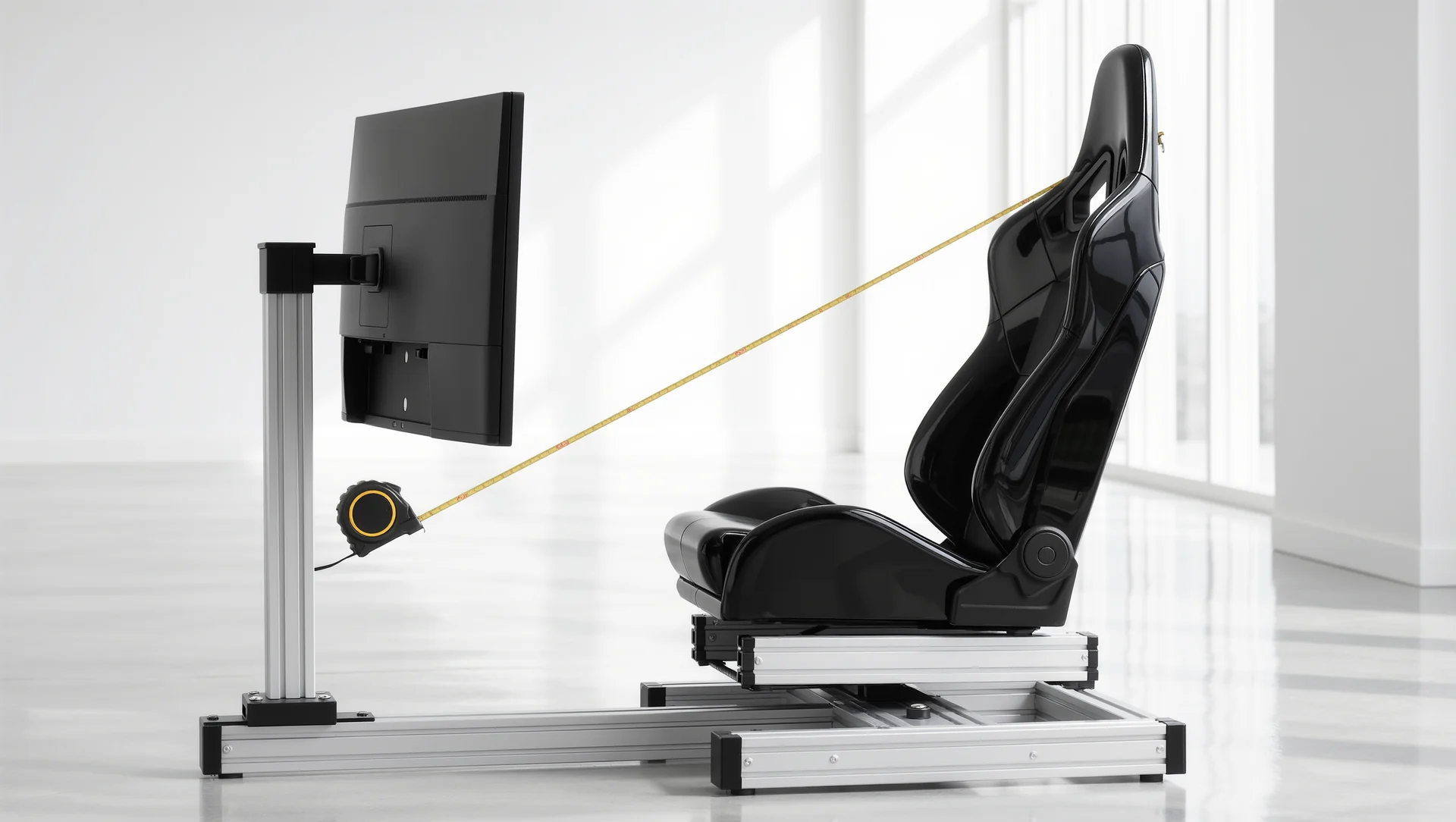
Field of view: the calculation, not the preference
Field of view is a calculation, not a preference: the formula, what a wrong setting costs you and why the correct number always feels too narrow at first.