How the big sims differ where it counts: the tyre model
Where the big simulators really differ: not graphics or content, but the tyre model and the rate it runs at. What the published figures mean at the wheel.
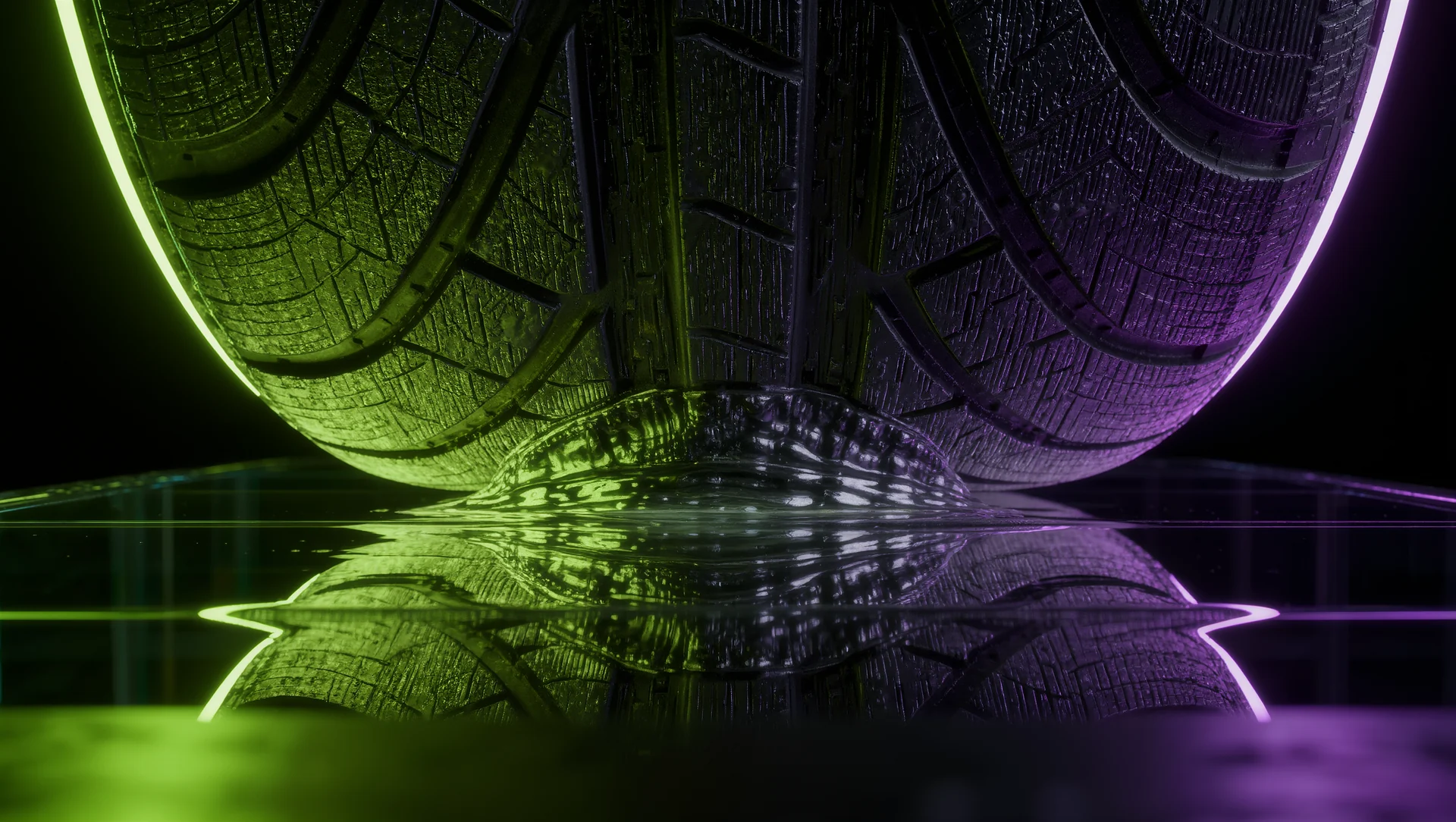
Two simulators can share a circuit, a car and a wheel base and still feel nothing alike, because the only part that decides how a car behaves is the tyre model. Everything else is presentation, and the published figures for the tyre models explain more about the differences than any lap time comparison.
What a tyre model has to solve
A tyre generates grip through a contact patch roughly the size of a hand, and that patch changes shape, temperature and pressure continuously. A model has to compute how much force the patch can transmit at a given slip angle, how that changes as the rubber heats and cools, how the carcass deforms and what happens when the surface is wet, dusty or covered in marbles.
Two design choices dominate the result. The first is what is modelled: a brush model treats the contact patch as many small elastic elements, while other approaches model the carcass and the patch as a coupled physical structure. The second is how often the model runs, because a tyre that changes state faster than the simulation updates is a tyre whose behaviour arrives late.
Rate is the number people underestimate. Le Mans Ultimate publishes a physics engine running at 400 Hz for force feedback with an advanced brush tyre model, which is a new value every 2.5 milliseconds. At 200 km/h a car covers 14 centimetres in that time, so the resolution of what you feel is measured in handspans of tarmac.
Where the simulators sit
Le Mans Ultimate is the most explicit about its figures: 400 Hz, an advanced brush model and eleven laser scanned circuits, all aimed at prototypes and GT cars over long distances. The narrow content list is a consequence of the modelling effort per car rather than a marketing decision.
rFactor 2 built its reputation on a tyre model that computes the contact patch rather than approximating it, and Studio 397 named that approach the Contact Patch Model. The official system requirements hint at the cost: 16 GB of memory minimum and 32 GB recommended, with an i5-9600 or Ryzen 5 3600X recommended, which is a heavier ask than the graphics alone would explain.
Automobilista 2 takes a different route, using the Madness Engine with its SETA tyre model, and spends the saved effort on breadth: well over 200 individual cars and more than 50 tracks with over 150 layouts. Assetto Corsa Competizione sits between the two philosophies, with more than 40 GT cars and 26 circuits, all in one class family.
| Simulator | Tyre model | Content |
|---|---|---|
| Le Mans Ultimate | advanced brush model, 400 Hz physics | 17 base cars, 11 laser scanned tracks |
| rFactor 2 | Contact Patch Model | over 35 free and paid cars and tracks |
| Automobilista 2 | SETA model on the Madness Engine | over 200 cars, over 50 tracks, over 150 layouts |
| Assetto Corsa Competizione | not published in these terms | over 40 GT cars, 26 circuits |
What the differences feel like
Higher rate models report more between events. On a low rate model a kerb is a bump; on a high rate model it is a sequence of impacts with a texture, and the tyre's recovery afterwards is something you can feel rather than infer.
Contact patch approaches tend to punish sustained abuse differently. A tyre that models heat through the carcass rather than as a single temperature will lose grip in a way that builds across a stint, which is why some simulators reward a driver who manages temperature and others reward one who simply drives fast.
Breadth costs depth, and that is a legitimate trade. A simulator with 200 cars cannot model each to the depth of one with 17, and a driver who wants to feel the difference between two similar GT3 cars is asking a different question from one who wants to try a Group C car on a Tuesday.
How to judge it yourself
Do not compare lap times between simulators; compare what happens at the limit. Drive the same corner in each until the car slides, and ask three questions: how much warning did you get, how progressive was the loss, and did the tyre come back when you corrected. Those three answers separate tyre models more reliably than any specification sheet.
Then repeat it after twenty minutes of driving. The simulators diverge most in how the tyre behaves once it has been worked, and a model that feels identical on lap one is often a different car by lap fifteen.
Sources
Frequently asked questions
Does a higher physics rate mean a better simulator?
It means more resolution in what you feel, not more accuracy in what is modelled. A fast loop over a crude model is still a crude model.
Why do the same cars feel different between simulators?
Because the tyre model decides the behaviour and each one solves the contact patch differently. The car data is the smaller part of the difference.
Which simulator has the best tyre model?
There is no single answer, because they optimise for different things. The right question is which one behaves the way your discipline actually behaves.
Do system requirements say anything about physics?
Somewhat. A recommendation of 32 GB of memory and a modern six core processor points at computation that the graphics alone would not need.
More in Games & Platforms
Clipping: how to see the detail you are losing
Clipping explained: what the force meter shows, why the strongest setting loses detail and how iRacing sets the maximum for you.
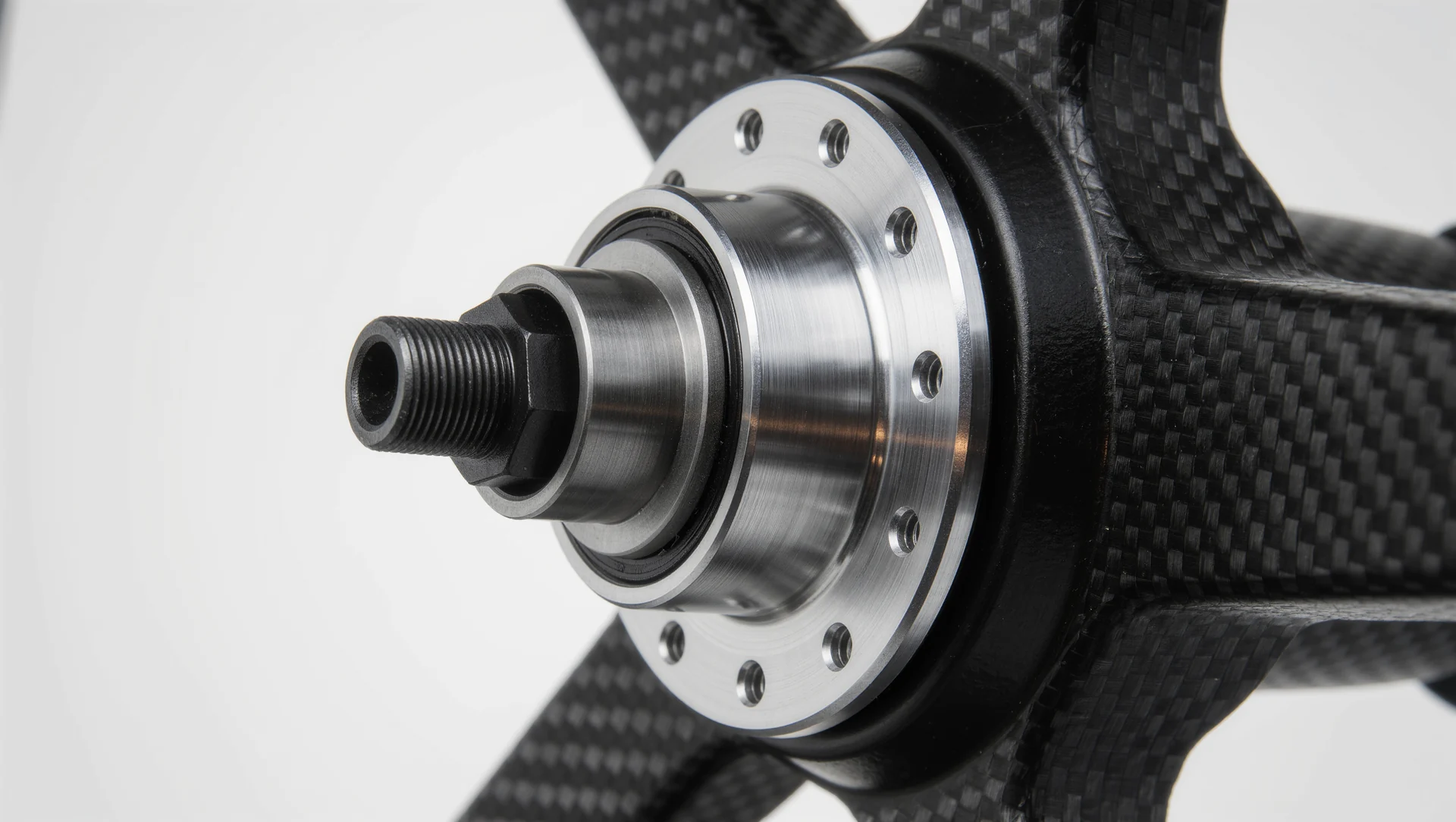
Quick release standards and what fits what
Quick release standards explained: the 70 mm bolt pattern, why QR1 and QR2 do not mix, and which variant belongs on which torque level.
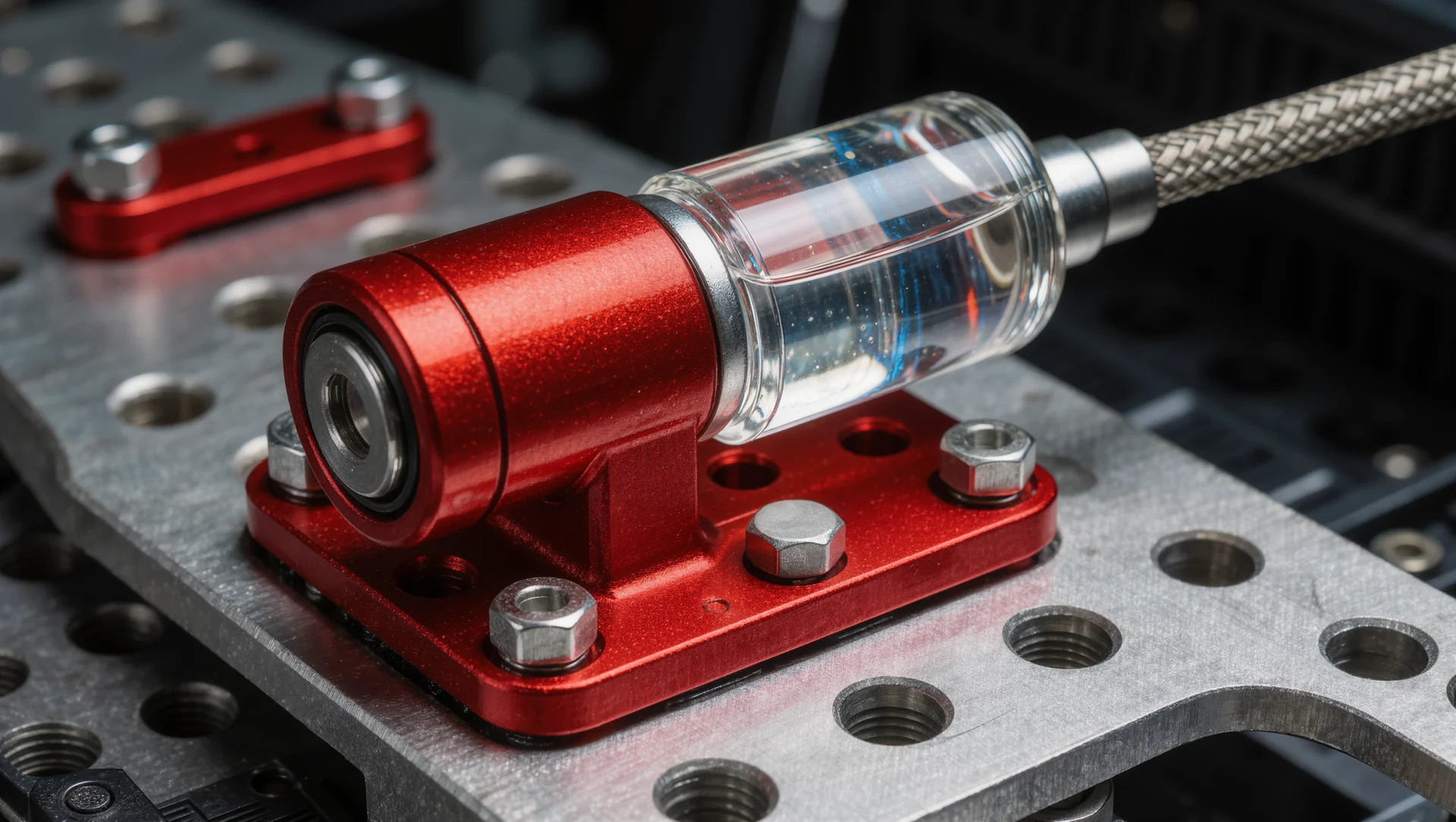
Hydraulic brakes in a sim: worth the mess
True hydraulic brake pedals against a good load cell: the published pressures, prices and maintenance, and who genuinely gains from the upgrade.