Sim Racing Gloves: Grip, Sweat and Wheel Wear
What gloves change on a sim wheel, which types work, what they cost and how to look after both the gloves and an Alcantara or suede rim.
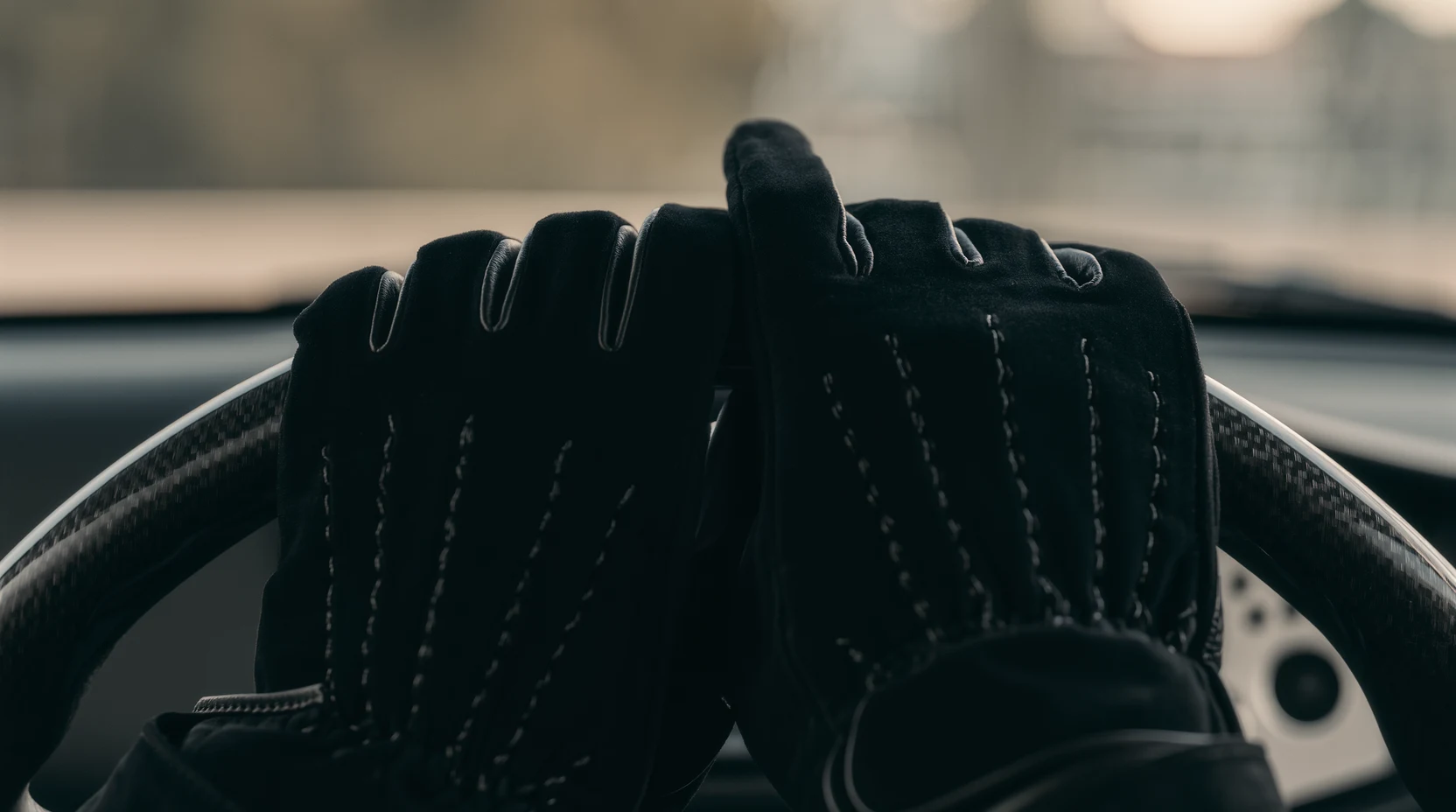
Gloves are not necessary to start sim racing, but for many drivers they solve three practical problems: sweaty hands losing grip, sore hands after long sessions, and sweat and skin oil wearing the rim. This guide covers what gloves do on a sim wheel, which types work, what they cost and how to look after them and the rim.
The benefits are practical rather than cosmetic, and they matter more the longer your sessions are.
Enhanced Grip and Control
This is arguably the biggest reason to invest in gloves. Even with a well-made sim wheel, your hands can get sweaty, especially during intense, longer races. This leads to a loss of grip, forcing you to squeeze the wheel harder, which causes fatigue.
No More Slippery Situations
Sweat is the enemy of consistent control. Gloves, with their specialized materials and designs, wick away moisture and provide a tacky surface that keeps your hands firmly planted on the wheel. This means you can maintain a lighter, more relaxed grip, which translates to smoother inputs and less arm pump.
Improved Steering Wheel Feedback
When your hands aren’t slipping, you’re more attuned to the subtle vibrations and forces coming through the wheel. This clearer feedback allows you to react more precisely to what the car is doing, whether it’s understeer, oversteer, or just the feeling of the road surface.
Comfort in Long Sessions
Long sim racing sessions can take a toll on your hands. From calluses to general fatigue, discomfort can hinder your performance. Gloves act as a protective layer and a comfort enhancer.
Preventing Hand Fatigue and Aches
Gloves provide a thin layer between your hands and the wheel. That can reduce pressure points and vibration, which helps delay hand fatigue. If your hands ache after an hour or two of racing, gloves are one of the cheapest things to try.
Say Goodbye to Calluses and Blisters
Continuously rubbing your hands against almost any material can lead to calluses, and in extreme cases blisters. Gloves put a barrier between your skin and the rim and take that friction instead.
Protecting Your Gear (and Your Investment)
It’s not just about your hands; your expensive sim gear can also benefit from you wearing gloves.
Preserving Your Wheel’s Material
Many sim wheels use leather, Alcantara or suede rims. Over time, sweat and skin oil leave these materials looking matted or oily, which Fanatec describes as normal wear in its cleaning guide, and the manufacturer’s advice is to keep your hands clean. Gloves keep sweat and oil off the rim, so a suede or Alcantara rim stays cleaner for longer. They do not make a rim last indefinitely, and Fanatec also points out that gloves can affect the durability of rubber grips and asks for careful handling when wearing them. Whatever you choose, clean the rim the way the manufacturer describes: for Alcantara, Tactaris and suede, Fanatec recommends dusting with a soft brush or dry cloth, wiping gently with a warm, damp microfibre cloth without soaking the material, and brushing it once it is completely dry. Alcantara’s own care guide likewise advises against printed paper towels, which can transfer ink.
Keeping Your Buttons Clean
Ever notice how greasy your buttons and rotary encoders can get after a long session? Gloves prevent direct contact, keeping your controls cleaner and more responsive.
Choosing the Right Sim Racing Gloves
There are many options, but a few criteria narrow them down quickly.
Material Matters: What Are They Made Of?
The material composition heavily influences grip, comfort, and durability.
Synthetic Fabrics (Polyester, Spandex, Microfiber)
Most common and often the most affordable. These materials are excellent at wicking away sweat and often offer good flexibility. Look for gloves with silicone or rubberized patterns on the palm and fingers for enhanced grip. They are generally easy to clean and dry quickly.
Leather and Suede
Often found in more premium gloves. Leather offers a very tactile feel and exceptional durability. Suede, while providing good grip initially, can wear down quicker and be harder to maintain. These materials tend to be less breathable than synthetics, but some gloves incorporate perforations for ventilation.
Blends and Hybrid Designs
Many gloves combine materials, for example a synthetic back for breathability and flexibility with a leather or suede palm for grip and durability. Hybrids like these balance ventilation against grip.
Fit and Feel: Comfort is Key
A glove, no matter how technically advanced, is useless if it doesn’t fit well.
Snug but Not Restrictive
The gloves should fit snugly, like a second skin, without being overly tight or loose. You don’t want any bunching or excess material, as this can create hot spots or reduce feel. Conversely, gloves that are too tight will restrict movement and blood flow, leading to discomfort.
Dexterity and Tactile Feedback
You should still be able to feel the wheel and easily manipulate buttons and switches. Test the gloves by mimicking steering and button presses before committing. Some gloves feature pre-curved fingers to reduce material bunching when gripping the wheel.
Seam Placement
Internal seams can be a source of irritation. Look for gloves with external seams or flat-stitched seams to minimize discomfort during long sessions.
Key Features to Look For
Beyond material and fit, several design elements can enhance your experience.
Grip Patterns
Most sim racing gloves feature silicone dots, textured patterns, or strategically placed rubberized sections on the palm and fingers. These are crucial for maximizing grip on various wheel materials, especially Alcantara or smooth leather. Ensure these patterns are durable and well-integrated.
Breathability and Ventilation
Sweaty hands are uncomfortable and reduce grip. Look for gloves with mesh panels, perforated materials, or breathable fabric on the back of the hand to promote airflow and keep your hands cool and dry.
Cuff Design
The cuff should be comfortable and secure. Some gloves have a simple elastic cuff, while others feature Velcro closures for a more adjustable and secure fit. Make sure the cuff doesn’t dig into your wrist or restrict movement.
Touchscreen Compatibility
If you use a tablet or phone for telemetry, dashboards or sim controls, look for gloves with conductive fingertips so that you do not have to take them off every time you tap a screen. Not all gloves have this, so check the specifications if it matters to you.
Types of Racing Gloves and Their Applications
While the lines can blur, there are generally a few categories of gloves that translate well to sim racing.
Dedicated Sim Racing Gloves
These are designed purely for sim racing. They usually prioritise ventilation, touchscreen compatibility and long session comfort over the fire resistance and abrasion protection required in real motorsport, and they tend to be lighter and more flexible. As an example of the price level, the sim racing glove maker F33L listed its sim racing gloves, all with touchscreen fingertips, between GBP 25 and GBP 39 in its UK store on 18 October 2026.
Advantages for Sim Racers
- Optimized for Sim Gear: Grip patterns are designed for common sim wheel materials.
- Breathability: Often feature extensive mesh panels.
- Flexibility: Excellent dexterity for button presses.
- Touchscreen Ready: Many include conductive fingertips.
Karting Gloves
Gloves designed for karting also work well for sim racing. They are built for grip and feel over long, physical sessions, and they are typically lighter than full car racing gloves.
Why Karting Gloves Work Well
- Great Grip: Strong focus on hand-to-wheel connection.
- Tactile Feel: Often thinner palm construction for better feedback.
- Breathable: Designed for active use in varied temperatures.
- Durable: Built to withstand the rigors of karting.
Real Racing Gloves (FIA/SFI Certified)
These are fire resistant gloves homologated for real motorsport. They can be used for sim racing, but you pay for safety certification that has no function at home. Their purpose is protection in a crash, not comfort and grip on a static rig.
Considerations for Real Racing Gloves
- Fire Retardant: While a great safety feature in a real car, it’s unnecessary for sim racing and adds to the cost and often bulk.
- Thicker Construction: Can sometimes reduce tactile feedback compared to thinner sim or karting gloves.
- Higher Cost: You’re paying for certified safety features you don’t need in your home.
- Less Breathable: The fire-retardant layers can make them warmer.
Maintenance and Care for Your Sim Racing Gloves
To ensure your gloves last and continue to perform their best, proper care is essential.
Keeping Them Clean
Regular cleaning prevents odors, maintains grip, and extends the life of the materials.
Hand Washing is Best
Most sim racing gloves can be hand washed with mild soap (like a gentle laundry detergent or dish soap) and cool water. Gently rub them to remove dirt and sweat, then rinse thoroughly until the water runs clear. Avoid harsh chemicals or bleach, which can damage the materials and grip patterns.
Air Drying is Crucial
Never put your racing gloves in a tumble dryer. The high heat can shrink them, damage the grip materials, and degrade the fabric. Instead, reshape them gently and air dry them away from direct sunlight or heat. You can hang them or lay them flat. Allow them to fully dry before storing them to prevent mildew.
Proper Storage
When not in use, ensure your gloves are stored properly.
Keep Them Dry and Ventilated
Store your gloves in a dry, well-ventilated area. Avoid stuffing them into a dark, damp bag, as this encourages bacterial growth and odor. Some cases or mesh bags designed for gloves can be a good investment.
Avoid Direct Sunlight
Prolonged exposure to direct sunlight can fade colors and degrade materials, especially synthetic fabrics and grip patterns.
When to Consider an Upgrade or Your First Pair
If you’ve been on the fence, here are some signs it might be time to invest in, or upgrade, your racing gloves.
You’re Getting Serious About Sim Racing
If you’re moving beyond casual play and into competitive leagues, endurance racing, or just pushing for more consistency, gloves become a valuable tool. They help eliminate variables caused by hand fatigue and poor grip.
Your Hands are Uncomfortable
If you’re experiencing calluses, blisters, hand fatigue, or general discomfort during or after longer sessions, gloves will make a significant difference.
Your Wheel is Showing Wear
If the Alcantara, suede or leather on your rim is starting to look matted or shiny, sweat and skin oil are building up. Clean the rim as the manufacturer describes, and consider gloves to slow the process down.
You Want Improved Immersion and Consistency
A good pair of gloves enhances the feeling of being “in the car.” When you’re not worrying about your hands slipping or feeling uncomfortable, you can focus purely on your driving, leading to better consistency and enjoyment.
Summary: when gloves are worth it
You can race without gloves, and many drivers do. They are worth trying if your hands sweat, if they get sore during long sessions or if you want to keep a suede or Alcantara rim clean for longer. Choose a snug fit, a thin palm with a grip pattern, good ventilation and, if you use a screen, conductive fingertips. Wash them by hand, dry them in the air and clean the rim as its manufacturer recommends. For the wider question of looking after your equipment, see maintenance that doubles the life of your hardware.
FAQs
What are racing gloves for Sim Racing?
Racing gloves for Sim Racing are specialized gloves designed to enhance grip and control while driving in simulated racing environments. They are often made of lightweight and breathable materials to provide comfort during long gaming sessions.What are the benefits of using racing gloves for Sim Racing?
Using racing gloves for Sim Racing can improve grip on the steering wheel and other controls, reduce hand fatigue, and enhance the overall gaming experience. They also provide a layer of protection for the hands and help maintain a consistent grip in intense gaming situations.What features should I look for in racing gloves for Sim Racing?
When choosing racing gloves for Sim Racing, look for features such as anti-slip materials, reinforced palm and finger areas, breathable fabric, and a snug yet comfortable fit. Some gloves also come with touchscreen compatibility for easy access to gaming devices.Are racing gloves necessary for Sim Racing?
No. Many drivers race without them. Gloves help most with sweaty hands, sore hands in long sessions and keeping a suede or Alcantara rim clean.Where can I purchase racing gloves for Sim Racing?
Sim racing gloves are sold by specialist makers, sim racing shops and motorsport equipment suppliers. As an example of the price level, F33L listed its sim racing gloves between GBP 25 and GBP 39 in its UK store on 18 October 2026. It’s important to consider factors such as size, fit, and specific features when choosing the right pair of gloves for Sim Racing.Sources
More from Equipment & Gear

Sim Racing PC Build Guide: CPU, GPU and Settings for 2026
Building a PC for sim racing in 2026: why the CPU matters, which graphics card suits one screen, triples or VR, and which Windows settings are…

Sim Racing VR vs Triple Monitors: Headsets, Screens and Cost
VR or triple monitors for sim racing: Meta Quest 3, Pimax Crystal Light and Bigscreen Beyond 2 against triple 1440p screens on view, depth,…

Sim Racing Motion Platforms: Seat Movers, Chassis and Haptics
Seat movers, chassis movers and bass shakers compared: how motion cueing works, what D-BOX, PT Actuator and Sigma offer, and how to tune it.