Hybrid Hypercars: P1, 918, LaFerrari and AMG One
How hybrid powertrains make hypercars faster, what they cost in weight and complexity, the cars that defined the segment, and where you can drive them in a sim.
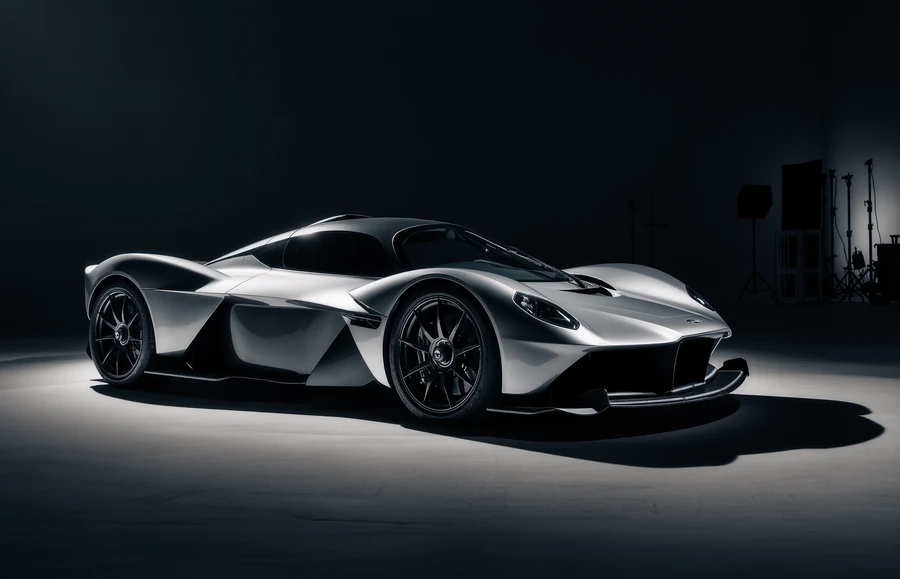
A hybrid hypercar combines a high performance combustion engine with one or more electric motors and a battery. The electric side adds instant torque, fills the gaps in the engine’s response and recovers energy under braking. In this class the aim is performance first and economy second: the hybrid system makes an already extreme car quicker, not more frugal. This guide explains how the systems work, what they cost in weight and complexity, which cars defined the segment, and where you can drive them in a sim.
The Driving Force: Why Hybrid?
For hypercar manufacturers, hybridization isn’t just a nod to environmental concerns (though that’s a welcome bonus). It’s a performance enhancer. Electric motors deliver their maximum torque almost instantly, filling in the power gaps of a conventional engine and eliminating turbo-lag. This means quicker acceleration, better throttle response, and a more electrifying driving experience. Plus, there’s the added benefit of improved fuel efficiency, or at least, a way to deliver eye-watering power without completely draining your fuel tank in minutes.
Let’s be honest, hypercars have always been about pushing limits. But hybrid technology has truly taken that ambition to another level. We’re talking about statistics that would have been unimaginable just a decade or two ago.
Instant Torque: The Electric Punch
One of the most noticeable benefits of hybrid powertrains in hypercars is the immediate availability of torque.
Eliminating Lag
Traditional internal combustion engines, especially forced-induction ones, suffer from a slight delay between pressing the accelerator and feeling the full power, ‘turbo lag’. Electric motors, however, provide torque instantaneously. The car responds as soon as you press the throttle.
Launch and low speed acceleration
For acceleration, instant torque matters most at low speed, where a combustion engine is furthest from its power peak. It helps these cars launch harder than comparable combustion cars, as long as the tyres can take the torque.
Power Density: More Horses Per Pound
Hybrid systems, particularly those using advanced battery and motor technology, offer an impressive power-to-weight ratio.
Compact Powerhouses
Electric motors are generally more compact and can be integrated into the drivetrain in various ways without adding an exorbitant amount of weight, especially when compared to the power they contribute. This allows engineers to extract more horsepower from the overall package.
Strategic Placement
Batteries and motors can also be strategically placed to optimize weight distribution, further improving handling and cornering dynamics, crucial for a car designed to go ridiculously fast.
Engineering Wonders: How It All Comes Together
Building a hybrid hypercar isn’t just about bolting an electric motor to an engine. It’s a complex dance of precision engineering, advanced materials, and ingenious software.
The Powertrain: A Symphony of Power Sources
The heart of any hybrid hypercar is its intricate powertrain, blending gasoline and electric propulsion.
Internal Combustion Engines (ICE)
Often, these are bespoke units, frequently V6s, V8s, or even V12s, designed for high revs and immense power output. They incorporate exotic materials and advanced combustion techniques to maximize efficiency and power. For instance, the engine in some hybrid hypercars might be derived from racing programs, emphasizing durability under extreme stress.
Electric Motors
There can be one to four electric motors in a hybrid hypercar. They serve various roles: providing direct drive to the wheels, acting as a generator, or even assisting the ICE. Their placement can vary from being integrated into the gearbox to driving the front or rear axles independently, enabling sophisticated torque vectoring.
Energy Storage: The Battery Pack
The battery is the linchpin of the electric system, demanding a balance between power, capacity, and weight.
High-Performance Batteries
Unlike the batteries in a typical EV, which prioritize range, hypercar batteries are designed for rapid discharge and recharge cycles. They need to deliver massive bursts of power instantly and then recover quickly, often through regenerative braking. This typically means smaller, lighter battery packs optimized for power density.
Thermal Management
Controlling the temperature of these high-performance batteries is critical. Sophisticated liquid cooling systems are employed to prevent overheating during aggressive driving and to maintain optimal operating temperatures for peak efficiency and longevity.
Advanced Control Systems: The Brains Behind the Brawn
The seamless integration of the ICE, electric motors, and battery demands highly sophisticated electronic control units (ECUs).
Power Allocation
These ECUs constantly monitor driver inputs, vehicle speed, gear selection, and battery state of charge to determine the optimal power delivery from each source. This ensures maximum performance, efficiency, or a blend of both, depending on the driving mode.
Regenerative Braking
A key component of hybrid efficiency, regenerative braking allows the electric motors to act as generators during deceleration, recovering kinetic energy and storing it back in the battery. This not only extends the electric range but also reduces wear on traditional brakes.
Beyond Speed: The Benefits and Challenges
While speed is often the headline, hybrid hypercars offer a deeper array of advantages, along with their own set of hurdles.
Advantages: More Than Just Bragging Rights
The benefits extend beyond raw numbers, impacting the entire driving experience.
Enhanced Driveability
The electric assist smooths out power delivery, making these very powerful cars easier to manage at lower speeds and in complex driving situations. The instant torque makes low-speed maneuvering and quick bursts of acceleration effortless.
Improved Efficiency (Relatively Speaking)
While no hypercar is “economical,” hybridization significantly improves fuel efficiency compared to a purely combustion-engined car with similar performance. This means fewer pit stops if you’re on a road trip, or at least, less frequent visits to the petrol station.
Reduced Emissions (Locally)
Many hybrid hypercars offer a limited “EV mode” where they can run solely on electric power for a few miles. This allows for quiet, zero-emission driving in urban areas, a feature becoming increasingly relevant with stricter emission regulations.
Torque Vectoring Opportunities
With electric motors often driving individual wheels, engineers can implement advanced torque vectoring systems. This actively distributes power to individual wheels to improve cornering stability and agility, effectively “pulling” the car through a turn.
Challenges: Pushing the Limits Has Its Costs
Innovation always comes with its own set of complexities.
Weight Management
Adding electric motors, batteries, and associated cooling systems inevitably adds weight. Engineers spend countless hours using lightweight materials like carbon fiber, titanium, and magnesium to offset this increase, but it remains a constant battle to maintain a favorable power-to-weight ratio.
Cost and Complexity
The intricate engineering, advanced materials, and bespoke systems involved in hybrid hypercars make them very expensive to develop and produce. This is reflected in their multi-million-dollar price tags.
Heat Management
Managing the heat generated by both a high-output internal combustion engine and high-discharge electric motors and batteries is a monumental task. This requires sophisticated cooling systems that add weight and complexity.
Battery Longevity and Performance Degradation
While significant advancements have been made, battery life and performance degradation over time are still factors, especially for components subjected to such extreme usage cycles. Replacing a hypercar battery pack can be a remarkably expensive undertaking.
The Future Trajectory: What’s Next for Hybrid Hypercars?
Hybrid hypercars are not a fleeting trend; they are a fundamental step in the evolution of extreme performance vehicles. The journey is far from over.
Advancements in Battery Technology
This is arguably the most critical area for future development.
Solid-State Batteries
These next-generation batteries promise higher energy density, faster charging times, and increased safety compared to current lithium-ion technology. If successfully integrated into hypercars, they could significantly reduce weight, increase electric range, and further boost performance.
Ultra-Capacitors and Advanced Cells
Exploration into ultra-capacitors and other advanced cell chemistries could offer solutions for even quicker power delivery and recovery, pushing the boundaries of acceleration and regenerative braking.
Motor Miniaturization and Efficiency
As electric motor technology advances, we can expect smaller, lighter, and even more powerful units.
Axial Flux Motors
These motors, known for their compact design and high power density, are already being explored in some applications and could become more prevalent in hypercars, freeing up packaging space.
Greater Efficiency
Improvements in motor design and materials will further reduce energy losses, translating to more power at the wheels and better overall system efficiency.
Software and AI Integration
The intelligence behind the powertrain will become even more sophisticated.
Predictive Energy Management
Advanced AI could learn driver behavior and anticipate road conditions to optimize power delivery and battery usage in real-time, maximizing performance or efficiency as needed. This could even incorporate external data like GPS and traffic information.
Adaptive Aerodynamics
Integration with active aerodynamic systems will become even more seamless, using electric power to dynamically adjust wings, diffusers, and other elements for optimal downforce or minimal drag depending on the situation.
Hydrogen Fuel Cell Hybrids?
While still speculative for hypercars, the idea of combining fuel cells with electric motors presents an intriguing alternative for zero-emission performance without range anxiety. Imagine a hypercar that runs on hydrogen, generating electricity on demand, effectively acting as an onboard power plant for the electric motors. The challenges are significant, packaging, hydrogen storage, and infrastructure, but the potential is there.
The hybrid hypercars that defined the segment
To illustrate the point, it’s worth highlighting some of the pioneers and current leaders in this space. These are the cars that have shaped, and continue to shape, the segment.
The Original Holy Trinity (2013-2015)
Around 2013, three manufacturers simultaneously unveiled hybrid hypercars that redefined the segment.
McLaren P1
The P1 paired a twin turbo V8 with an electric motor for a combined 916 PS (903 bhp), according to McLaren, and focused on track driving with active aerodynamics. McLaren built 375. Its electric only range was short, and the hybrid system was there mainly for performance.
Porsche 918 Spyder
Porsche took a different approach. A 4.6 litre naturally aspirated V8 with 608 hp works with two electric motors, one driving the rear axle and one the front wheels, for a system output of 652 kW (887 hp). In September 2013 the 918 became the first road approved car to lap the Nordschleife in under seven minutes, in 6:57. Porsche built 918 cars; the last left the line in June 2015.
Ferrari LaFerrari
Ferrari’s entry combined an 800 hp naturally aspirated V12 with a 120 kW electric motor in its F1 derived HY-KERS system, for a total of 963 hp. Ferrari built 499 coupés.
The Modern Maestros (2018-Present)
The next wave has pushed boundaries even further.
Mercedes-AMG One
The Mercedes-AMG ONE brings a Formula 1 derived powertrain to the road: a 1.6 litre turbocharged V6 with four electric motors, on the turbocharger, the crankshaft and the front axle, for a system output of 1,063 hp. Mercedes announced a run of 275 cars.
Aston Martin Valkyrie
The Valkyrie came from a technical partnership between Aston Martin and Red Bull Advanced Technologies, with Adrian Newey, then Red Bull Racing’s chief technical officer, working closely with Cosworth on the engine. The Cosworth built 6.5 litre naturally aspirated V12 revs to 11,100 rpm, and Aston Martin quoted a certified 1,160 bhp for the full hybrid system in 2019. Its shape is dictated by aerodynamics, which makes it look like a Le Mans prototype for the road.
Koenigsegg Regera
The Regera is a hybrid of a different kind. Koenigsegg Direct Drive replaces the gearbox, so the twin turbo V8 drives the rear axle directly, supported by three axial flux electric motors, two at the rear wheels and one on the crankshaft. Combined output is 1,500 hp, of which 700 hp can come from the electric motors.
These cars also serve as test beds: technology developed for them, from battery cooling to torque vectoring, reaches more affordable performance cars later.
Where you can drive them in a sim
The hybrid hypercars above are well represented in racing games, so you can compare their character on a virtual track.
- Forza Motorsport (2023) lists the 2013 McLaren P1, 2013 Ferrari LaFerrari and 2014 Porsche 918 Spyder in its Modern Exotic GT division and the 2021 Mercedes-AMG ONE among its Modern Hypercars, according to the launch car list. The track only 2015 McLaren P1 GTR is a Modern Factory Racecar.
- Gran Turismo 7 includes the Ferrari LaFerrari ’13, Porsche 918 Spyder ’13, McLaren P1 GTR ’16 and Aston Martin Valkyrie ’21 in its official car list.
- Assetto Corsa has the Porsche 918 Spyder in the official Porsche Pack I DLC.
In a sim the hybrid system shows up mainly as torque out of slow corners, which makes throttle control on exit the first skill to learn, and as energy that may be limited per lap in cars that model it. How much downforce the track versions use, and what it costs on the straights, is explained in downforce against drag. For the brands and the fully electric cars, see hypercar brands.
Fully electric, and the parts around the powertrain
The step beyond the hybrid is the fully electric hypercar, and it changes the engineering questions rather than the goals. Without an engine, the battery becomes both the energy store and a large structural mass. Mounted low in the chassis, it lowers the centre of gravity, and with several motors the torque vectoring described above can act on each wheel independently. The trade is that a battery large enough for sustained track use weighs more than a hybrid pack, and its cooling now carries the whole thermal load.
Production examples of the approach include the Rimac Nevera (the production car that followed the C_Two concept), the Pininfarina Battista and the Lotus Evija.
Materials
Weight is fought with the same materials on hybrid and electric cars. Carbon fibre monocoques carry the structure and provide the torsional rigidity that precise handling needs. Fibre orientation and layup are tuned so panels can be thinner without losing strength, 3D printing is used for complex internal parts that cannot be moulded conventionally, and aluminium, magnesium and titanium remain where their properties suit, for example in suspension parts and exhausts.
Software
Software increasingly defines how the car behaves. Over-the-air updates can change driving modes and fix faults without a workshop visit, and recorded telemetry lets owners and manufacturers analyse a track session and diagnose the car remotely. Driver profiles store throttle response, suspension and aero settings per person. For sim racers this is familiar ground: the data a hypercar records on track is the same kind explained in reading telemetry.
FAQs
What are hybrid hypercars?
Hybrid hypercars are high-performance vehicles that combine a traditional internal combustion engine with an electric motor and battery system. This hybrid technology allows for increased power and efficiency, resulting in impressive performance and reduced emissions.What are the benefits of hybrid hypercars?
Hybrid hypercars offer several benefits, including improved fuel efficiency, reduced emissions, and enhanced performance. The combination of an internal combustion engine and electric motor allows for increased power output while also minimizing environmental impact.Which companies produce hybrid hypercars?
Ferrari, Porsche, McLaren, Mercedes-AMG, Aston Martin and Koenigsegg have all built hybrid hypercars. Their hybrid systems are designed mainly for performance, although they also allow short distances on electric power in some models.What are some examples of hybrid hypercars?
Examples of hybrid hypercars include the Ferrari LaFerrari, Porsche 918 Spyder, McLaren P1, and Aston Martin Valkyrie. These vehicles showcase the cutting-edge technology and performance capabilities of hybrid hypercars, setting new standards for the automotive industry.Are hybrid hypercars the future of high-performance vehicles?
Hybrid systems are now common in the top class, and fully electric hypercars such as the Rimac Nevera have joined them. Which approach will dominate depends on battery development, regulations and what buyers want, so the answer is still open.Sources
- McLaren P1 specification
- Porsche Newsroom: Porsche 918 Spyder press kit
- Porsche Newsroom: number 918 rolls out of the manufactory
- Ferrari: LaFerrari (2013)
- Ferrari magazine: the LaFerrari Aperta
- Mercedes-AMG ONE
- Mercedes-Benz Media: production of the Mercedes-AMG ONE has started
- Aston Martin: Valkyrie, the ultimate hybrid powertrain
- Aston Martin: Valkyrie V12 turns the hypercar engine up to 11,100
- Koenigsegg Regera
- Forza Motorsport initial car list (forza.net)
- Gran Turismo 7 car list: Ferrari LaFerrari 13
- Gran Turismo 7 car list: Porsche 918 Spyder 13
- Gran Turismo 7 car list: McLaren P1 GTR 16
- Gran Turismo 7 car list: Aston Martin Valkyrie 21
- Assetto Corsa Porsche Pack I on Steam
More from Hypercars
Hypercars as an Investment: Value, Risk and Running Costs
What auction results show about hypercar values, why prices for one model differ so widely, what ownership costs and the risks. Not investment advice.
Hypercar Brands: Bugatti, Koenigsegg, Pagani and More
The main hypercar brands and models, from Bugatti and Koenigsegg to McLaren, Ferrari, Rimac and Pagani, with makers’ figures and where to drive…
Driving a Hypercar in a Simulator: Sims, Rigs, Centres
How to drive a hypercar in a simulator: which sims carry hypercars, from Le Mans Ultimate to iRacing, what hardware matters and where to try one.