Learning a new track in three structured sessions
Learning a new circuit in three structured sessions instead of ten unstructured ones, with what each session is for and how to know it worked.
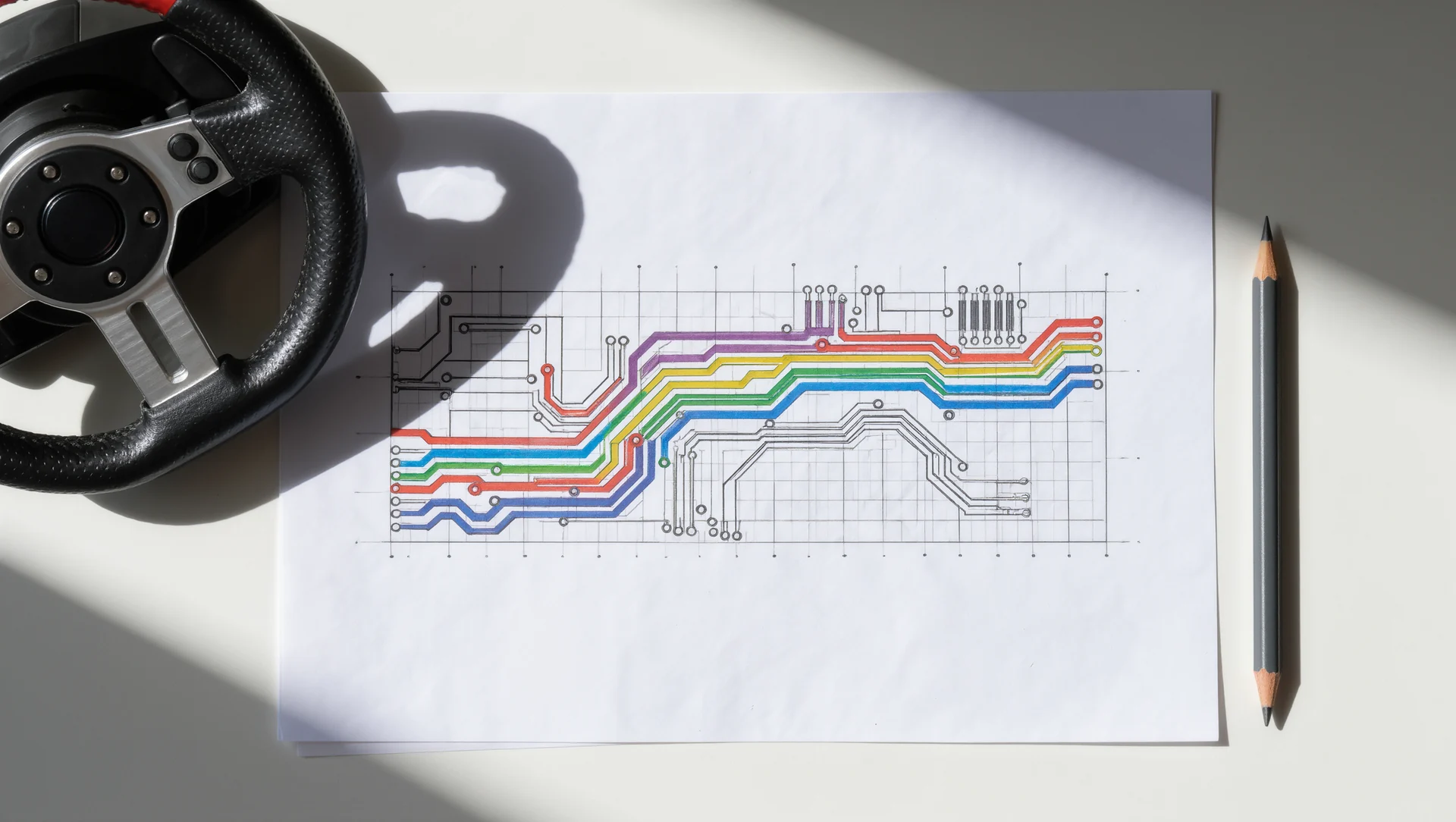
Most drivers learn a circuit by driving it until it feels familiar, which takes about ten hours and produces references they cannot explain. Three structured sessions of forty minutes produce better references and let you say afterwards what you actually learned.
Why structure beats repetition
The scale of the problem justifies a method. iRacing publishes more than 150 tracks with over 425 configurations, and a driver who needs ten hours per circuit is committing to 1,500 hours to see the catalogue once. Circuits also differ enormously: a 5.4 km layout with 22 corners is a different learning task from a 2 km oval.
Unstructured repetition also teaches the wrong thing. Driving until it feels familiar builds a rhythm, and a rhythm collapses in traffic, in the wet and at a different fuel load. Structure builds references instead, and references survive.
The session weights in the rulebook argue for it too. Open practice weighs 0.50 against a race at 1.00 when incidents are averaged into a safety rating, so learning a circuit in practice costs half what learning it in races costs, and learning it in a race costs other people as well.
Session one: the map
Drive at 70 per cent for twenty minutes with one job: name every corner and note what follows it. Straight, corner, or the start of a sequence, because that determines the apex you will want. Do not chase lap time and do not touch the setup.
Then drive twenty minutes finding one fixed reference per corner, on the track surface rather than on boards. A seam, a patch, a change in kerb colour or the end of a barrier. Write them down. Twelve corners is twelve lines of notes and takes five minutes to record.
The test that session one worked: you can describe the lap out loud, in order, without driving it. If you cannot, you have driven the circuit but not learned it.
| Session | Job | Test that it worked |
|---|---|---|
| One, 40 minutes | map the corners and fix references | describe the lap out loud, in order |
| Two, 40 minutes | find entry and exit limits per corner | best lap and best sectors from the same lap |
| Three, 40 minutes | race fuel, race pace, off line practice | twenty laps within two tenths |
| Total | two hours | against about ten hours of unstructured driving |
Session two: the limits
Take each corner individually and find where it stops working. Enter one km/h faster each time until the car will not hold the line, then note the speed. This is boring and it is the session that produces the actual pace, because you now know the ceiling rather than guessing beneath it.
Then do the same for the exits: how early can full throttle come without running out of road. Corner exit speed is worth more than entry speed wherever a straight follows, so this half of the session is where the lap time is.
The test that session two worked: your lap time and your best sector times come from the same lap rather than from three different ones. If the theoretical best is far under your actual best, you have found limits but not yet strung them together.
Session three: the race version
Run twenty laps with a full fuel load at 95 per cent. The circuit you learned in session two was a qualifying circuit; this is the one you will actually race on, and the references move because the car is heavier and the tyres change over the run.
Then run five laps deliberately off line, on the part of the track you would use to overtake or to avoid a spinning car. A driver who has never driven the inside line into turn 4 will not attempt a pass there, and that is a self imposed limit rather than a real one.
The test that session three worked: your twenty laps sit within two tenths of each other. That number, not the fast lap, is what decides races, and it is the honest measure of whether you know the circuit.
Sources
Frequently asked questions
Can I skip session one if I have seen the circuit on video?
No. Watching builds recognition, not references, and recognition fails the moment a car blocks your view of the landmark you were using.
How long does this take in total?
About two hours against roughly ten of unstructured driving, and the references are explainable afterwards rather than felt.
Should I use a setup while learning?
Use the default. A setup you do not understand changes the limits you are trying to find, and you will learn the setup instead of the circuit.
Why practise off the racing line?
Because that is where overtakes and avoidances happen. A line you have never driven is a line you will not use when it matters.
More in Driving Technique

Updates that break your mods, and how to survive them
Updates that break your mods and your settings: why it happens, how to survive it and the routine that turns a lost weekend into ten minutes.
Setup work in the right order: one change at a time
Setup work in the right order: why one change at a time is not pedantry, which adjustment comes first and how to know when to stop.
Tyre pressure: the fastest free lap time in the game
Tyre pressure is the fastest free lap time available: what it actually changes, the workflow that finds the right figure and why the answer moves during a race.