Tyre pressure: the fastest free lap time in the game
Tyre pressure is the fastest free lap time available: what it actually changes, the workflow that finds the right figure and why the answer moves during a race.
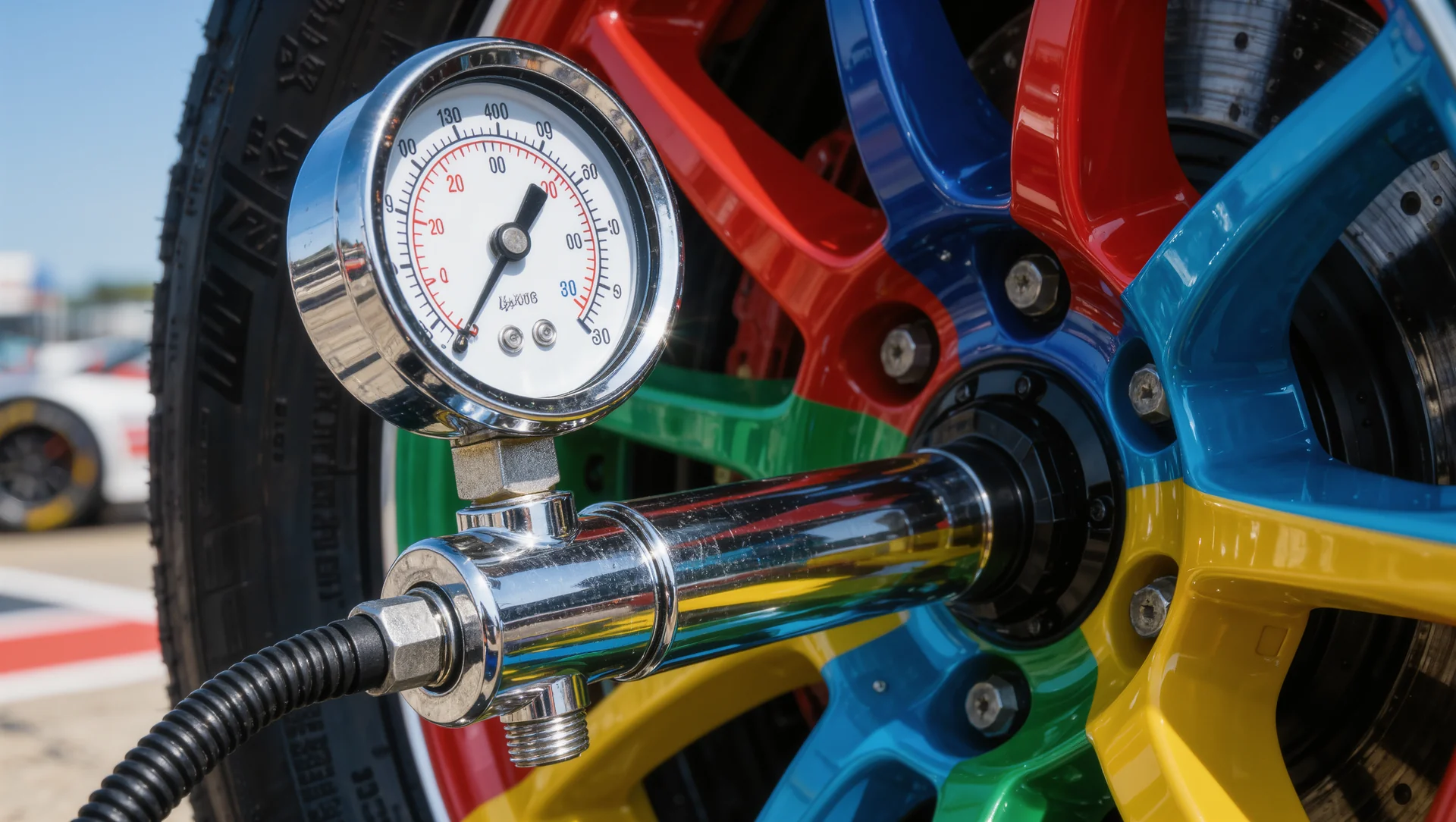
The official setup guide calls tyre pressure probably the most powerful adjustment you can make, because tyre performance affects every part of a lap. It is also free, takes one number to change and is the single adjustment most drivers never test properly.
What pressure actually changes
It changes the sidewall, not just the contact patch. The guide states it plainly: increasing pressure stiffens the sidewall, which makes the tyre more responsive to driver inputs, particularly during the initial turn in. The compromise is that as the tyre becomes stiffer it loses compliance with the road, so bumps, kerbs and violent inputs may result in a loss of traction.
Lowering pressure does the reverse. A softer sidewall improves compliance and generally improves grip, and the downside is that the car becomes less responsive to inputs and feels sluggish. Those two paragraphs are the whole trade, and everything else is applying them to a specific corner.
Load decides which end of the trade you want. The guide notes that ideal pressure is determined by the load the tyre carries: higher pressures handle higher loads better, so a heavier car, a banked turn or the compression at the base of a hill retains more grip with higher pressures, while lighter loads tend to give better grip with lower pressures.
| Change | Effect | Compromise |
|---|---|---|
| Higher pressure | stiffer sidewall, more responsive at turn in | less compliance over bumps and kerbs |
| Lower pressure | softer sidewall, better compliance and grip | less responsive, feels sluggish |
| Higher load | higher pressures retain more grip | |
| Lower load | lower pressures give better grip | |
| Target tread spread | about 10 degrees, plus or minus 5 | inner edge hottest |
The three readings that matter
Cold pressure is the inflation pressure in psi at ambient temperature in the pits, before the tyre has been run. Last hot pressure is what is recorded when you exit the car or pull into your pit stall, whichever comes first, and the guide notes that pressure rises with temperature during a run and generally stabilises after a few laps.
Last temps O M I are the surface temperatures at the outer edge, the middle and the inner edge. The guide gives the target: a differential of about 10 degrees, plus or minus 5, from outer to inner edge, with the inner edge being the hottest.
Together those three answer different questions. Hot pressure tells you whether your cold setting was right, the O M I spread tells you whether the camber is right, and the relationship between them tells you whether the problem you feel is pressure or geometry.
The workflow that finds the number
Set cold, run five laps at race pace, read hot. Because pressure stabilises after a few laps, five is enough to see where it settles and short enough to repeat several times in a session. Then adjust the cold pressure by the difference between the hot pressure you got and the one you want.
Change one corner of the car at a time when diagnosing. Raising all four pressures tells you the car changed; raising the fronts tells you which end caused what. Front and rear pressures move the balance in opposite directions, and moving both hides the effect.
Then repeat the whole thing with a full fuel tank. Load determines the ideal pressure, and a car carrying 60 kg more fuel is a car with different ideal pressures, which is why a qualifying setup and a race setup differ here before they differ anywhere else.
Why the answer moves during a race
Fuel burns off, so the load falls continuously and the ideal pressure falls with it. A setting that is right on lap five is high by lap thirty five, which is one reason cars understeer late in a stint.
Track temperature moves too, and it moves the hot pressure without you touching anything. An evening race that starts at 30 degrees of track temperature and finishes at 20 is a race where the same cold pressure produces a different hot pressure at the end.
Work the numbers once and the setting follows. A 40 lap stint burning 1.5 kg of fuel per lap loses 60 kg between the first lap and the last, which is 15 kg per corner of the car and typically 1 to 2 psi of ideal pressure. Track temperature moving 10 degrees is worth roughly another 2 psi of hot pressure, so across a race the target moves by about 3 psi without you touching anything.
The practical answer is to set pressures for the middle of the stint rather than the start. A car that is slightly nervous on lap two and correct from lap ten is faster over forty laps than one that is perfect on lap two and pushing from lap twenty.
Sources
Frequently asked questions
Is lower pressure always more grip?
Under light loads usually, but the car becomes less responsive. Under heavy loads higher pressures retain more grip, which is why the answer depends on the corner.
How many laps before I read hot pressures?
Five. The guide notes that pressure generally stabilises after a few laps, and five is long enough to see it settle.
Should I set pressures for the start or the middle of a stint?
The middle. Fuel burns off and the load falls, so a setting optimal on lap two is high by lap thirty.
Front and rear together or separately?
Separately when diagnosing. They move the balance in opposite directions and changing both hides which end did what.
More in Setup & Telemetry
Catching oversteer before the car decides for you
Catching oversteer before the car decides for you: the timing, why most catches arrive late and the drill that shortens your reaction.
Understeer: driver, setup or tyre temperature
Understeer diagnosed properly: driver, setup or tyre temperature, and the order in which to rule each one out before touching the car.

Consistency training: the boring drill that wins races
Consistency training: the unglamorous drill that wins races, why the fastest lap is the wrong target and how to measure progress in a way that does not lie.