GT3 Esports: Platforms, Teams and the Link to Real Racing
An overview of GT3 racing in esports, with platforms, teams and series as of 18 October 2026.

GT3 esports has grown because it offers an accessible and still very competitive version of real motorsport. It is a serious proving ground for driving skill, and it brings together dedicated sim racers, real racing drivers and car manufacturers around cars that fans also see on real circuits.
The appeal of GT3 cars in virtual racing isn’t hard to grasp once you’ve spent some time behind the wheel, or even just watching an event. These are high-performance machines with a familiar, yet exotic, feel. They’re not Formula 1 cars that demand otherworldly precision, nor are they basic road cars. They sit between the two, which makes them engaging for drivers and spectators alike.
Why GT3 Cars are a Perfect Fit
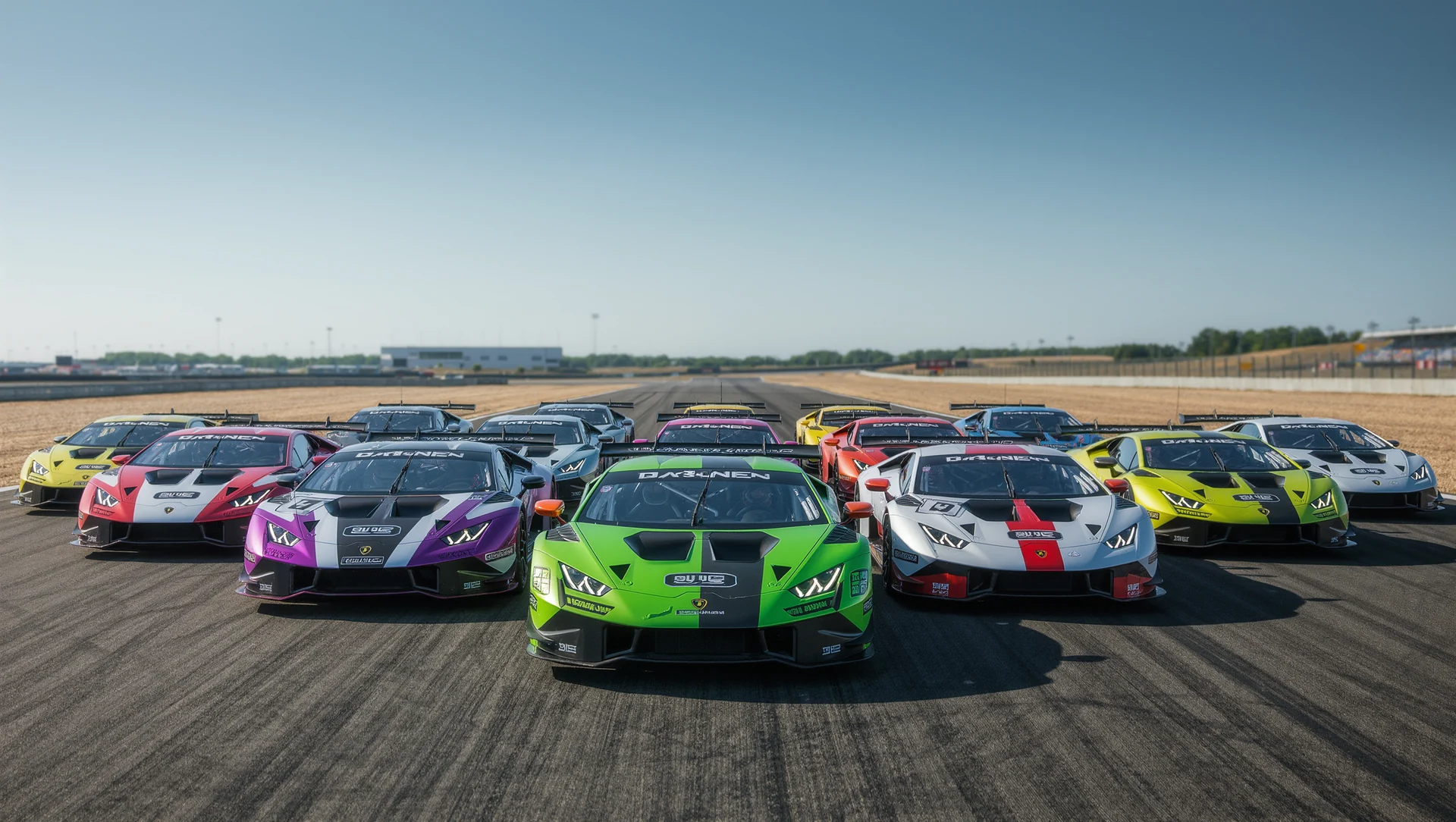
GT3 cars are purpose-built racing machines, but they’re also based on production models, making them inherently relatable. Think Porsche 911 GT3 R, Lamborghini Huracán GT3 EVO2, or BMW M4 GT3. They have powerful engines, sophisticated aerodynamics, and advanced suspensions. Crucially, they also incorporate a decent level of driver aids like ABS and traction control, which are tunable. This means a wider range of drivers can learn to handle them competently, but mastering them still takes a great deal of skill. This balance broadens the talent pool significantly.
A Level Playing Field
One of the biggest draws of GT3 in esports is the concept of a “Balance of Performance” (BoP). In real-world GT3 racing, BoP is applied to different car models to ensure competitive parity, despite inherent differences in engine power, weight, and aero efficiency. Sims apply a balance of performance of their own to their GT3 cars and adjust it in updates; how closely it follows the real series differs from title to title. The aim is the same as on track: the car should matter less than the driver, the strategy and the execution, which makes for close racing. In practice some cars are still preferred at some tracks, and drivers follow BoP changes closely.
Variety and Realism
Beyond performance, the sheer variety of GT3 cars available in simulators like iRacing, Assetto Corsa Competizione, Le Mans Ultimate and rFactor 2 adds another layer of appeal. Each car has its own distinct character, handling quirks, and sound profile. Drivers can specialize in a particular model or switch between them, keeping things fresh and challenging. The highly detailed virtual tracks, laser-scanned for accuracy, coupled with realistic physics models, bring the experience close to real GT racing.
The Ecosystem: Platforms, Teams, and Drivers
The growth of GT3 esports isn’t just about the cars; it’s about the entire ecosystem built around them. This includes the dedicated simulation platforms, the professional teams and organizations, and the diverse range of drivers who populate the grids. It’s a multifaceted environment that’s constantly evolving and professionalizing.
Leading Simulation Platforms
When we talk about GT3 esports, a few key platforms instantly come to mind:
- iRacing: A subscription platform built around scheduled online racing, with a licence ladder and separate ratings for pace and clean driving. Its GT3 series and special events such as its virtual 24 hour races draw large fields, and championship series such as the Porsche Esports Supercup also run on it. See what the ratings reward.
- Assetto Corsa Competizione (ACC): The official GT World Challenge game, produced under licence from SRO and focused on GT3 and GT4 cars and the circuits of that championship. Its physics, tyre model and endurance features are tailored to GT racing, which has made it a common platform for GT3 leagues; see the first ten hours in ACC.
- rFactor 2 and Le Mans Ultimate: rFactor 2 is valued for its physics and tyre model and remains on sale, but Studio 397’s newer Le Mans Ultimate, the official game of the FIA World Endurance Championship and the 24 Hours of Le Mans, now carries the studio’s official endurance racing, including an LMGT3 class. It was released in full on 22 July 2025 after Early Access from February 2024. See rFactor 2 in 2026 and where Le Mans Ultimate stands.
Each platform cultivates its own community and often hosts different official and unofficial esports leagues, giving drivers and teams choices for where to compete.
Professional Esports Teams
As in real motorsport, professional esports teams provide structure, coaching, hardware and media support to top sim drivers, and many are backed by real brands. Car manufacturers run official programmes: BMW M Motorsport, for example, named BMW M Team Redline Racing Bulls, BMW M Team BS+COMPETITION and BMW M Team MOUZ as its official sim racing teams for the 2025 Esports World Cup, for which the teams qualified through an online season on the Rennsport platform. VRS Coanda Simsport is another well known name in GT racing. Some teams named in older articles race mainly in other disciplines: Mercedes-AMG Petronas, for instance, is one of the ten Formula 1 teams in the F1 Sim Racing World Championship. Max Verstappen’s Team Redline was renamed Verstappen Sim Racing in March 2026. How a team is built is covered in founding a team, and what sponsors pay for in sponsoring a sim team.
The Driver Spectrum: Pro to Amateur
GT3 esports appeals across the whole driver spectrum. At the top, elite sim racers spend many hours on practice, data analysis and fitness and compete for prize money and recognition; the sober figures are on our prize money page. Some real racing drivers take part as well. Max Verstappen, for example, won the GTD class of the 2024 virtual 24 Hours of Daytona on iRacing for Team Redline, driving a Mercedes-AMG GT3.
Below this elite tier, there’s a vast community of highly skilled amateur drivers, semi-pros, and casual enthusiasts who participate in countless leagues, endurance races, and public sessions. The ability for anyone, regardless of their financial background or physical location, to compete in a virtual GT3 race weekend against drivers of varying skill levels is a powerful equalizer and a major driver of engagement. This accessibility fosters a strong sense of community and provides a clear pathway for talent to rise through the ranks.
Bridging the Gap: Real-World Crossover
One of the most compelling aspects of GT3 esports is its strong connection to real-world motorsport. It’s not just a parallel universe; it’s a legitimate pathway and training ground.
Sim to Reality: A Proving Ground
The skills practised in GT3 esports, car control, racecraft, strategy and working with engineers and teammates, carry over to real racing to a degree. Programmes like Nissan’s GT Academy, which Jann Mardenborough won in 2011 before racing professionally, showed that a sim can be the start of a real career, and GT cars have been a common first step for such drivers. Today many young drivers use sims alongside karting and testing. The financial barrier to sim racing is far lower than to real racing, but a sim does not replace real track time; see from sim to seat and what transfers to a real car.
Real-World Pros in the Virtual Arena
Real racing drivers use GT3 sims for practice, to learn new tracks or simply to race in the off season. Their presence brings attention to the events, and results such as Verstappen’s class win at the virtual Daytona 24 Hours show that the best sim racers and real professionals can share a grid.
Manufacturer Involvement
Car manufacturers license their GT3 cars to the sims, and several run their own esports programmes. BMW M Motorsport has official sim racing teams, as described above, and Porsche runs the Porsche Esports Supercup on iRacing, a one make championship rather than a GT3 series, with a total prize pot of 200,000 dollars in 2025. For a manufacturer this is marketing and talent scouting at a far lower cost than a real racing programme.
The Spectacle: Broadcasts and Events
The growth of GT3 esports is fundamentally tied to its ability to be a compelling spectator sport. It’s not just about what happens on the virtual track, but how it’s presented to a global audience.
Professional Production Values
Modern GT3 esports broadcasts have come a very long way from grainy Twitch streams with amateur commentary. Major events now feature professional commentators, dedicated camera operators (using virtual cameras, of course), sophisticated graphics packages, real-time data overlays, and engaging replay functions. The production quality mirrors that of real-world motorsport, making it accessible and exciting for both seasoned fans and newcomers. Multi-angle shots, onboard cameras, pit lane views, and even drone-like flyovers contribute to a dynamic viewing experience. The goal is to tell a compelling story, to highlight the drama and the skill, and to make the competition as engaging as possible.
High-Stakes Competitions
Top GT3 esports events have included official championships run by SRO on Assetto Corsa Competizione, launched as the GT World Challenge Esports championships in 2021, iRacing special events such as its virtual 24 hour races, and manufacturer backed series. Calendars, formats and prize money change from season to season, so check the organiser’s current rules before planning an entry. The formats often mirror real endurance races or sprint championships, which adds strategic depth.
Community Engagement and Growth
Beyond the top-tier professional events, thousands of community-run leagues and endurance races take place annually. These provide opportunities for drivers of all skill levels to compete and for a broader audience to spectate. Platforms like Twitch and YouTube are crucial for this, allowing individuals and smaller organizations to stream their races and build their own communities. The interactive nature of live streaming, with chat functions and viewer polls, fosters a strong sense of community and allows fans to directly engage with drivers and commentators. Esports inherently brings an interactive element that traditional sports sometimes lack, building a more direct relationship between competitor and fan. This grassroots activity is vital for talent development and for keeping the entire ecosystem vibrant and healthy.
The Future Trajectory of GT3 Esports
Looking ahead, the trajectory for GT3 esports seems firmly pointed upwards. The foundations are strong, and several trends indicate continued growth and innovation.
Technological Advancements
The underlying technology will only continue to improve. Expect even more realistic physics models, further enhancements to graphic fidelity (think ray tracing becoming standard), and potentially greater integration of virtual reality (VR) or even mixed reality (MR) for an even more immersive driving and viewing experience. Haptic feedback systems in steering wheels and sim rigs are becoming more advanced, offering a richer sense of what the car is doing. As processing power increases and internet connectivity improves globally, the barriers to entry will continue to lower, and the gap between sim and reality will further shrink. Imagine AI-driven spotters that learn from your driving style or dynamic weather systems that truly replicate real-world unpredictability.
Increased Professionalization and Investment
The trend of professionalism we’ve already discussed is set to accelerate. More real-world motorsport teams and manufacturers will likely establish dedicated esports divisions. This means more structured career paths for sim drivers, increased prize money, and higher production values for broadcasts. Whether sponsor and media money grows depends on audiences, which vary widely from event to event. We might even see integrated championship structures that directly feed into real-world opportunities, like a more formalized “sim-to-pro” ladder.
Broader Audience Reach
As esports in general gains mainstream recognition, GT3 esports will ride that wave. Accessibility will be key here. Efforts to simplify the viewing experience for newcomers, explain complex racing strategies, and highlight compelling driver storylines will help attract a broader, more casual audience. Partnerships with traditional sports broadcasters and mainstream media outlets will play a crucial role in bringing virtual racing to a wider demographic. The appeal of intense, close-quarters racing is universal, and GT3 cars offer that in spades, making it a relatively easy sell once people tune in. The challenge will be in converting passive viewers into engaged fans, and perhaps even into participants, further fueling the ecosystem.
GT3 esports combines accessible but deep racing with a direct link to real GT championships and car manufacturers. That link, more than any single event, is why it has lasted.
FAQs
What is GT3 esports?
GT3 esports is competitive online racing with GT3 class cars in racing simulators, from public races and community leagues up to official championships run by series organisers and car manufacturers.How does GT3 esports work?
Drivers race GT3 cars in sims such as Assetto Corsa Competizione, iRacing and Le Mans Ultimate. Events run as rated public races, leagues, championships and one-off endurance races; qualifying sets the grid and the race is decided by finishing position, as in real racing.What are the benefits of participating in GT3 esports?
Participating in GT3 esports can provide players with the opportunity to showcase their racing skills, compete against other talented players, and potentially win prizes. It also allows players to connect with a community of like-minded individuals who share a passion for virtual racing.How can I get involved in GT3 esports?
To get involved in GT3 esports, you can start by practicing and improving your racing skills in popular racing simulation games. You can also look for online communities, leagues, or tournaments that host GT3 esports events and sign up to participate. Additionally, some esports organizations and racing teams may recruit talented virtual racers for their competitive teams.What are some popular GT3 esports events or leagues?
Examples are the official esports championships SRO has run on Assetto Corsa Competizione, iRacing special events such as its virtual 24 hour races, manufacturer programmes such as those of BMW M Motorsport, and many community leagues on every major platform. Names and formats change from season to season. These events often feature top virtual racing talent and provide an exciting platform for competitive GT3 racing.Sources
- Assetto Corsa Competizione on Steam (official GT World Challenge game)
- Le Mans Ultimate on Steam
- GT World Challenge, SRO Esports launches global championships for sim drivers and teams
- BMW Group, the virtual BMW M Motorsport teams prepare for the Esports World Cup (4 July 2025)
- Verstappen.com, Max wins the GTD class in the virtual 24 Hours of Daytona (21 January 2024)
- Verstappen.com, Team Redline rebrands as Verstappen Sim Racing (23 March 2026)
- Formula 1, everything you need to know about the 2025 F1 Sim Racing World Championship
- Porsche, 2025 Porsche Esports Supercup end of season review
- iRacing, Porsche Esports Supercup
- Gran Turismo, Jann Mardenborough crowned GT Academy 2011 champion
More from Esports & Competitions

Sim Racing Communities: Forums, Discord, Leagues and Events
Where sim racers meet: Reddit, OverTake, official forums, Discord matchmaking, endurance teams, league finders and in-person events, checked…

Sim Racing Esports: How It Grew and Where It Stands in 2026
How sim racing esports grew from online leagues to official championships: platforms, series such as the F1 Sim Racing World Championship, teams…
Joining your first league without embarrassing yourself
Joining your first league without embarrassing yourself: what to prepare, what the numbers should look like before you enter and the etiquette of a first season.