GT3 Cars in Sim Racing: Where to Start and How to Drive Them
GT3 is raced in almost every major simulator. This guide covers where to start, which cars you will meet and how to drive and set them up.
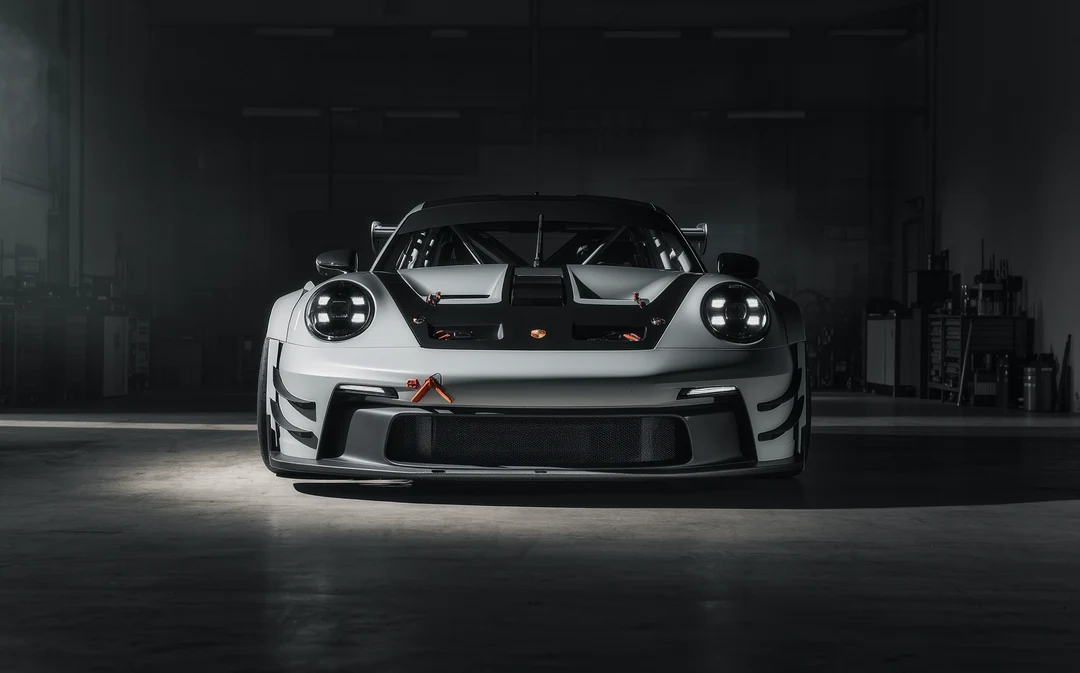
GT3 cars in sim racing are digital versions of real Grand Touring race cars built to the FIA GT3 rules and raced in everything from short sprints to 24 hour races. Think of cars such as the Porsche 911 GT3 R, the Ferrari 296 GT3 or the Mercedes-AMG GT3, driven from your sim rig. They are popular because they combine high performance, relative accessibility compared with open-wheel cars, and a wide choice of cars and tracks. Many of them are officially licensed and closely modelled on the real cars.
Why GT3 works in a sim
GT3 cars suit beginners and experienced drivers alike. They are fast and demanding, but driver aids and stable handling keep them from being overly punishing.
Bridging the Gap: Realism Meets Accessibility
These aren’t your street cars. GT3s are purpose-built racing machines with advanced aerodynamics, powerful engines, and sophisticated suspension setups. Sim developers put a tremendous amount of effort into recreating these characteristics accurately. You feel the downforce, the weight transfer, and the grip limits in a way that truly immerses you.
However, unlike open-wheel cars with their razor-sharp responses and unforgiving nature, GT3s typically have traction control (TC) and anti-lock brakes (ABS). While these driver aids are often limited or adjustable in the real cars, their presence in the sim helps bridge the gap for new drivers, allowing them to focus on racing lines and track limits before mastering raw car control. This means a smoother learning curve compared to, say, an F1 car.
Diverse Car Selection: Something for Everyone
One of the biggest draws of GT3 is the sheer variety of cars available. Almost every major performance marque has a GT3 challenger: Porsche, Ferrari, Mercedes-AMG, BMW, McLaren, Audi, Lamborghini, Lexus, Aston Martin, and more. Each car has its own distinct personality.
- Front-engined cars: Cars like the Mercedes-AMG GT3 or the Aston Martin Vantage GT3 offer powerful front-mounted engines, often with a slightly more stable feel under braking and acceleration.
- Mid-engined cars: The Ferrari 296 GT3, successor to the 488 GT3, or the McLaren 720S GT3 place the engine behind the driver, which gives a more balanced weight distribution and often agile handling. The 296 GT3 is available in Assetto Corsa Competizione through the 2023 GT World Challenge Pack and in iRacing.
- Rear-engined Porsche: The Porsche 911 GT3 R is the odd one out. Its unique rear-engine layout provides incredible traction but requires a different driving style to manage weight transfer effectively, especially under braking.
This diversity isn’t just cosmetic; it translates to different driving experiences, forcing you to adapt your techniques and choose a car that suits your style.
Competition and community
GT3 racing is available on all the major sim platforms, including iRacing, Assetto Corsa Competizione (ACC), Le Mans Ultimate, rFactor 2 and Automobilista 2, in official races, leagues and special events.
- Official Series: Sims like iRacing offer official GT3 sprint and endurance series with well-populated grids and structured progression.
- Community leagues: Many community-run leagues cater to all skill levels, from casual racing to organised esports; joining your first league explains how to pick one.
- Time zones: Because GT3 is raced worldwide, the larger sims usually offer GT3 races at most times of day.
Getting Started: Your First GT3 Experience
Jumping into a GT3 car can feel a bit daunting at first, but with a few pointers, you’ll be turning competitive laps in no time.
Choosing Your Sim Platform
The first step is selecting the right simulator. While many sims feature GT3 cars, a few stand out for their dedicated focus and quality:
- Assetto Corsa Competizione (ACC): The official GT World Challenge game from Kunos Simulazioni, built around GT3. Downloadable packs add GT4 cars, GT2 cars and one-make cup and challenge cars such as the Porsche 911 GT3 Cup and the Ferrari 488 GT3 Challenge Evo. The physics, tyre model and force feedback (FFB) are detailed, and if GT3 is your main interest, ACC is the natural first choice. Assetto Corsa Competizione: the first ten hours shows how to start.
- iRacing: Offers a comprehensive GT3 experience alongside its huge roster of other cars and tracks. The online matchmaking system (iRating/Safety Rating) provides consistently competitive racing. It costs a subscription plus paid cars and tracks; what iRacing costs in the first year sets out the sums.
- rFactor 2: Known for its highly detailed tire model and complex physics. While it has a steeper learning curve, dedicated GT3 mods and official expansions offer a deep and rewarding experience for those willing to invest time.
- Automobilista 2: Features excellent FFB and a strong selection of GT3 cars. It offers a slightly more accessible physics model while still being realistic, making it a good choice for those who want a varied racing experience beyond just GT3.
- Assetto Corsa (original): Older, but its modding community has produced a large library of GT3 cars and tracks, many of them free, so it is a low cost way to explore the class. Quality varies; see Assetto Corsa mods: quality and safety.
- Le Mans Ultimate: The official game of the FIA World Endurance Championship and the 24 Hours of Le Mans, with LMGT3 cars alongside Hypercars and LMP2, which suits drivers who want GT3 in multi-class endurance races. See where Le Mans Ultimate stands now.
Each sim has its strengths, so research which one aligns best with your preferences for realism, online competition, and content philosophy.
Essential Hardware
While you can technically play with a gamepad, a proper steering wheel and pedals are practically mandatory for a truly immersive and competitive GT3 experience.
- Direct Drive Wheel: If your budget allows, a direct drive (DD) wheel provides the most realistic force feedback, allowing you to feel every nuance of the car’s grip, slip, and road surface. Brands like Fanatec, Moza, Simucube, and Asetek are popular choices.
- Load Cell Pedals: These are arguably even more important than a DD wheel. Load cell pedals measure the force you apply rather than just the travel distance, providing much more consistent and precise braking control, a cornerstone of fast GT3 driving.
- Rig/Cockpit: A sturdy rig or dedicated cockpit is crucial to mount your wheel and pedals securely, preventing flex and ensuring consistent ergonomics, especially during intense braking.
- Monitor/VR: A single ultrawide monitor, triple screens, or a VR headset will significantly enhance immersion and spatial awareness compared to a standard single monitor. VR, in particular, can be incredibly transformative for racing.
Investing in decent hardware makes a world of difference in your ability to control these powerful machines and extract their full performance.
Initial Car Setup and Driver Aids
When you first jump in, don’t worry too much about custom setups. Most sims provide “safe” or “default” setups that are perfectly adequate for getting acquainted with the car and track.
- Default Setups: Start with the default or a “safe” setup. These are designed to be relatively drivable and predictable.
- Driver Aids: Begin by using the in-car traction control (TC) and anti-lock brakes (ABS) at moderate levels. You might even want to enable an automatic clutch for easier starts if your pedal setup doesn’t have a dedicated clutch or you’re new to manual sequential shifting. As you get more comfortable, you can gradually reduce TC and feel for the car’s natural grip limits. ABS is often used even by pros in GT3, as it’s part of the real car’s package.
- Basic Control Mapping: Ensure your steering, throttle, and brake are properly calibrated and assigned. Map essential functions to your wheel, such as pit limiter, brake bias adjustment, track map (if available), and perhaps an engine map or TC/ABS adjustment for on-the-fly tuning.
The goal at this stage isn’t speed, but consistency and familiarization with the car’s behavior.
Driving technique
GT3 cars demand a blend of aggression and precision. Understanding a few key techniques will significantly improve your lap times and racecraft.
Braking: The Heart of GT3 Driving
Effective braking is arguably the most crucial skill in GT3 racing. These cars are heavy and powerful, and often use sophisticated braking systems.
- Threshold Braking: The goal is to apply maximum brake pressure without locking the wheels (or engaging ABS excessively aggressively). With load cell pedals, you learn to feel this threshold. Smoothly releasing the brakes (trail braking) into the corner helps rotate the car and maintain speed.
- Brake Bias: This adjusts the front-to-rear distribution of braking force. A forward bias means more front braking, while a rearward bias means more rear braking. Too much front and the car will understeer under braking; too much rear and it will be unstable and prone to locking the rears. Experiment with it (often adjustable on your wheel) to find what works best for each corner.
- ABS and Lockups: While ABS prevents full wheel lock, it can still extend your braking distance if overused. Aim to brake just up to the point where ABS starts to intervene, rather than relying on it heavily. A slight “jiggle” in the pedal through the FFB often indicates ABS activation.
Practice heavy braking zones repeatedly, focusing on consistency and feeling the limits.
Cornering: Finding the Rhythm
GT3 cars generate significant mechanical grip and aerodynamic downforce. Maximizing both is key.
- Corner Entry: Smoothness is paramount. Turn-in should be decisive but not abrupt. Use trail braking to carry speed into the corner and help yaw (rotate) the car.
- Mid-Corner: Maintain throttle application (even a tiny amount) to keep the car settled and maintain aerodynamic load. Avoid sudden movements that could unsettle the chassis. Feel for the balance between understeer and oversteer.
- Corner Exit: This is where you make up time. As you unwind the steering, progressively apply throttle. Aggressive throttle too early will lead to wheelspin and loss of traction, especially in rear-wheel-drive GT3s. Don’t be afraid to let TC work for you, but aim to minimize its intervention through smooth throttle application.
Think about the “racing line” as a continuous arc, not a series of stops and starts.
Throttle Control: Powering Out
Managing the potent engines of GT3 cars is crucial for good lap times and tire preservation.
- Progressive Power: Especially in lower gears or slower corners, rolling onto the throttle smoothly and progressively is vital. Stabbing the throttle will break traction and trigger TC, slowing you down.
- Lift-and-Coast: On long straights leading into heavy braking zones, a brief lift off the throttle before braking can save fuel, preserve brakes, and help settle the car for the braking phase. This is more relevant in endurance racing but can still be beneficial in sprints.
- Traction Control (TC): Modern GT3 cars have multi-stage TC systems. Experiment with these settings. A higher TC setting will be safer but slower, while a lower setting will allow more wheelspin and potentially faster exits if managed well. Learn how the TC system in your chosen car and sim behaves.
Getting the power down effectively out of corners defines a fast GT3 driver.
Setup & Strategy: Beyond Driving Skill
While raw driving talent is important, understanding how to adjust your car and strategize for races will elevate your performance.
Basic Setup Adjustments
Even if you’re not building setups from scratch, knowing what common adjustments do can help you fine-tune a baseline setup for your style and the track.
- Tyre Pressures: Critically important. Too low, and the tyre will overheat and wear quickly. Too high, and it will lack grip and feel “bouncy.” Aim for optimal pressures (often indicated by tire telemetry in the sim) after a few hot laps.
- Fuel Load: Less fuel means a lighter car, which means faster lap times. However, running out of fuel means game over. Calculate how much fuel you need for a stint or race, and add a small buffer.
- Brake Bias: As discussed earlier, adjusting this can significantly impact stability and turn-in.
- Springs & Dampers: These control the car’s suspension stiffness and how quickly it reacts. Stiffer springs/dampers generally mean better responsiveness but can make the car twitchy over bumps. Softer settings offer more comfort but can lead to a less responsive feel.
- Wing Angle (Aerodynamics): More wing angle means more downforce and better grip in high-speed corners, but it also creates more drag, reducing top speed. Less wing means higher top speed but less stability.
Don’t try to change everything at once. Focus on one or two adjustments, test them, and see what changes. There are plenty of online guides and community forums dedicated to GT3 setups.
Race Strategy Fundamentals
Especially in longer races, strategy plays a crucial role.
- Fuel Management: Knowing your car’s fuel consumption per lap is essential for planning pit stops. Over-fueling wastes time; under-fueling ends your race.
- Tyre Management: Aggressive driving can degrade tyres quickly, leading to a loss of grip and slower lap times. Smoothness and avoiding lock-ups or excessive wheelspin helps preserve them. In some endurance races, you might need to decide whether to change tyres during a pit stop or save time by keeping the old ones.
- Pit Stops: Practice pit stop entries and exits. A clean, efficient pit stop can gain or lose you positions. Pay attention to speed limits in the pit lane.
- Race Pace vs. Qualifying Pace: A qualifying lap is about raw, absolute speed for one lap. A race lap is about consistent speed over many laps, managing tyres, fuel, and traffic. Learn to adapt your driving style for different race phases.
Thinking strategically about these elements will make you a much more rounded and successful sim racer.
The Endurance Challenge: Long-Distance GT3 Racing
GT3 cars are a fixture of endurance racing, and sim racing lets you take part in long races from home.
The Mental and Physical Demands
Endurance racing isn’t just about driving fast; it’s a test of consistency, focus, and managing fatigue.
- Consistency: Maintaining a solid, repeatable lap time for hours on end is incredibly challenging. Mistakes are amplified over a long race.
- Concentration: Staying focused, especially during monotonous stints, requires mental fortitude. Little mistakes can turn into big crashes.
- Tire and Fuel Management: These become far more critical in endurance racing. Small deviations in driving style can lead to significant differences in wear and consumption over multiple stints.
- Managing Traffic: In multi-class endurance races (which are common in sims like iRacing and ACC), constantly being aware of faster and slower cars, and managing overtakes safely, adds another layer of complexity.
Prepare yourself mentally for the long haul. Take breaks if permitted, stay hydrated, and ensure your rig is ergonomic.
Team Racing and Communication
Many endurance events in sim racing are team-based, requiring seamless coordination.
- Driver swaps: Practise smooth and efficient driver swaps, especially if your sim requires specific button presses or actions; see driver swaps.
- Strategy Calls: Effective communication with teammates is vital for adjusting strategy on the fly, changes in weather, yellow flags, or unexpected incidents.
- Shared Responsibility: Working as a team, sharing car data, and providing encouragement are all part of the endurance experience.
Participating in a well-managed team can be one of the most rewarding aspects of sim racing. It moves beyond individual performance and fosters a sense of camaraderie.
GT3 cars are one of the main classes in sim racing because they combine performance, variety and accessibility. Start with one sim and one car, learn its braking and tyre behaviour, and then move on to longer races or a team. The two topics that pay off fastest in a GT3 car are trail braking and the tyre window.
FAQs
What are GT3 cars in sim racing?
GT3 cars in sim racing are a class of racing cars that adhere to the FIA’s GT3 regulations. These cars are designed for endurance racing and are known for their high performance and balanced handling characteristics.What makes GT3 cars popular in sim racing?
GT3 cars are popular in sim racing due to their close racing and competitive nature. They offer a wide variety of car models from different manufacturers, allowing sim racers to experience a diverse range of driving styles and characteristics.How do GT3 cars differ from other racing car classes in sim racing?
GT3 cars differ from other racing car classes in sim racing in terms of performance, handling, and regulations. They are designed to be more accessible and cost-effective compared to higher-tier racing classes, making them a popular choice for sim racers of all skill levels.What are some popular GT3 cars in sim racing?
Current GT3 cars in sims include the Ferrari 296 GT3, the Porsche 911 GT3 R (992), the Lamborghini Huracán GT3 EVO2, the Audi R8 LMS GT3 evo II and the Mercedes-AMG GT3. Older versions such as the Ferrari 488 GT3 and the BMW M6 GT3 are still found in many sims and leagues.How can sim racers experience GT3 cars in sim racing?
Sim racers can experience GT3 cars in sim racing by participating in online racing leagues, joining multiplayer lobbies, or using sim racing platforms that offer GT3 car models. They can also practise against AI opponents before racing other people online.Sources
- Assetto Corsa Competizione on Steam (official GT World Challenge game, downloadable packs)
- Assetto Corsa Competizione: 2023 GT World Challenge Pack on Steam (Ferrari 296 GT3, Porsche 911 GT3 R 992, Huracán GT3 EVO2)
- Assetto Corsa Competizione: Challengers Pack on Steam
- Assetto Corsa Competizione: GT2 Pack on Steam
- iRacing 2023 Season 4 (Ferrari 296 GT3)
- Le Mans Ultimate on Steam (official WEC game, LMGT3 class)
More from Cars & Tracks
Laser scanned tracks: what the scan really changes in a sim
What a laser scan of a circuit captures, what it changes in the car and what it cannot, and which sims say they use scanned tracks: iRacing, ACC,…
Driving Formula Cars in Sim Racing: Rig, Braking and Throttle
How to drive formula cars in a sim: force feedback without clipping, load-cell braking, trail braking, throttle control, dirty air and which sims…

Monza in the sim: chicanes, Lesmos and low downforce
Monza in iRacing, ACC, LMU and AMS2: the three chicanes, the Lesmos, Ascari and the Parabolica, the low downforce setup and how to use the slipstream.