Monza in the sim: chicanes, Lesmos and low downforce
How to drive the Autodromo Nazionale Monza in a sim, corner by corner, which titles carry it and what to change in a low downforce setup.
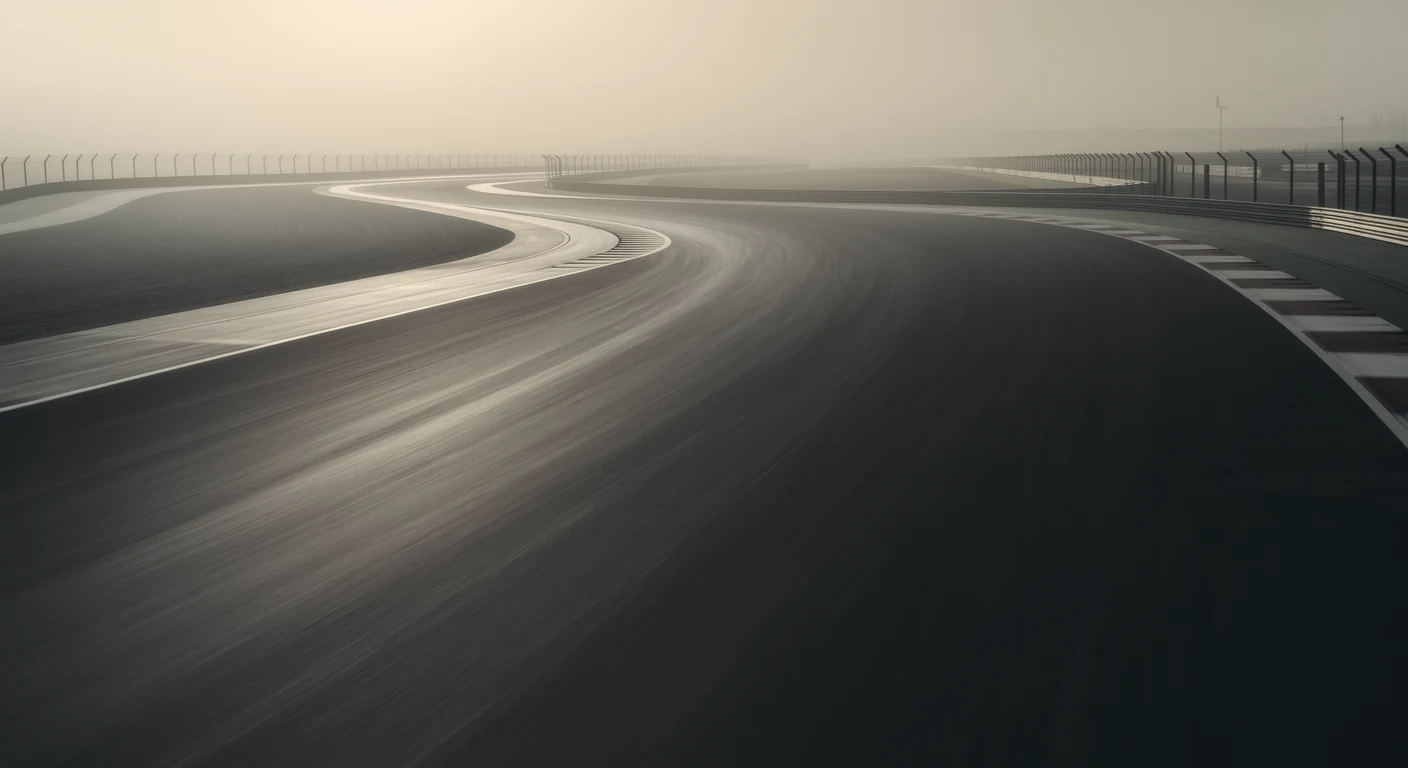
Monza in numbers: a lap built around the straights
The Autodromo Nazionale Monza opened in 1922 and was on the first Formula 1 calendar in 1950. The Grand Prix circuit measures 5.793 km and runs clockwise. Formula 1 lists the start and finish straight at about 1.1 km and says the cars spend roughly 80 percent of the lap at full throttle. Those two figures explain almost everything about driving it in a sim: the lap is a series of long straights joined by three chicanes and a handful of fast corners, and the time is won or lost in how you arrive at and leave each braking zone.
That makes Monza a good teacher. There are only a few places to make a mistake, and each one costs you speed on the straight that follows. If you can brake late and straight, turn the car once and get back on the throttle early, you will be quick here. If you overslow the chicanes or bounce across the kerbs, the stopwatch shows it immediately.
Where to drive Monza in a sim
Most current road racing sims carry a version of the circuit. What differs is whether it comes with the base game and which historic layouts are included.
- iRacing lists the Autódromo Nazionale Monza in its track catalogue. Its track page covers the Grand Prix circuit, the shorter Junior circuit and the old Alta Velocità oval.
- Assetto Corsa Competizione includes Monza in the base game, as listed by its developer Kunos Simulazioni.
- Le Mans Ultimate has Monza among the seven laser scanned tracks of its base game.
- Automobilista 2 sells Monza in its Premium Track Pack, with the modern circuit plus 1971 and 1991 versions.
- Assetto Corsa, the original title, names Monza in its track list together with three variants from the 1960s.
The layout is the same everywhere, but kerb behaviour, tyre model and the way the car reacts to the slipstream are not. A lap that works in one title will need adjusting in another, which is covered in how the big sims differ.
Corner by corner
The speeds below are the circuit's own figures for the fastest cars. In a GT car everything happens lower and later, but the order of priorities stays the same.
Variante del Rettifilo
The first chicane is a tight right of about 90 degrees followed by a tight left. Formula 1 quotes braking from around 350 km/h to about 70 km/h here. It is the heaviest stop of the lap and, as Formula 1 notes, one of the best overtaking spots. Brake in a straight line, with the car settled, and accept that the first apex is slow. The exit of the left matters more, because the car is flat out from there through Curva Biassono. On the opening lap of a race, with cars on every side, leave more room than you think you need.
Curva Biassono
Originally called Curva Grande and renamed in 1972, this long right-hander has a radius of about 300 metres and is taken at full throttle. In a sim the only task is to keep the car straight and stable on the exit of the first chicane so that it can run wide through Biassono without lifting.
Variante della Roggia
The second chicane is a narrow left and right at the end of a straight of more than a kilometre, where the circuit gives speeds of about 335 km/h dropping to 110 to 120 km/h. It is shorter and faster than the first, and easier to get wrong: braking a fraction late locks the inside front and sends you straight over the kerbs. A slightly earlier brake point with a clean exit is usually faster than a heroic one.
The two Lesmos
About 200 metres after the Roggia comes the first Lesmo, a right-hander with a 75 metre radius. The second Lesmo is tighter, with a 35 metre radius. Neither is a chicane, so the car carries real lateral load, and the second leads onto the run to Ascari. A common way to lose time here is turning in too early for Lesmo 2 and then waiting on the throttle. A later turn-in and an earlier, smoother throttle application usually pays off down the straight that follows.
Serraglio and Variante Ascari
The Serraglio is a very slight left with a radius of more than 600 metres, flat out. It leads into the Variante Ascari, a left, right and left sequence that the circuit says is entered at about 330 km/h and taken at about 200 km/h. Ascari rewards commitment and punishes a nervous car. The first left sets up everything: get it right and the car flows through the right and the final left with only small corrections.
Curva Alboreto
The last corner, formerly the Parabolica and now named Curva Alboreto, is long and opens out as it goes. It is entered at about 180 km/h, and the exit leads onto the main straight. That makes it the most valuable corner of the lap for top speed. Brake slightly earlier, turn in patiently, and use the widening radius to get on the throttle as soon as the car will take it.
Low downforce: what to change in the setup
With so much of the lap at full throttle, drag matters more at Monza than almost anywhere else. Most setups for this track start by taking wing out. The trade-off is explained in downforce against drag, and Monza is the clearest case of it.
- Wing. Remove rear wing in steps and watch two things: top speed at the end of the main straight, and whether the car still feels stable through Ascari and the Parabolica. If the rear becomes nervous in Ascari, you have gone too far.
- Balance. Less rear wing shifts the aerodynamic balance forward. Keep the front and rear in proportion, or the car will oversteer on corner entry.
- Brakes. Braking from top speed into the chicanes needs a car that stays straight. A little more forward brake bias can help, but adjust it during the lap rather than guessing in the garage, as described in brake bias.
- Kerbs. The chicanes invite you to use the kerbs. If the car jumps or lands badly, soften the bump settings or simply take less kerb. A car that lands sideways loses more time than the kerb gains.
- Gearing. Where the sim allows it, choose a top gear that does not hit the limiter in the slipstream of another car. In a race you will spend time in the tow, and a car that runs out of revs there cannot pass.
For races, decide whether you want the setup for one fast lap or for a full stint in traffic. Qualifying against race setup covers that choice.
Slipstream and racecraft
Long straights mean that the car behind gains speed in the wake of the car ahead. At Monza that is the main way to overtake: follow closely out of Lesmo 2 or the Parabolica, pull out late and complete the move on the brakes into the next chicane. Defending works the other way round. Take your line early and do not move again in the braking zone.
The first chicane on the first lap is where races are lost. Brake earlier than you would alone and expect cars beside you. The principles are set out in overtaking without collecting penalties.
A practice plan for Monza
- Learn the brake points. Use fixed markers for the three chicanes and the Parabolica. Braking points you can repeat explains how to choose them.
- Drive whole stints. Ten clean laps teach more than one fast one. Watch your exit speed onto the straights rather than the lap time.
- Check the data. Compare speed traces at the end of each straight. If the minimum speed in a chicane is up but the speed on the following straight is down, the exit was worse.
- Add traffic. Race against AI or in practice sessions online to learn where to use the tow and where to give space.
The general method for any new circuit is in learning a new track in three sessions.
Frequently asked questions
Which sims have Monza?
iRacing, Assetto Corsa Competizione and Le Mans Ultimate include the modern circuit, the latter two in the base game. Automobilista 2 sells it in its Premium Track Pack with 1971 and 1991 versions, and the original Assetto Corsa lists it with three variants from the 1960s.
How long is the Monza circuit?
The Grand Prix circuit is 5.793 km long and runs clockwise. Formula 1 cars are at full throttle for about 80 percent of the lap.
What setup works at Monza?
Start with less rear wing than usual for higher top speed, then check that the car stays stable through Ascari and the Parabolica. Keep the aero balance in proportion, make sure the car brakes straight from top speed and choose gearing that leaves room in the slipstream. See downforce against drag.
Where do you overtake at Monza?
Mostly into the Variante del Rettifilo, the first chicane at the end of the main straight, using the slipstream out of the Parabolica. The Variante della Roggia is the second option.
Sources
More from Cars & Tracks
Laser scanned tracks: what the scan really changes in a sim
What a laser scan of a circuit captures, what it changes in the car and what it cannot, and which sims say they use scanned tracks: iRacing, ACC,…
Driving Formula Cars in Sim Racing: Rig, Braking and Throttle
How to drive formula cars in a sim: force feedback without clipping, load-cell braking, trail braking, throttle control, dirty air and which sims…
Six tracks every sim racer should learn, and where to drive them
Nordschleife, Spa, Laguna Seca, Bathurst, Interlagos and Sonoma: what makes each difficult and which sims have it, plus the endurance circuits.