Driving Formula Cars in Sim Racing: Rig, Braking and Throttle
Formula cars depend on downforce and punish rough inputs. This guide covers the rig settings, the braking and throttle technique and the race habits that make them easier to drive quickly.
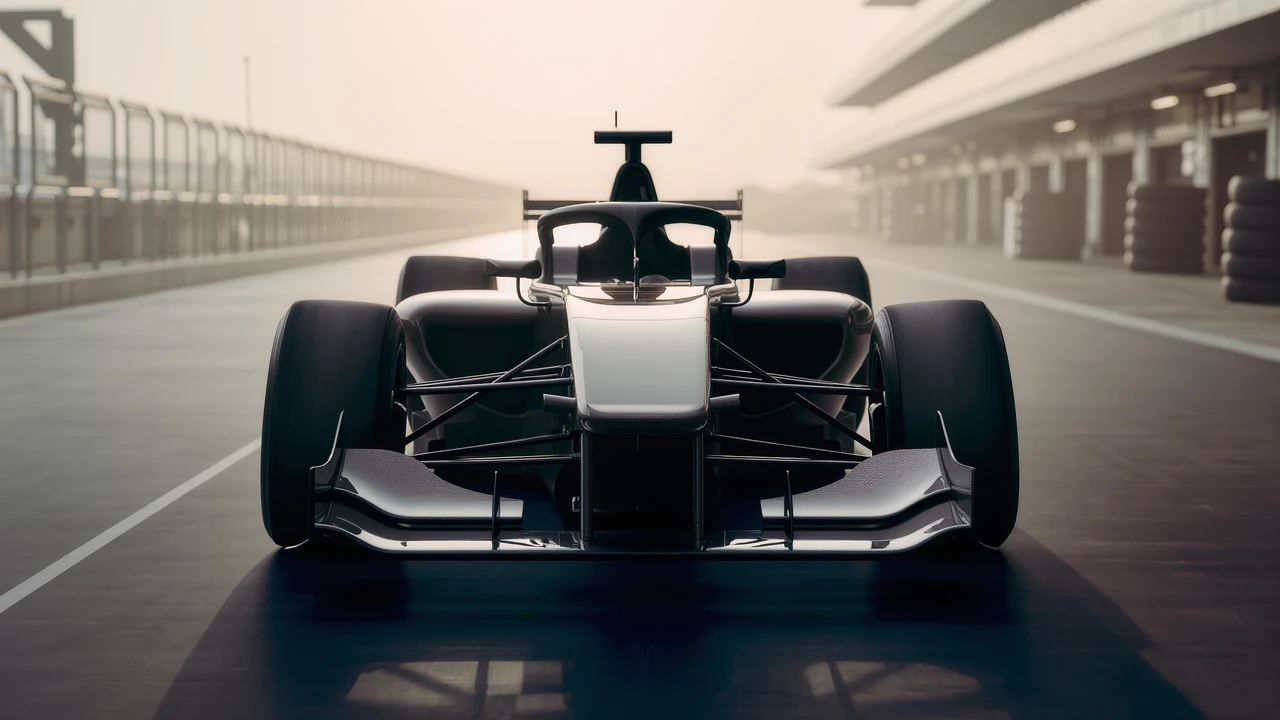
Formula cars have a steep learning curve in a simulator. They are light, they depend on downforce, and they react sharply to every input. With focused practice and a rig that tells you what the car is doing, they become manageable. This guide goes through the parts that make the biggest difference: the rig, braking, throttle, the effect of aerodynamics and how to practise. For the Formula 1 side, from software to esports, see the F1 sim racing guide.
Understanding the Formula Car’s Nature
Formula cars drive differently from anything else in a sim. Their defining characteristic is aerodynamics: the wings and, in modern cars, the floor generate large amounts of downforce. This downforce is what allows them to corner at speeds that seem physically impossible, and it’s also what makes them feel so different to drive.
How downforce works
Think of downforce as a giant hand pushing your car into the track. At speed, this hand gets much stronger. It’s the primary reason why cars like an F1 or a Formula 2 car can pull such high G-forces in corners. This means your braking points will be later, your turn-in will be sharper, and your traction will be greater, but only when you have the speed to generate it.
Sensitivity is Key
Because of that downforce and their lightweight construction, formula cars are incredibly sensitive to your inputs. A sudden jerk of the wheel, an abrupt stomp on the brakes, or a ham-fisted jab at the throttle can all send you spinning. Learn to be smooth, deliberate, and precise. This isn’t about brute force; it’s about finesse.
Open Wheels and Aerodynamic Impact
Exposed wheels create a lot of turbulence, and together with the wings and floor they leave a disturbed wake behind the car. That is why drivers talk about ‘dirty air’: when you follow closely, your own wings and floor work in that turbulent air and produce less downforce. It matters most in races, when you are close behind another car.
Setting Up Your Rig for Success
Your physical setup can make or break your formula car experience. While a motion rig or direct drive wheel is ideal, you can still achieve a lot with a solid wheelbase, a good pedal set, and proper screen placement. The goal is to create an environment where you can feel what the car is doing, and respond accurately.
Wheelbase Selection and Settings
For formula cars a direct drive wheel is recommended, because it conveys small changes in grip in detail; how much direct drive torque you need helps with the choice. On a belt or gear-driven wheel, set the force feedback as strong as you can without clipping, which means asking for more force than the base can deliver. Experiment with dampening and filter settings to find a balance between clarity and smoothness; too much filter can numb the feel.
Force Feedback (FFB) Calibration
This is non-negotiable. Every sim has its own FFB settings. You want to feel the road surface, the tyre slip, and the forces acting on the steering. The goal isn’t to have the wheel fight you, but to give you information. Start with a baseline setting provided by the sim developer or community, and then fine-tune. Clipping happens when the requested force exceeds what the base can deliver: the wheel sits at its maximum and you stop feeling changes in load, typically in fast, high-downforce corners where the steering goes heavy and flat. Light or buzzy feedback is a different problem, usually too little gain or too much effect from kerbs and filters. If the force clips, reduce the gain in the sim or in the wheel software until the peaks fit. Clipping: how to see the detail you are losing shows how to check it with telemetry.
Pedal Responsiveness and Feel
Formula cars often have very sensitive brakes and throttles, sometimes with a very short pedal travel. Getting a good pedal set with a load cell brake and perhaps a clutch is a massive upgrade. A load cell brake measures braking force, not pedal travel, which is far more accurate and consistent.
Brake Sensitivity and Travel
In many formula cars, the brakes are immensely powerful, but also have a narrow operational window. You need to build up to maximum braking pressure rather than just stomping on the pedal. Experiment with brake pedal force and travel in your sim settings. Many sims allow you to adjust the pedal curves, which can help you achieve a more consistent application of brake pressure.
Throttle Control
Similarly, the throttle on a formula car can be incredibly responsive. You want to be able to apply just enough throttle to keep the engine in its power band without spinning the rear wheels. This often requires very fine modulation, especially out of slow corners.
Posture and Input Devices
Your driving position and how you interact with the controls are critical. You want to be able to make small, precise adjustments to the wheel and pedals.
Wheel Angle and Ergonomics
Ensure your wheel is mounted at a comfortable height and angle. For formula cars, a relatively low wheel angle is common. You want to be able to turn the wheel without your arms hitting your legs. Many sim racing wheel rims are designed to replicate formula car wheels, with a comfortable grip and accessible buttons.
Button Mapping and Accessibility
Map essential functions like DRS, pit limiter, and gear changes to easily accessible buttons on your wheel. You don’t want to be fumbling for a key input mid-corner.
Braking
Braking in a formula car is an art form. It’s where you can gain or lose significant time, and it’s often where inexperienced drivers make the biggest mistakes. It’s not just about slowing down; it’s about setting up the rest of your corner.
Trail Braking Explained
This is one of the most important techniques for formula cars; trail braking explained goes deeper. Trail braking means you continue to apply some brake pressure as you turn into the corner. This transfers weight to the front tires, which increases their grip and helps the car turn more effectively.
Practicing Trail Braking
Start in a late braking zone. Brake hard in a straight line, then as you begin to turn the wheel, gradually release the brake pedal. You should feel the car rotate slightly. Gradually increase the amount of trail braking you apply as you get more comfortable. The goal isn’t to keep braking hard, but to smoothly blend braking into steering.
Understanding the Braking Zone
Formula cars can brake incredibly late due to their downforce and tyre technology. However, there’s a point where braking becomes less effective because the tires are overloaded. You need to find that sweet spot.
Finding the Apex of Braking
Each corner has an ideal braking point. This isn’t just about hitting a marker; it’s about how much you can brake before you need to turn. Experiment with braking points, but always aim for a smooth deceleration in a straight line before initiating your turn.
Avoiding Lock-ups
Formula cars are usually driven without ABS, so a lock-up is down to your foot. If you lock up your front tires, you lose all steering control, and the tires flat-spot, reducing grip for the remainder of the lap. Listen to the sound of your tires and feel for the shudder through the wheel.
Throttle Control and Corner Exit
Getting the power down efficiently on corner exit is just as critical as braking. A formula car’s rear tires are incredibly sensitive to throttle input, and a clumsy application will lead to spins and wasted time.
Smooth Application is Paramount
The key word here is “smooth.” As you unwind the steering wheel on corner exit, you need to gradually apply throttle. Think of it as a controlled dance between steering and throttle. The more you steer, the less throttle you can apply.
The Throttle-Steering Transition
As you come off the brakes and start turning, your throttle input should be zero or very light. As you gradually straighten the wheel, you can progressively add more throttle. Listen to your tires; a slight chirp is okay, a full burnout is not.
Managing Wheelspin
Wheelspin is your enemy. It not only slows you down but also destroys your rear tires. If you’re experiencing consistent wheelspin, you’re either applying too much throttle too early, or you’re not managing the steering angle correctly.
Traction Control (TC): Use Wisely
Some sims let you switch on traction control in formula cars, even where the real car has none. While it can help at first, relying on it too heavily can mask underlying issues with your throttle control and driving technique. Learn to drive without it as much as possible, or use it on a lower setting. Understanding how TC works will help you understand how much grip you actually have.
Aerodynamics and Driving Lines
Formula cars are heavily reliant on their aerodynamic grip. Your driving line, therefore, has a much bigger impact than on a car with less downforce. This is where the magic of low-speed cornering and high-speed stability really comes into play.
Speed Through the Corners
The faster you go, the more downforce you generate, and the faster you can go! It sounds circular, but it’s how formula cars work. This means carrying as much speed as possible through the corners is the primary objective.
Maintaining Minimum Speed
The minimum speed you achieve at the apex of a corner is crucial for your overall lap time. Your entry and exit speeds are directly influenced by this minimum speed. Smooth inputs and correct weight transfer help maintain it.
Understanding Dirty Air
As mentioned earlier, the turbulent air behind another car is a significant factor. This “dirty air” reduces the effectiveness of your wings.
Overtaking Challenges
Overtaking in formula cars is often about using slipstream to carry more speed on the straight and then being able to position your car to defend or attack on corner entry. When you’re close behind another car, you’ll feel a significant reduction in grip, especially in the front end.
Racing Lines in Traffic
When racing, you might need to adapt your racing line to account for dirty air. Running slightly higher or lower in the corner can sometimes provide a pocket of cleaner air.
Practice, Patience, and Progress
Mastering formula cars isn’t an overnight affair. It requires dedication and a willingness to learn from your mistakes. Every sim and every car will have its nuances, so be prepared to adapt.
The Importance of Repetition
There’s no substitute for putting in the laps. Get comfortable with the car’s behavior, its braking points, and its throttle response. Focus on one aspect at a time.
Lap Analysis and Data
Many sims offer telemetry or lap analysis tools. Use these to understand where you’re losing time. Are you braking too early? Not getting on the throttle soon enough? Are your tire temperatures too high or too low?
Continuous Learning and Adaptation
The sim racing community is a treasure trove of knowledge. Watch videos, read guides, and ask questions. Most importantly, be patient with yourself. Your progress will be measured in small increments, but those increments add up.
Finding Your Ideal Setup
While we’ve focused on driving technique, track-specific setups are also key. Experiment with wing angles, suspension settings, and tire pressures. A good setup can make a huge difference, but it won’t replace good driving.
Driving Different Formula Cars
Don’t be afraid to try out different formula cars in your sim. Each will offer a unique challenge and learning experience, from the raw power of an F1 car to the nimble agility of a Formula 3. You’ll find that the core principles remain, but the application will vary.
Work on these elements one at a time and the car becomes predictable. If you want a structured path, start in a small single-seater and move up step by step before you try a Formula 1 car. In iRacing that ladder runs from the Formula Vee and the Ray FF1600 through the FIA F4, the Dallara F3 and Super Formula Lights to the Super Formula SF23 and the Mercedes-AMG W13.
FAQs
What are formula cars in sim racing?
Formula cars in sim racing are virtual representations of open-wheel racing cars used in real-life motorsport events. These cars are designed to be fast, agile, and aerodynamically efficient, providing an exhilarating driving experience in the virtual world.What are some popular formula cars in sim racing?
Common choices are Formula 1 cars, IndyCars and junior single-seaters such as Formula 4 and Formula 3. EA Sports F1 25 with its 2026 Season Pack has the official Formula 1 grid; iRacing offers a ladder from the Formula Vee to the Mercedes-AMG W13, plus the Dallara IR18 IndyCar and Super Formula cars; rFactor 2 includes licensed Formula E content, and Automobilista 2 has classic Grand Prix cars such as the Lotus 72E alongside modern formula cars.What makes formula cars challenging to drive in sim racing?
Formula cars in sim racing are challenging to drive due to their high speed, aerodynamic grip, and sensitive handling characteristics. They require precise inputs from the driver, including steering, throttle, and braking, to maintain control and achieve fast lap times.How do sim racers prepare to drive formula cars in sim racing?
Sim racers prepare to drive formula cars in sim racing by practicing on virtual tracks, studying telemetry data, and fine-tuning their setups to optimize performance. They may also watch real-life racing footage and participate in online racing leagues to improve their skills.What are the benefits of driving formula cars in sim racing?
Driving formula cars in sim racing trains precise braking and throttle control and lets you race against other virtual racers in a realistic and immersive environment. It also provides an opportunity to learn about aerodynamics, vehicle dynamics, and racecraft.Sources
More from Cars & Tracks
Laser scanned tracks: what the scan really changes in a sim
What a laser scan of a circuit captures, what it changes in the car and what it cannot, and which sims say they use scanned tracks: iRacing, ACC,…
Monza in the sim: chicanes, Lesmos and low downforce
Monza in iRacing, ACC, LMU and AMS2: the three chicanes, the Lesmos, Ascari and the Parabolica, the low downforce setup and how to use the slipstream.
Six tracks every sim racer should learn, and where to drive them
Nordschleife, Spa, Laguna Seca, Bathurst, Interlagos and Sonoma: what makes each difficult and which sims have it, plus the endurance circuits.