Laser scanned tracks: what the scan really changes in a sim
What a laser scan records, how it shows up in the car, where its limits are and which sims build their tracks from scan data.
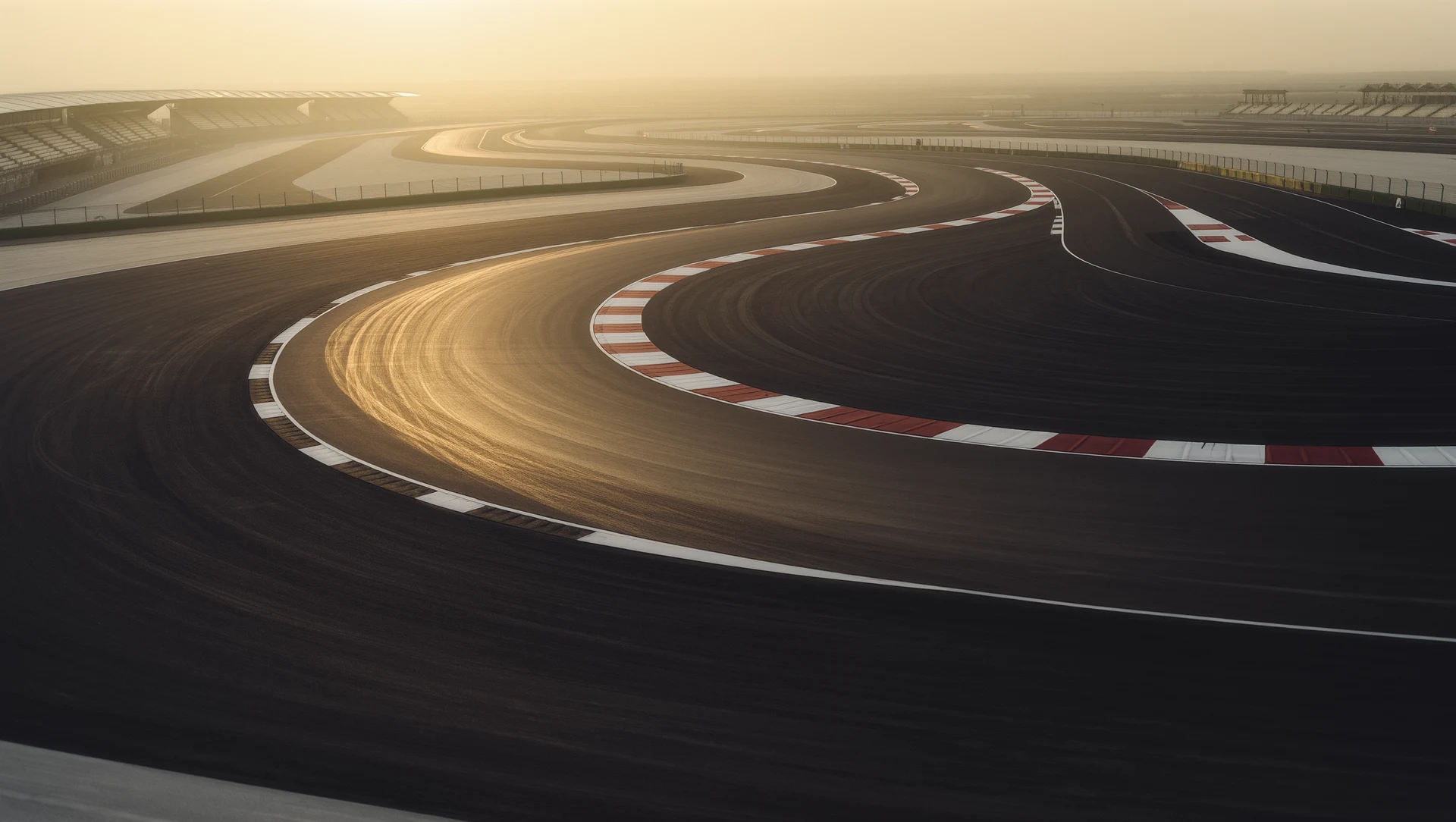
What a laser scan of a circuit is
A laser scanner measures distances to millions of points around it and turns them into a point cloud: a three dimensional record of the surface, the kerbs, the walls and the terrain beside the track. A developer then builds the drivable road and the surroundings from that data. The point cloud is not a finished track. It is the measured skeleton that the artists and physics programmers work on.
iRacing, which built its catalogue around scanned circuits, has described the aim as a track that is millimetre accurate in terms of the surface and its bumps, so that the physics react to the real road rather than an estimate. In the same interview the company explained how tracks were made before: with a measuring wheel, a level and photographs. It tested photographic methods as an alternative to scanning and found none of them good enough. The work does not end when the scanner is packed up. iRacing said the first scan of Lime Rock ran for about 34 hours, and that building a track from the data takes months, with street circuits taking the longest.
What the scan changes when you drive
The difference between a scanned track and a modelled one is mostly felt, not seen. A modelled track can look right and still be smooth where the real one is not. The scan carries the details that matter to the car:
- Bumps and surface undulations. They unsettle the car under braking and come through the wheel as force feedback. A braking zone that is bumpy in reality is bumpy in the sim, and you learn to brake around it.
- Camber and crowns. Small changes in the cross slope of the road change how much grip a corner offers and where the car wants to go on the exit.
- Kerb shapes. Height and profile decide which kerbs you can use and which ones launch the car. With a scan, that judgement is closer to what real drivers learn.
- Elevation. Crests, compressions and the exact point where a hill tips over change braking points and turn-in, and they are hard to estimate from photographs.
These are exactly the things a driver uses as references. That is why a scanned circuit is more useful for learning a real track than a modelled one, and why learning a new track in a sim transfers best when the sim uses scan data.
What a scan does not give you
A scan records shape, not behaviour. Several things that decide how a track feels still come from the developer:
- Grip. How much grip the asphalt offers, how it changes with temperature and how rubber builds up on the line are modelled, not measured by the scanner.
- The tyre model. The same scanned bump feels different in two sims because the tyre and suspension models differ. How the big sims differ explains where.
- Time. A scan is a snapshot. Circuits are resurfaced, kerbs are replaced and run-off areas change. iRacing has said that rescanning an existing circuit takes between 50 and 75 percent of the work of building a new one, so updates are a real cost and not every track is current.
- Visual detail. Trees, buildings and signs are built by artists. A beautiful track is not necessarily an accurate one, and the reverse is also true.
Which sims use laser scanned tracks
Developers state their approach on their own pages, and it varies more than marketing suggests.
- iRacing describes its catalogue as officially licensed and laser scanned, and explained its scanning process publicly as early as 2011.
- Assetto Corsa Competizione: Kunos Simulazioni says it uses laser scan technology to recreate every track in the game.
- Assetto Corsa, the original title, states on its store page that its circuits were developed using laser scan technology.
- Le Mans Ultimate lists seven laser scanned tracks in its base game.
- Automobilista 2 uses scan data for some circuits. Its Circuit des 24 Heures du Mans add-on, for example, is described as modelled with the aid of detailed laser scan data. Other tracks in the game are built from other sources, so check the description of the track you are interested in.
Other titles build tracks from photographs, survey data and video. That does not make them useless, but a lap there is a less reliable rehearsal for the real circuit.
Using a scanned track well
Scan data only helps if you use it. A few habits make the most of it:
- Pick references that exist in reality. Brake boards, kerb ends and marshal posts are reproduced on scanned tracks. Use those rather than a shadow or a texture that only exists in the sim. Braking points you can repeat covers how.
- Feel the bumps rather than filtering them out. If your force feedback is so smoothed that the surface disappears, you lose what the scan offers. Force feedback settings explains the trade between detail and noise.
- Check the version. If you are preparing for a real event, find out when the sim version was scanned or last updated and whether the real circuit has changed since.
- Compare sims carefully. The same scanned circuit in two sims will not give identical lap times or braking points, because grip and tyre models differ.
Real drivers use simulators in the same way, as a rehearsal for references and procedures rather than a perfect copy of the car. What transfers and what does not is covered in simulators in real driver training.
Frequently asked questions
What is a laser scanned track?
A circuit built from a laser scan: the scanner records the road surface, kerbs, walls and terrain as millions of measured points, and the developer builds the track from that data instead of estimating it from photographs or plans.
Which sims use laser scanned tracks?
iRacing, Assetto Corsa Competizione and the original Assetto Corsa state that their circuits are laser scanned, and Le Mans Ultimate lists seven scanned tracks in its base game. Automobilista 2 uses scan data for some circuits, such as its Le Mans add-on.
Does a laser scan make a track feel exactly like the real one?
No. The scan records shape: bumps, camber, kerbs and elevation. Grip, rubber build-up and tyre behaviour are still modelled by the developer, and the real circuit may have changed since it was scanned.
Are scanned tracks better for learning a real circuit?
Usually yes, because the references a driver uses, such as kerbs, crests and bumps in the braking zones, are in the right place. See learning a new track.
Sources
More from Cars & Tracks
Driving Formula Cars in Sim Racing: Rig, Braking and Throttle
How to drive formula cars in a sim: force feedback without clipping, load-cell braking, trail braking, throttle control, dirty air and which sims…
Monza in the sim: chicanes, Lesmos and low downforce
Monza in iRacing, ACC, LMU and AMS2: the three chicanes, the Lesmos, Ascari and the Parabolica, the low downforce setup and how to use the slipstream.

Six tracks every sim racer should learn, and where to drive them
Nordschleife, Spa, Laguna Seca, Bathurst, Interlagos and Sonoma: what makes each difficult and which sims have it, plus the endurance circuits.