Sim Racing Coaching: What a Coach Finds in Your Data
What a sim racing coach looks at in your telemetry and replays, how to choose one, and what to ask before you pay.
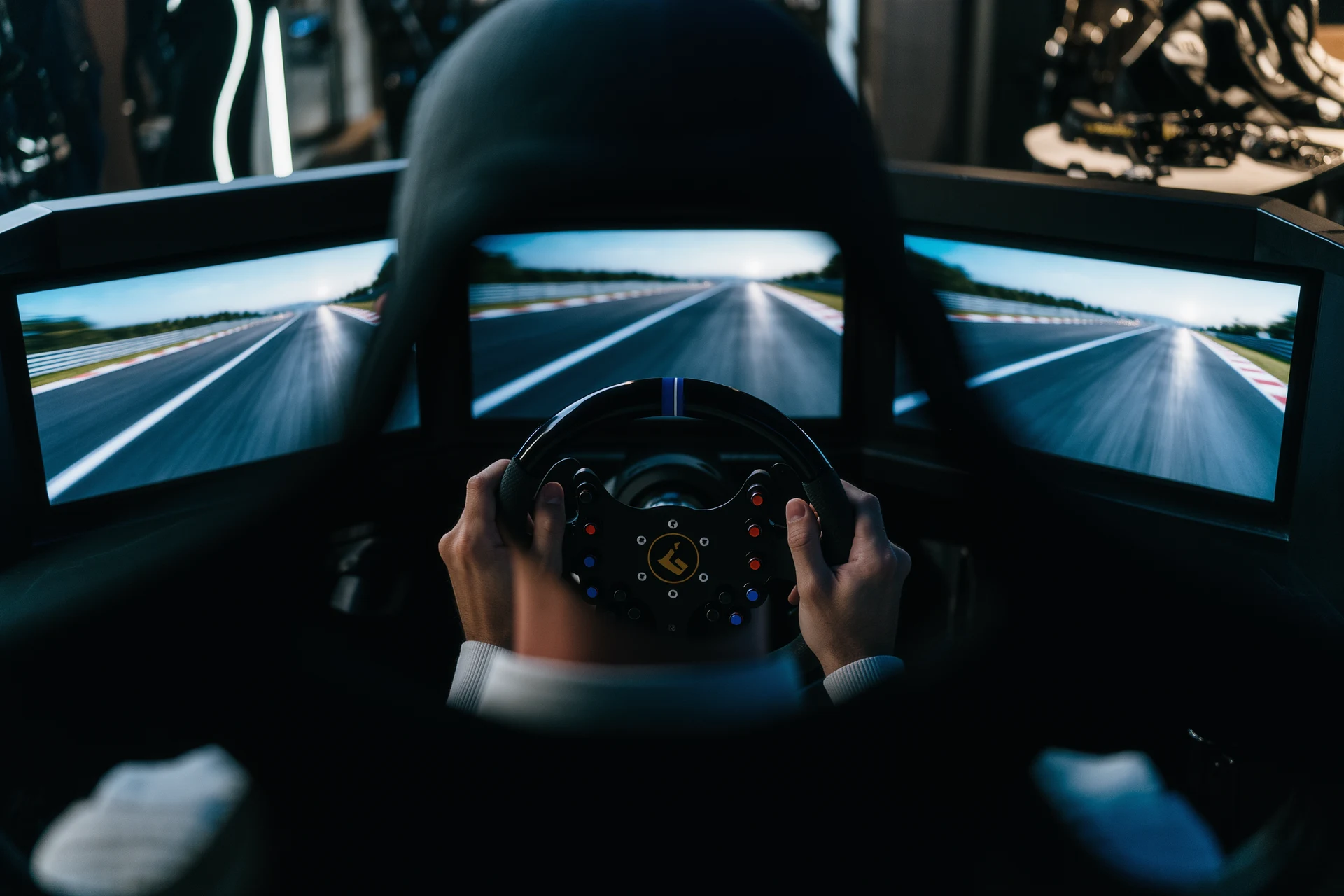
Most sim racers reach a point where more laps no longer make them faster. A coach helps at that point because they look at things you cannot see from the seat: where your brake trace differs from a reference lap, which corners cost time on every lap, and which habits repeat under pressure. Good coaching is less about tips and more about evidence, and most of that evidence is in your telemetry and replays. If you want to read it yourself first, start with the four telemetry channels that matter first and the replay session.
There is plenty of free advice in videos and community guides, but most of it is generic. What a coach adds is an analysis of your own inputs and habits in a particular car and track, and a plan for building a cleaner, more consistent driving style from there.
Identifying and Correcting Bad Habits
We all pick up little quirks when we drive, whether it’s on a real road or in a sim. Maybe you’re too aggressive on the brakes, or your steering input is a bit jerky. An expert eye can spot these instantly. They can tell you exactly why that’s costing you time and, more importantly, how to fix it. This isn’t about generic advice; it’s about pinpointing your specific mistakes.
The “I Didn’t Even Know I Was Doing That!” Moment
Many sim racers experience this. You’re driving, you feel like you’re going fast, but the telemetry or your laptimes tell a different story. A coach can review your data and show you precisely where you’re losing fractions of a second, often in ways you wouldn’t notice yourself. This awareness is the first step to improvement.
Building Muscle Memory for Good Habits
Breaking a bad habit is only half the work. A coach also sets drills that repeat the correct input until it becomes automatic, so you hit the same apex lap after lap without having to think about it.
Accelerating Your Learning Curve
If you’re trying to learn by yourself, you might spend months or even years figuring out certain techniques. A coach can condense that learning time significantly. They’ve already gone through the process of trial and error, and they can present you with the most efficient methods to achieve your goals.
Faster Progression Through Different Cars and Tracks
Every car and every track demands a slightly different approach. Instead of floundering, trying to figure out a new car’s nuances, a coach can give you the key principles for that specific vehicle and circuit. This means you can master new challenges much quicker.
Understanding the “Why” Behind the “How”
It’s easy to be told “brake here” or “turn in now.” But understanding why you should do that, the physics, the tire behavior, the car’s balance, is what truly elevates your driving. Coaches can explain these underlying principles, giving you a deeper comprehension of what makes a fast lap.
What to Look for in an Expert Sim Racing Coach
Not all coaches are created equal, and the “expert” label can be a bit fluid. When you’re thinking about investing in coaching, look for specific qualities that will genuinely help you improve.
Proven Experience and Success
Ask what the coach has achieved in sim racing. This could be through winning championships, competing at a high level, or having a track record of successfully coaching other drivers to significant improvements. Ask about their racing background and their coaching credentials.
Demonstrable Results with Other Drivers
Anecdotal evidence is fine, but concrete proof is better. Can the coach point to drivers they’ve worked with who have seen tangible improvements? Look for testimonials or even ask if they can share some examples of client progress.
Understanding Different Simulators and Platforms
Sim racing isn’t a monolith. Different simulators (iRacing, Assetto Corsa Competizione, rFactor 2, etc.) have unique physics models and driving characteristics. A good coach will understand these nuances and be able to tailor their advice accordingly, especially if you primarily race on one platform.
Teaching Style and Communication
This is just as important as their racing pedigree. Can they explain complex concepts clearly and concisely? Do they adapt to your learning style, or do they just steamroll you with information?
Patience and Adaptability
Learning takes time, and everyone learns at a different pace. A good coach will be patient, willing to repeat concepts, and adapt their approach if something isn’t clicking. They should also be able to handle different levels of experience, from beginners to seasoned racers.
Constructive Feedback and Encouragement
You want feedback that helps you improve, not just criticism that makes you feel bad about your driving. A coach should be able to offer constructive criticism that is actionable, along with the necessary encouragement to keep you motivated.
Technical Proficiency with Data Analysis
Modern sim racing relies heavily on data. A coach who can effectively analyze telemetry data will provide insights you simply can’t get from just watching video or feeling the car.
Interpreting Telemetry and Video
This is the bread and butter of effective sim coaching. They should be able to look at your speed traces, throttle inputs, brake applications, steering angles, and compare them to a reference lap, identifying performance gaps and advising on corrections you can implement.
Understanding Force Feedback (FFB) and Hardware Setup
While not strictly driving technique, understanding how your hardware interacts with the simulation is crucial. A coach with knowledge of FFB settings and how to optimize them can significantly improve your feel for the car and, therefore, your control.
The Coaching Process: What to Expect
Signing up for coaching can feel a bit daunting if you don’t know what to expect. Understanding the typical process can help you feel more prepared and get the most out of your sessions.
Initial Consultation and Goal Setting
Before any serious work begins, a good coach will want to understand your current level, what you’re aiming for, and what your pain points are. This initial chat is crucial for defining a clear path forward.
Identifying Your Current Skill Level
Be honest about where you are. Are you consistently qualifying on pole, or are you struggling to keep the car on track? The coach needs this baseline to build from.
Defining Specific, Achievable Goals
“Get faster” is too vague. Is it finding three tenths at a particular track? Consistently finishing races without incident? Mastering a specific car? Clear goals make progress measurable.
On-Track Session Analysis
This is the core of the work. You’ll be driving, and the coach will be observing your performance, often in real-time or through reviewing recorded sessions.
Live Driver Coaching (If Possible)
Some coaches offer live guidance during practice sessions. This allows for immediate feedback and corrections as you’re making mistakes. It works well for habits that only show up at speed.
Reviewing Recorded Laps and Telemetry
Even if live coaching isn’t an option, reviewing your recorded efforts is essential. The coach will analyze your lines, braking points, throttle control, and steering inputs to pinpoint areas for improvement.
Comparing to Expert Reference Laps
This is a powerful tool. A coach can show you exactly where you’re losing time compared to their own optimal laps or those of other high-level drivers, highlighting the specific differences in technique.
Data Analysis and Feedback Interpretation
Telemetry shows what happened, but not always why. A coach reads the speed, brake, throttle and steering traces against a reference lap and turns the differences into a small number of changes. The same method works for setups, as comparing two setups with data shows.
Understanding Gaps in Your Performance
The coach will highlight where your braking is late, your acceleration is too early, or your steering is inconsistent. They’ll explain why these differences matter.
Translating Data into Actionable Advice
The goal isn’t just to show you the data; it’s to give you concrete actions to take. “Brake 5 meters earlier at Turn 1” is actionable. “Improve your braking” is not.
Explaining Tire Wear and Fuel Management Implications
Beyond pure speed, a coach can guide you on how your driving affects tire degradation and fuel consumption over a race distance, crucial for endurance racing.
Practice Drills and Skill Development
Once the issues are identified, the coach will often provide specific exercises to help you improve.
Targeted Drills for Specific Techniques
If you struggle with trail braking, they might assign you drills focused solely on mastering that technique. If your car control in a slide is poor, they’ll give you exercises to improve that.
Developing Consistency and Race Craft
Beyond raw pace, sim racing involves race craft: overtaking, defending, managing traffic. Coaches can guide you on developing these crucial skills through simulations and practice scenarios.
Practical Applications: Where Coaching Excels
The benefits of coaching aren’t just theoretical; they translate into real-world improvements in your sim racing.
Improving Cornering Speed and Efficiency
Cornering is where most lap time is gained or lost. A coach can help you optimize your entry, apex, and exit speeds.
Trail Braking Mastery
This is a fundamental technique that many drivers struggle with. Coaching can demystify trail braking and help you implement it effectively to improve turn-in and carry more speed.
Finding the Optimal Racing Line
There’s more to a racing line than just the shortest path. A coach can help you understand how to set up for the next corner and carry momentum through sequences.
Enhancing Braking Techniques
Braking is a delicate art. Over-braking or under-braking can ruin a lap or even lead to a crash.
Precision Braking Points
Learning exactly when to apply and release the brakes for maximum deceleration without locking up the wheels is critical.
Understanding Brake Bias and its Impact
For advanced drivers, moving the brake bias during a lap is a useful tool once the basics are consistent. A coach can show you where it helps; our guide to brake bias explains the principle.
Refining Throttle Control and Power Application
Smooth throttle application is key to maintaining grip and maximizing acceleration out of corners.
Smooth Transitions and Traction
Jumping on the gas too hard can result in wheelspin, costing you precious time. Coaches can help develop a smoother, more controlled throttle application.
Understanding Power Delivery in Different Cars
Different cars have different power bands and torque curves. A coach can help you learn how to best exploit the power of the specific car you’re driving.
Developing Advanced Race Craft and Strategic Thinking
Beyond just being fast, winning races requires smart decision-making and tactical awareness.
Overtaking and Defending Strategies
When and how to make a pass, and how to effectively defend your position, are skills that can be learned and refined with expert guidance.
Tire Management and Fuel Strategy in Longer Races
For endurance racing, understanding how to conserve tires and manage fuel can be the difference between winning and losing. A coach can provide insights into these strategies.
Adapting to Changing Track Conditions
Rain, changing grip levels, or incidents on track can require quick thinking and adaptation. Coaching can help you develop this flexibility.
Making the Investment: Cost vs. Value
Expert coaching is an investment, and like any investment, you need to consider the value you’re getting.
Understanding the Cost Structure
Fees depend on the coach’s experience, the format and how much data work is included, and many coaches only quote on request, so compare offers on what a session includes rather than on the headline price. Subscription services sit at the lower end: Virtual Racing School, an iRacing data and coaching service, listed its Competitive plan at 9.99 US dollars a month or 99.99 US dollars a year on 18 October 2026, with one-to-one coaching available as an extra purchase on that plan. Before you book, ask how long a session lasts, whether the coach reviews your telemetry before and after, and whether follow-up questions are included.
Hourly Rates vs. Package Deals
Some coaches charge by the hour, while others offer packages for a set number of sessions or a specific goal. Consider which suits your needs and budget best.
Group Coaching vs. One-on-One Sessions
Group coaching can be more affordable and offer the benefit of learning from others’ mistakes, while one-on-one sessions provide completely personalized attention.
The Return on Investment: What You Gain
When you look at the time and frustration you save, and the improvements you make, the value of good coaching often outweighs the cost.
Faster Achievement of Your Sim Racing Goals
Instead of taking years to figure things out yourself, coaching can accelerate your progress significantly, leading to quicker enjoyment of higher performance.
Increased Enjoyment and Reduced Frustration
Consistently improving is incredibly rewarding. Coaching helps bypass the frustrating plateaus and keeps the fun factor high.
Potential for Competitive Success
If your ambition extends to competitive leagues or events, coaching can help you close the gap to the front, although results still depend on practice time, the car and the field you race against.
Finding the Right Coach for You
The search for the right sim racing coach is personal. What works for one driver might not be the perfect fit for another.
Utilizing Online Platforms and Communities
There are numerous resources online where you can find coaches. Sim racing forums, dedicated coaching websites, and even social media groups can be good starting points.
Checking Coaching Websites and Portfolios
Many coaches have websites detailing their services, background, and testimonials. This is a good place to start gathering information.
Asking for Recommendations in Sim Racing Communities
Don’t underestimate the power of peer recommendations. If you’re part of a sim racing league or community, ask fellow racers if they have any coaches they’d recommend.
The Trial Session: A Smart First Step
Before committing to a long-term coaching relationship, see if you can book a single trial session. This is invaluable for assessing compatibility.
Assessing Communication and Teaching Style
Can you understand what the coach is saying? Do you feel comfortable asking them questions? A trial session allows you to gauge this relationship.
Evaluating Their Analytical Skills
Does the coach provide insightful feedback based on your driving? Do they seem to understand your issues?
Determining if You “Click” with the Coach
Ultimately, you need to feel a good rapport with your coach. This will make the learning process more enjoyable and effective.
FAQs
What is sim racing coaching?
Sim racing coaching is a service provided by experienced sim racers to help improve the skills and performance of other sim racers. Coaches offer personalized training, advice, and feedback to help their clients become better virtual racers.What can I expect from sim racing coaching?
Sim racing coaching typically includes one-on-one sessions with a coach who will analyze your driving, provide feedback, offer tips for improvement, and help you develop a personalized training plan. Coaches may also assist with setup and tuning of virtual race cars.How can sim racing coaching benefit me?
Sim racing coaching can benefit you by helping you improve your driving skills, learn advanced racing techniques, understand vehicle dynamics, optimize your setup, and ultimately become a faster and more competitive sim racer.Who can benefit from sim racing coaching?
Sim racing coaching is beneficial for sim racers of all skill levels, from beginners looking to learn the basics of virtual racing to experienced drivers aiming to fine-tune their performance and gain a competitive edge in online racing leagues and competitions.How can I find a sim racing coach?
You can find a sim racing coach by searching online for coaching services, joining sim racing communities and forums, or asking for recommendations from other sim racers. Many coaches offer their services through online platforms and can work with clients from anywhere in the world.Sources
More from Training & Performance
Sim Racing Practice Routine: Three Structured Sessions
A sim racing practice routine in three sessions, observation, consistency and race conditions, plus drills for braking, throttle, review and…
Braking points you can repeat, not remember
Braking points you can repeat rather than remember: the arithmetic behind the distances, why markers fail and the method that survives a race.
Trail braking: the technique that separates the field
Trail braking explained through the friction circle: why it works, what it costs when done wrong and how to learn it in one session per corner.