Sim Racing Practice Routine: Three Structured Sessions
A practice plan for any sim, built on three sessions and a review routine after each one.
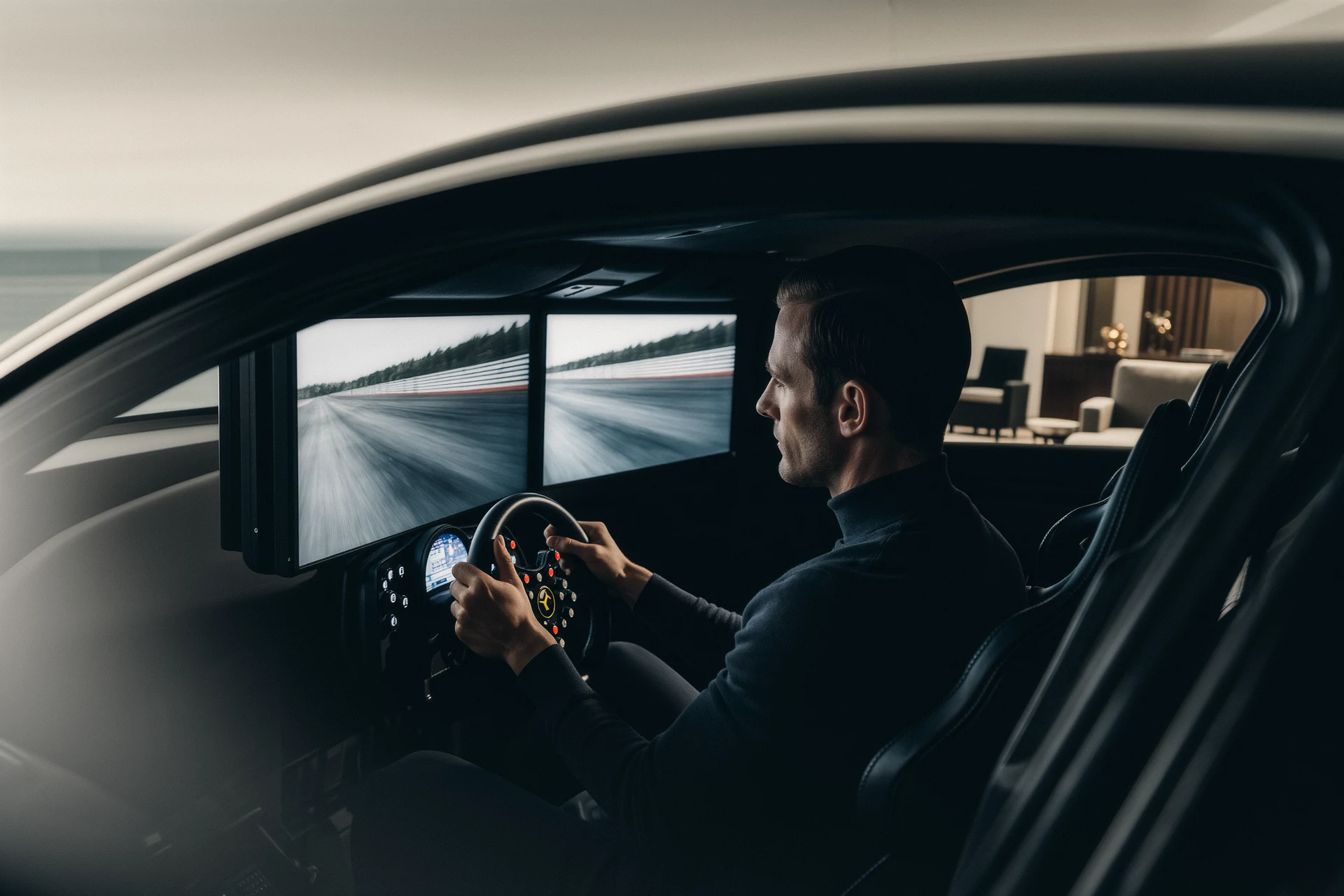
Getting faster in a sim comes from consistent, focused practice, not from endless laps in the hope that something sticks. You need a plan for each session, a small number of things to work on, and a way to learn from what you did. Think of learning an instrument: you practise scales and single passages, not only whole pieces. This routine sets out three sessions and the drills around them; the longer drills are in consistency training and learning a new track.
Before the main sessions, there are a few crucial things to get sorted. Neglecting these will ultimately hinder your progress, no matter how much time you spend on track.
Getting Your Hardware Dialed In
This sounds obvious, but honestly, how many of us have just plugged in a wheel and gone for it?
Wheel and Pedal Calibration
Take five minutes to properly calibrate your steering wheel and pedals within your sim of choice. Most sims have a dedicated setup wizard. This ensures that the game accurately interprets your inputs, from a gentle tap of the brake to a full lock turn. An improperly calibrated wheel can lead to jerky inputs and a false sense of grip loss.
Force Feedback Settings
Don’t just accept the default FFB settings. These are often a compromise. Experiment to find a level that gives you good tactile feedback without causing fatigue or clipping (where the force feedback signal gets cut off because it’s too strong). You want to feel the nuances of the tire grip, the gentle slip, the sudden breakaway, not just a constant heavy tug. Our guide to force feedback settings explains each slider.
Understanding Your Track and Car
Jumping onto a track you’ve never run before with a car you’re unfamiliar with is a recipe for frustration.
Pre-Track Familiarization
Spend a few laps just cruising around a new track. Get a feel for the track surface, the general flow, and where the braking zones feel like they should be. Don’t worry about lap times yet. This is reconnaissance.
Car Characteristics
Each car has a personality. Is it front-tire-heavy? Does the rear end snap loose easily? Knowing these traits will help you anticipate its behavior and adapt your driving style. Watch onboard videos of real-life drivers or skilled sim racers to get a feel for how they handle the car.
The Core of Your Routine: Structured Practice Sessions
This is where the real work happens. We’re going to break down practice into digestible, skill-focused chunks. The goal here is quality over sheer quantity.
Session 1: Theory and Observation (15-20 minutes)
You wouldn’t go into an exam without studying, so why a race without preparation?
Watching In-Car Videos
Find onboard videos of fast drivers on the track and car combination you’ll be practicing with. Pay close attention to their:
- Braking points: Where do they initiate braking? Are they trail-braking?
- Turn-in points: When do they start turning the wheel?
- Apexes: Where do they aim to clip the corner? Is it a single apex, or are they going for a double apex?
- Throttle application: When do they stomp on the gas? Are they short-shifting?
- Gear selection: What gears are they using on corner exit?
Analyzing Telemetry Data (If Available)
Most sims record or export telemetry, iRacing and Assetto Corsa Competizione among them, but the analysis happens in a separate tool such as MoTeC i2 or a third party app rather than in the sim itself. If you have such a tool set up, compare your steering, throttle and brake traces with a faster driver’s lap. This can show subtle but significant differences in technique; reading telemetry covers the first channels to look at.
Session 2: Consistency and Feel (30-45 minutes)
This is where you translate observation into action, focusing on building a solid foundation.
Lap 1-5: Getting Up to Speed and Basic Lines
Don’t aim for perfection immediately. Your first few laps are about getting a feel for the car and circuit, finding your braking markers, and establishing a consistent racing line. Focus on smooth inputs.
Lap 6-25: Refining Corners and Focus Areas
Now, start to isolate specific corners or sequences that you identified as challenging during your observation. Work on hitting your marks consistently. Don’t worry about overall lap time yet; focus on making each corner feel repeatable.
Lap 26-40: Braking Technique and Trail Braking
Braking is arguably the most critical skill in racing.
Gentle Braking vs. Hard Braking
Understand the difference. Gentle braking is for finding your markers and maintaining momentum. Hard braking is about maximizing deceleration without locking up the tires.
The Art of Trail Braking
This is where you continue to apply a little bit of brake pressure as you turn into corners. It helps rotate the car and maintains tire grip at the front. It is a nuanced technique and takes practice: too much pressure and the front tyres lock or the rear steps out, too little and the car runs wide. The detail is in trail braking explained.
Lap 41-50: Throttle Control and Corner Exit
Smooth throttle application out of corners is key to maximizing acceleration and preventing oversteer.
Short, Sharp Inputs vs. Smooth Roll-On
Avoid sudden, jerky throttle inputs. Aim for a smooth, progressive application of power as you unwind the steering wheel.
Session 3: Introducing Race Conditions (20-30 minutes)
Putting it all together under a bit more pressure.
Single Lap Time Trials
Once you have a consistent few laps under your belt, start pushing for single, clean lap times. This involves piecing together all the skills you’ve been working on: smooth braking, precise turn-in, optimal apex clipping, and controlled throttle application.
Stint Practice (5-10 Lap Runs)
Simulate race conditions by doing longer stints. This teaches you how to manage tire wear, maintain focus over multiple laps, and adapt to subtle changes in grip.
Fuel Management and Tire Degradation
If your sim has these elements, factor them into your stint practice. Learn how fuel load affects the car’s handling and how worn tires change your braking points and grip levels.
Practice Starts
Don’t overlook the start! Practice clean, effective race starts. This includes understanding clutch control, throttle modulation, and avoiding wheelspin.
Skill-Specific Breakdowns: Honing the Fine Details
Some skills require dedicated, almost drill-like practice. You can’t just hope to get better at them; you need to actively work on them.
Mastering Braking Points and Deceleration
This is the bedrock of speed. If you’re braking too late or too early, nothing else you do will matter.
Visual Cues and Reference Points
Identify distinct objects or landmarks on the track that serve as reliable braking markers (braking points you can repeat). These should remain consistent regardless of whether you’re driving a different car or under different lighting conditions.
Consistent Brake Pressure Application
Develop a feel for how much brake pressure you can apply before the tires lock up. This is where a good force feedback wheel and properly calibrated pedals are essential. The goal is to brake as hard as possible without engaging ABS (if applicable) or locking up the wheels.
Trail Braking Mastery
As you begin to turn into a corner, release the brake pedal gradually instead of all at once. The remaining brake pressure keeps weight on the front tyres, which helps the car turn. It is a delicate balance, and too much or too little pressure both cost time.
Precision on Throttle and Corner Exit
Getting out of a corner cleanly is as important as getting into it.
Smooth Throttle Application
Avoid sudden, jerky inputs on the throttle. As you begin to unwind the steering wheel, gradually increase throttle application. This prevents the rear tires from losing grip and causing oversteer.
Short Shifting and Gear Choice
Experiment with different gears on corner exit. Sometimes, shifting up a gear earlier can help manage wheelspin and put the power down more effectively, especially in lower-powered cars.
Managing Wheelspin
Learn to feel when the rear tires are starting to spin. Back off the throttle slightly, and then reapply it smoothly. This is a skill that develops with significant practice and a good understanding of your car’s power delivery.
Understanding and Utilizing Trail Braking
We’ve touched on this, but it deserves its own focus because it’s so impactful.
The Physics Behind It
When you brake, weight transfers to the front of the car. This increases front grip. By continuing to brake lightly as you turn, you maintain that weight transfer, helping the car rotate through the corner.
Different Corner Types
Trail braking strategies will vary depending on the corner. Hairpins might require more aggressive trail braking than a sweeping bend.
Progressive Release
The key is a progressive release of the brake pedal as you turn. It’s not an on-or-off switch. You’re easing off the brake, not slamming it off.
Analyzing Your Performance: Learning from Mistakes (and Successes!)
Practice isn’t just about putting in laps; it’s about actively critiquing your performance.
Post-Session Review
This is non-negotiable. After each practice session, take a few minutes to reflect.
What Went Well?
Don’t just focus on what you did wrong. Acknowledge the improvements. Did you hit your braking points more consistently? Did you manage corner exits better in a specific section?
What Went Wrong?
Be honest with yourself. Where did you make mistakes? Was it a late dive into a corner? Did you get on the throttle too early? Identifying the cause of the mistake is crucial.
What Can You Improve Next Session?
Based on your review, set specific, actionable goals for your next practice session. Instead of “be faster,” try “improve braking for Turn 3” or “focus on smoother throttle application through the esses.”
Using Replays to Your Advantage
Replays are your best friend for self-analysis.
Comparing Onboard Lines
Watch your own replays and compare your driving line to the onboard videos you watched earlier. Are you missing apexes? Are you taking too wide an entry?
Identifying Areas of Instability
Look for moments where the car feels unstable or you lose control. Was it a sudden steering input? Did you brake too hard? The replay often shows the exact moment things went wrong.
Eye Tracking Your Input
If your sim supports it, or with practice, try to track your own inputs in the replay data. Are your steering inputs smooth and progressive, or are they jerky and abrupt?
Advanced Techniques and Continuous Improvement
Once you’ve got a solid routine down, it’s time to start pushing the boundaries and looking for long-term gains.
Race Craft and Overtaking Practice
Being fast is one thing, but being able to race wheel-to-wheel is another.
Practice Starts and First Lap Chaos
Spend time practicing race starts and then running races from the back of the pack. This teaches you how to navigate traffic and avoid incidents.
Simulating Overtake Scenarios
If your sim allows, create scenarios where you have to overtake AI cars. Work on different lines, braking maneuvers, and holding your nerve.
Defensive Driving
Learn how to defend your position without being overly aggressive or blocking. This involves understanding where your opponent is and how to position your car to make it difficult for them to pass.
Tire Management and Fuel Saving
In longer races, these skills become paramount.
Learning Tire Wear Patterns
Understand how different driving styles affect tire wear. Aggressive acceleration and braking will wear tires out faster.
Fuel Strategy Practice
If fuel is a factor, practice running entire races while monitoring your fuel consumption. Learn when you can push and when you need to conserve fuel.
Sim-Specific Tuning and Setup Knowledge
While this guide focuses on driving technique, understanding how car setups affect handling is also a form of practice.
Basic Setup Changes
Learn the impact of simple setup changes like tire pressures, aerodynamic balance, and suspension stiffness.
Experimentation in Practice
Use your practice sessions to experiment with small setup changes and observe how they affect the car’s behavior, particularly in the areas you’re trying to improve.
Improvement in a sim is gradual. A structured routine like this one builds good habits, helps you understand the car and the track, and shows where the next step lies. Keep the sessions short and focused, and review each one before the next.
Reading the review: speed trace, input overlay and sector work
The post-session review above asks what went wrong. Three tools answer that question with evidence rather than memory.
Speed trace against your own reference
Lay your lap over your own fastest lap or a faster ghost and read the speed trace corner by corner. Three points tell most of the story: where the speed starts to fall (the braking point), the lowest speed in the corner, and where it starts to rise again. A lower minimum after the same braking point usually means over-slowing; a later rise means the throttle came in late or the car was not yet pointing at the exit. The channels behind this are covered in reading telemetry.
Replay with the input overlay
Switch on the steering, brake and throttle overlay and watch the corner that lost time from two cameras. The cockpit view lines your inputs up with your track markers; a chase view shows the attitude of the car at the moment each input arrives. Look for a second steering correction after turn-in, throttle that rises and falls again, or a brake released in one step. The replay session shows how to structure this.
Splitting the lap into sectors
Do not chase the whole lap at once. Work on one sector until its time is repeatable, then move on. For each corner in that sector, fix a chain of four reference points: braking point, turn-in point, apex and exit. They depend on each other, so moving one moves the rest. Change one link, drive several laps, and check the trace before touching the next. Fixed objects make the most reliable markers, such as a board, the end of a kerb or a painted line, because they stay put when the light or the car changes (braking points you can repeat).
FAQs
How long should a practice session be?
Shorter, focused sessions usually work better than long unfocused ones. The three sessions in this plan take roughly 15 to 20, 30 to 45 and 20 to 30 minutes; stop when concentration drops, because laps driven tired mostly repeat mistakes.Why is a practice routine important in sim racing?
A practice routine is important in sim racing because it helps drivers improve their skills, learn the nuances of different tracks, and refine their racing techniques. Consistent practice can lead to better performance and results in competitive racing.What are some key components of a sim racing practice routine?
Key components of a sim racing practice routine include setting specific goals for each practice session, focusing on different aspects of driving such as braking points and cornering techniques, analyzing telemetry data to identify areas for improvement, and participating in online races to gain experience in competitive environments.How often should sim racers practice?
The frequency of practice sessions can vary depending on individual schedules and commitments, but many sim racers aim to practice several times a week to maintain and improve their skills. Consistent practice is often more beneficial than infrequent, intensive sessions.What are some recommended practice techniques for sim racing?
Useful techniques are practising one section of a track at a time, comparing your laps with a faster reference lap or ghost, watching onboard footage of fast drivers, reviewing replays with the input overlay, and asking experienced drivers for feedback. Driving aids such as ABS or traction control are fine where the real car has them, but switching aids off step by step is not a training method in itself.More from Training & Performance
Sim Racing Coaching: What a Coach Finds in Your Data
What sim racing coaching covers: how a coach reads your telemetry and replays, what to look for in a coach, how sessions run and what to compare…
Braking points you can repeat, not remember
Braking points you can repeat rather than remember: the arithmetic behind the distances, why markers fail and the method that survives a race.
Trail braking: the technique that separates the field
Trail braking explained through the friction circle: why it works, what it costs when done wrong and how to learn it in one session per corner.