Ultimate Realistic Racing Simulator: The Future of Virtual Racing
The future of virtual racing isn’t some far-off dream; it’s here, and it’s called the ultimate realistic racing simulator. We’re talking about experiences t…

The future of virtual racing isn’t some far-off dream; it’s here, and it’s called the ultimate realistic racing simulator. We’re talking about experiences that blur the lines between virtual and reality, offering immersion so profound you might forget you’re not actually tearing down the track. This isn’t just about fancier graphics; it’s about replicating the physics, the feel, and the sensory input of real-world racing to an unprecedented degree.
When we talk about an “ultimate realistic racing simulator,” we’re not just throwing around buzzwords. This isn’t your average console game with a steering wheel. It’s a meticulously engineered system designed to mimic the intricacies of real-world driving. Think about everything a race car driver experiences, the G-forces, the vibrations, the subtle feedback from the road, the roar of the engine, even the smell of burning rubber. A truly ultimate simulator attempts to recreate as many of these sensations as technologically possible.
Beyond Visuals: The Sensory Overload
While stunning 4K visuals and high refresh rates are certainly part of the equation, they’re just one piece of the puzzle. Realistic simulation goes far beyond what you see on screen. It delves into the realm of haptic feedback, motion platforms, and even sophisticated sound design that accurately replicates engine notes and environmental acoustics.
The Physics Engine: Heart of the Realism
At the core of any realistic racing simulator is its physics engine. This isn’t a simplified model; it’s a complex algorithm that takes into account countless variables. We’re talking about tire grip, suspension dynamics, aerodynamics, weight transfer, brake fade, and even track surface imperfections. A high-fidelity physics engine ensures that every input you make, every bump you hit, and every corner you take behaves exactly as it would in a real car.
The Hardware Backbone: Bringing the Virtual to Life
A powerful simulator is nothing without the right hardware. This isn’t a setup you can piece together from your local electronics store. We’re talking specialized, high-performance components designed for precise control and immersive feedback.
Motion Platforms: Feeling Every Bump and G-Force
Perhaps the most striking component of an ultimate simulator is the motion platform. These aren’t just simple shakers; they’re sophisticated systems that can replicate real-world forces.
3 DOF and 6 DOF Systems
You’ll typically encounter two main types: 3 Degrees of Freedom (3 DOF) and 6 Degrees of Freedom (6 DOF). A 3 DOF system usually simulates pitch, roll, and heave, giving you a sense of acceleration, braking, and cornering lean. A 6 DOF system takes it further, adding yaw, surge, and sway, allowing for even more subtle and nuanced movements that mimic the full range of a real car’s motion. This means you’ll feel the car squatting under acceleration, lifting under braking, and even twisting as you drift.
Industrial-Grade Actuators
These platforms aren’t moved by flimsy motors. They employ powerful, industrial-grade actuators, often hydraulic or electric, capable of rapid and precise movements. The quality of these actuators directly impacts the fluidity and responsiveness of the motion.
High-Fidelity Force Feedback Steering Wheels: Connecting You to the Road
Forget those flimsy plastic wheels that only vibrate. An ultimate simulator demands a direct drive force feedback steering wheel.
Direct Drive Technology
Unlike gear-driven or belt-driven wheels, direct drive wheels have the motor directly connected to the steering shaft. This eliminates any play or lag, providing incredibly detailed and powerful force feedback. You’ll feel every ripple in the road, every loss of traction, and every nuance of steering resistance as if it were a real car. The torque output can be astounding, requiring a firm grip and simulating the weight and effort of a true racing wheel.
Realistic Pedal Sets
Just as important as the wheel are the pedals. High-end simulators feature load cell brakes that measure the pressure you apply, not just the distance the pedal travels. This allows for much finer control over braking and trail braking, mimicking the feel of a race car’s hydraulic brake system. Clutch pedals with realistic bite points and accelerators with precise input round out the experience.
Visual Immersion: Displays and VR
While motion platforms handle the physical feedback, the visual aspect is crucial for complete immersion.
Triple Monitor Setups
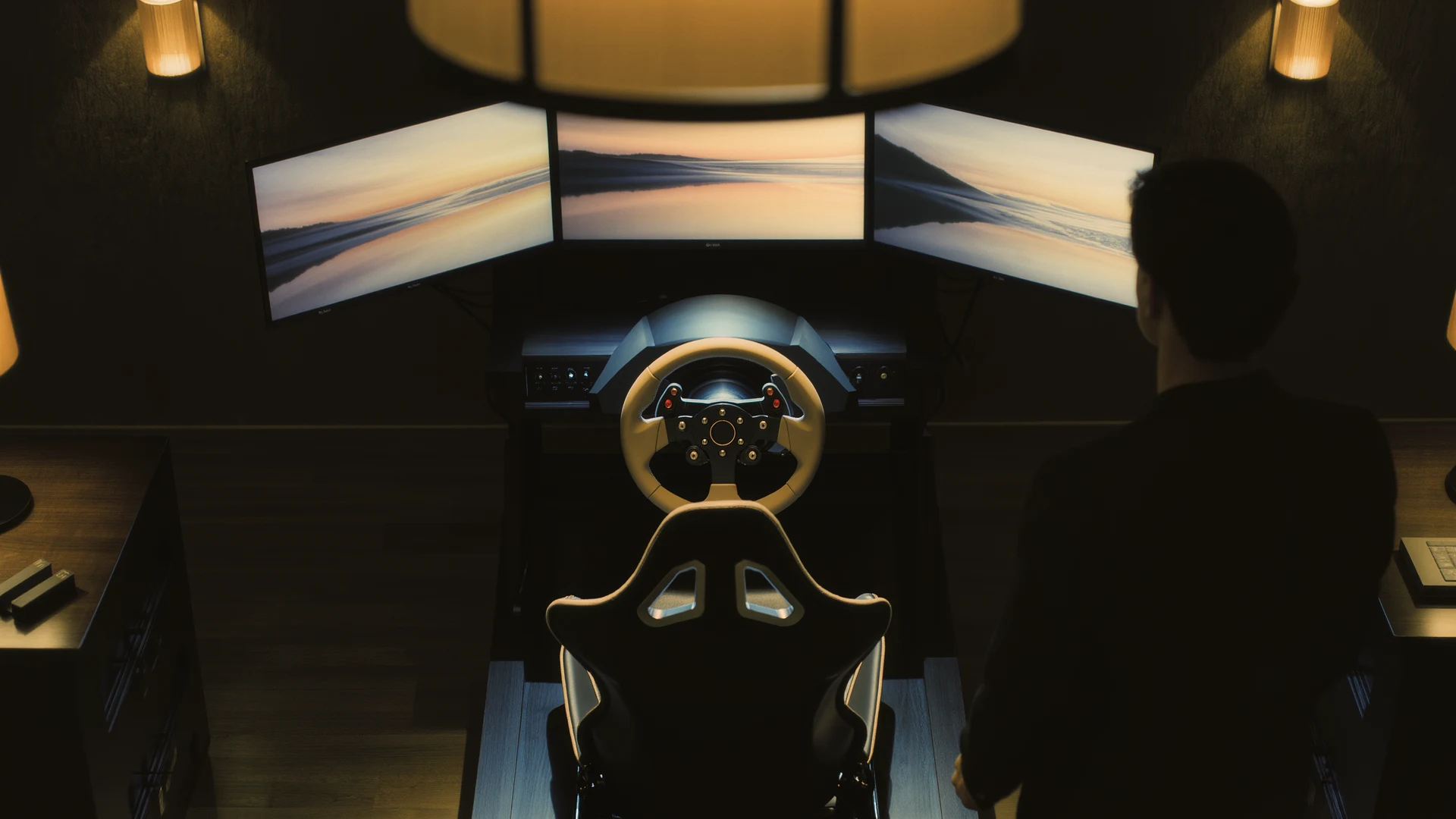
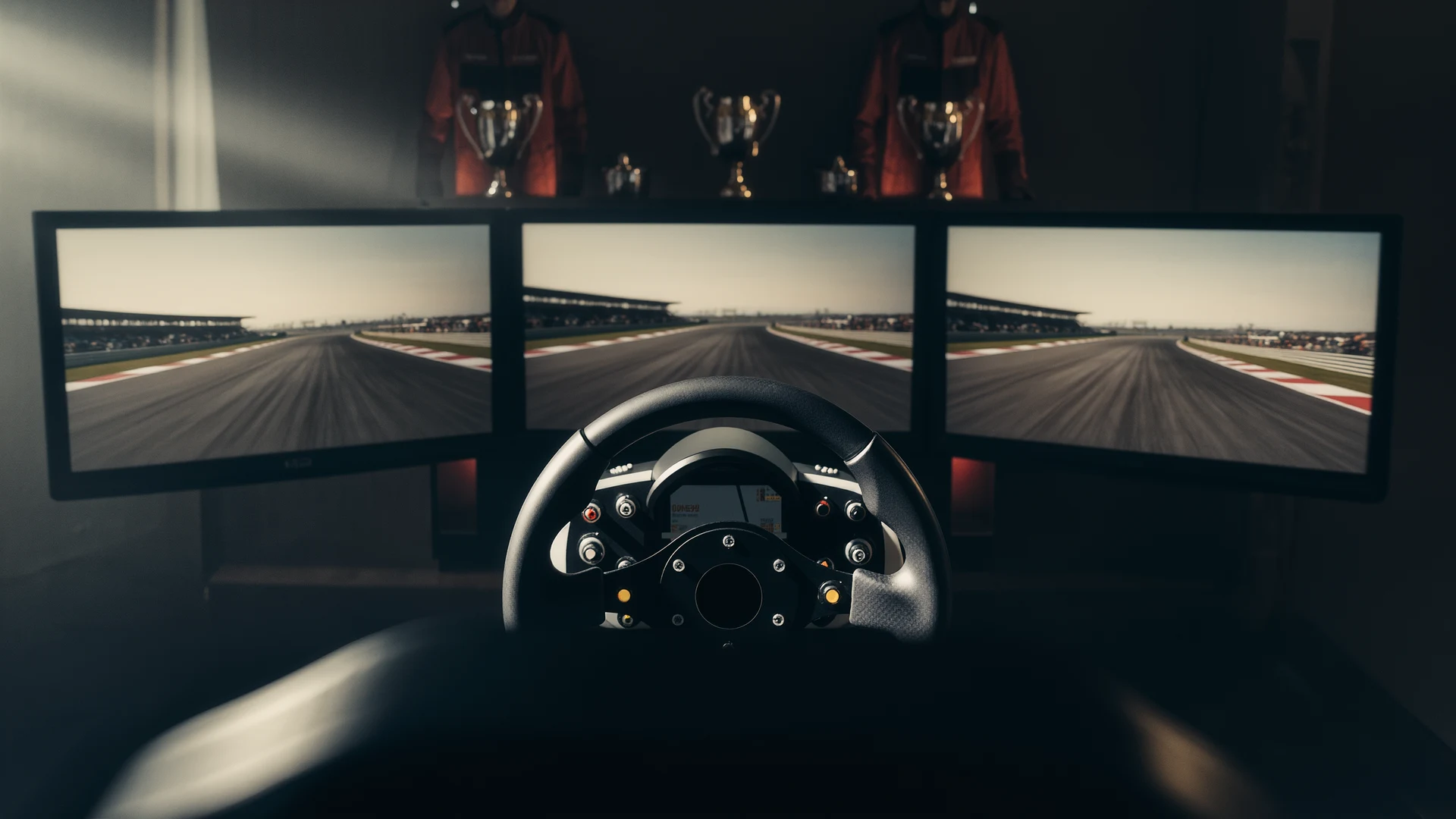
Running three large, high-refresh-rate monitors (often 144Hz or higher) provides a panoramic view of the track, greatly enhancing peripheral vision and situational awareness. The sense of speed is amplified, and judging distances becomes more intuitive than on a single screen.
Virtual Reality Headsets
Alternatively, high-end VR headsets offer an unparalleled level of immersion. Being truly “inside” the car, with full 360-degree vision and stereoscopic 3D, elevates the experience to another level. You can look into apexes naturally, track your opponents, and truly feel the scale of the environments. The sense of presence is incredibly strong, making the virtual world feel tangible.
The Software: The Brains Behind the Brawn
The best hardware in the world is useless without powerful and realistic simulation software. This is where the magic happens, translating your inputs and the car’s physics into believable actions.
Dedicated Simulation Titles
Forget mainstream racing games. Ultimate simulators rely on dedicated simulation titles built from the ground up for realism. Think titles like iRacing, Assetto Corsa Competizione, rFactor 2, and Automobilista 2. These games boast incredibly complex physics engines and meticulously laser-scanned tracks.
Laser-Scanned Tracks
Many top-tier simulators feature tracks that have been laser-scanned. This means every bump, every camber change, and every imperfection on the real-world track is replicated with centimeter-level accuracy in the game. This further enhances the realism and familiarization for professional drivers.
Highly Detailed Car Models
The cars themselves are also modeled with incredible attention to detail. This isn’t just about external appearance; it’s about accurate weight distribution, aerodynamic properties, engine power curves, and suspension geometry that truly reflect their real-world counterparts. Different tire compounds react differently to temperature and wear, and the engine management systems behave as they would in real life.
Telemetry and Data Analysis
Just like in real racing, high-end simulators allow for detailed telemetry analysis. You can record your laps and analyze data points like speed, braking force, throttle input, steering angle, G-forces, tire temperatures, and more. This data is invaluable for identifying areas for improvement, understanding car behavior, and fine-tuning your driving technique.
Beyond Entertainment: Professional Training and Development
While incredibly fun, ultimate racing simulators are more than just expensive toys. They are becoming indispensable tools for professional drivers and aspiring racers alike.
Bridging the Gap: From Virtual to Real
These simulators offer a safe and cost-effective environment to push limits without the enormous financial risks of real-world racing. Drivers can experiment with setups, learn new tracks, and hone their skills without fear of damaging expensive machinery or incurring medical bills.
Learning Tracks and Line Management
Before ever setting foot on a physical track, a driver can spend countless hours learning the optimal racing lines, braking points, and acceleration zones. This significantly reduces the learning curve and allows for more productive track time when they eventually get behind the wheel of a real car.
Setup Experimentation
Changing car setups in real life can be a time-consuming and expensive process. In a simulator, drivers can rapidly experiment with different suspension settings, aerodynamic configurations, gear ratios, and tire pressures to find the optimal setup for a given track and driving style.
Physical and Mental Conditioning
While not a replacement for physical fitness, a demanding simulator session can still be physically tiring. The G-forces felt through the motion platform and the exertion required to precisely control the car can provide a workout. Mentally, the concentration and rapid decision-making required in a realistic simulator can be just as intense as in real racing, helping to build mental fortitude and focus.
The Future is Collaborative and Accessible (Relatively)
While currently a significant investment, the technology behind these ultimate simulators is constantly evolving and becoming more accessible.
Esports and Virtual Racing Leagues
The rise of esports has seen professional virtual racing leagues emerge, offering significant prize pools and attracting top talent. These leagues often leverage the same high-fidelity simulators used for professional training, showcasing the competitive potential of the virtual realm.
Talent Identification
Esports provides a platform for identifying raw driving talent that might otherwise go unnoticed due to the high barrier to entry in real-world motorsport. A skilled virtual racer can potentially transition to real-world racing with the right support.
Ongoing Development and Innovation
The simulator industry is in a constant state of innovation. Expect to see further advancements in haptic feedback, more accurate physics models, ever-improving graphics, and more sophisticated motion technologies. The future might even hold integrated biofeedback systems to monitor driver stress and performance.
Modularity and Upgradability
Many high-end simulator components are designed with modularity in mind. This means you can upgrade individual parts as new technology becomes available or as your budget allows, rather than having to replace the entire system. This allows enthusiasts to gradually build up their ultimate racing rig over time.
Is it Worth the Investment?
For serious racing enthusiasts, professional drivers, or those who simply crave the ultimate in immersion, the answer is a resounding yes. While the initial cost can be substantial, ranging from several thousand dollars for a high-end enthusiast setup to tens or even hundreds of thousands for a professional-grade simulator, the value proposition is clear. It offers an unparalleled experience that is both incredibly entertaining and genuinely useful for skill development. It’s not just a game; it’s a window into the demanding and exhilarating world of motorsports, accessible from the comfort of your own home. The ultimate realistic racing simulator isn’t just the future; it’s the present, pushing the boundaries of what virtual experiences can be.
FAQs
What is a realistic racing simulator?
A realistic racing simulator is a type of video game that aims to accurately simulate the experience of driving a race car. It typically includes realistic physics, vehicle handling, and track designs to provide an immersive and authentic racing experience.What features are typically included in a realistic racing simulator?
Realistic racing simulators often include features such as accurate vehicle dynamics, realistic track layouts, dynamic weather and time of day, customizable car setups, and multiplayer modes for competitive racing against other players.What are some popular realistic racing simulators?
Popular realistic racing simulators include titles such as “Gran Turismo,” “Forza Motorsport,” “Assetto Corsa,” “Project CARS,” and “iRacing.” These games are known for their attention to detail and realistic driving physics.What gaming platforms are realistic racing simulators available on?
Realistic racing simulators are available on a variety of gaming platforms, including PC, PlayStation, Xbox, and in some cases, mobile devices. Many simulators also support virtual reality (VR) for an even more immersive experience.Are realistic racing simulators used for professional training or competition?
Yes, realistic racing simulators are often used by professional race car drivers for training and practice. Additionally, there are competitive esports leagues and events dedicated to realistic racing simulators, where players can compete for prizes and recognition.More from Racing Simulators
Future of Sim Racing
The future of sim racing: how AI tire models, mixed reality, cloud streaming, cheaper direct-drive hardware and the sim-to-real pipeline reshape motor…
F1 Sim Racing Guide
F1 sim racing guide: compare F1 24, iRacing, RSS and AMS2, choose the right wheel and load-cell brake, and master braking, ERS and tire strategy.…
Assetto Corsa Ultimate Guide
Assetto Corsa ultimate guide: the best mods (Content Manager, CSP, SOL, Pure), free cars and tracks, online racing, performance tuning, and AC vs ACC …