RaceRoom in 2026: Free Content, Ranked Racing and Setup Basics
RaceRoom is a free download with paid cars and tracks, ranked online racing and a strong touring car line up. This guide explains how the model works and which setup basics to learn first.
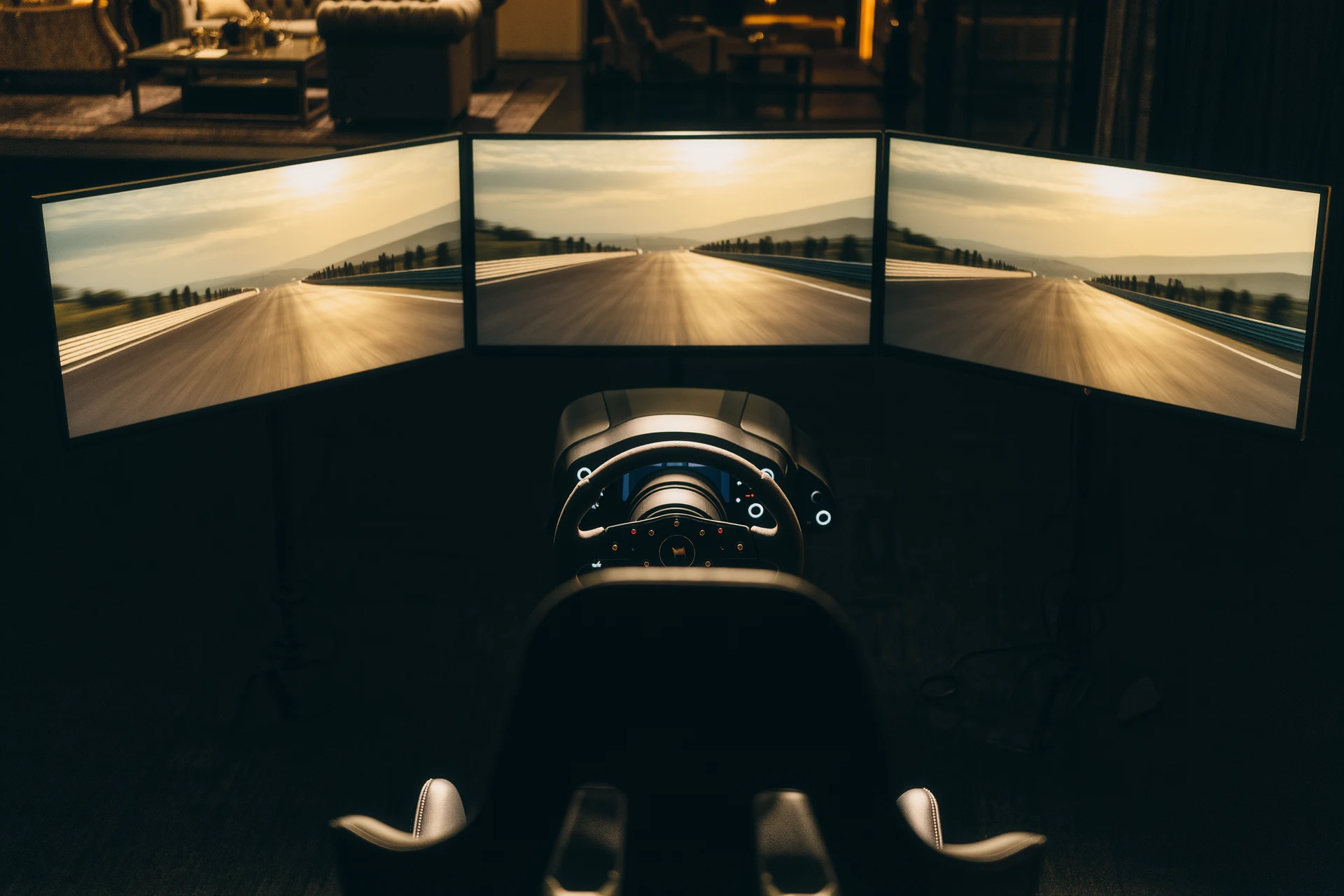
What RaceRoom is
RaceRoom Racing Experience is a PC racing simulator developed and published by KW Studios, with RaceRoom Entertainment AG named as co-publisher on Steam. It first appeared on Steam on 12 February 2013 and runs on Windows. According to the store description, its physics were developed together with KW Automotive, racing teams and professional drivers, and its circuits are reviewed and updated every year.
What sets RaceRoom apart from most of its rivals is the business model. The base game is a free download, and you buy the cars and tracks you want, one at a time or in packs, from the store. That keeps the cost of trying a serious simulator low, but it also means you should know what you want before you start buying. This guide explains the model first and then moves on to the settings and setup basics that apply to every car in the game.
What you get without paying
- The base game. The download includes a set of free cars and tracks that you can use offline and online.
- A weekly free combination. Each week a different car and track pairing becomes free in all game modes, including multiplayer and time attack.
- Test drives. Any car in the store can be tried on the tracks you already own before you buy it.
Use all three before you spend anything. A few laps in a car on a track you know tell you more about its handling than any review, and the weekly combination is a good way to find out whether a class suits you.
How the store works
Content is sold per car and per track, or bundled in packs. The Steam page names licensed series such as the DTM, the FIA WTCC and the WTCR, alongside GT3 cars, prototypes and a one-make cup, and the official website presents a DTM Experience and an ADAC GT Masters Experience. Touring and GT cars are therefore the core of the catalogue, which makes RaceRoom a natural home for drivers who like touring car racing. The track list includes a laser-scanned Nordschleife, covered in our Nordschleife guide.
A sensible buying order looks like this:
- Decide which class you want to race, for example GT3 or a touring car series.
- Check which cars and tracks the ranked sessions and official competitions use in that class.
- Buy one car and the two or three tracks you will race most, then add more as your racing demands it.
Buying a large pack early is tempting, but most drivers end up racing a small part of what they own.
Ranked multiplayer, competitions and leaderboards
RaceRoom offers three ways to measure yourself against other drivers. Ranked multiplayer runs scheduled sessions with safety ratings and driver progression, in sprint and endurance formats. Time attack events come with international leaderboards. Official competitions on the RaceRoom website run for a set period with a fixed car and track and their own leaderboard.
Time attack and competitions are the gentlest start, because you race the clock rather than other cars. They teach you a track and give you a reference for your pace. When you move to ranked racing, the safety rating matters as much as your speed: contact and offs cost you, clean laps build it up. Safety and skill ratings explains what systems like this reward, and flags and etiquette and clean overtaking cover the behaviour that keeps your rating intact. If you prefer a fixed group of drivers, joining your first league is the next step.
Settings before the first lap
Three settings decide whether the car feels right, and they are worth an evening before you think about setups.
- Force feedback. Start from the default for your wheel and adjust the overall strength until the strongest corners do not saturate the base. Force feedback settings explained goes through the sliders, and clipping detection shows how to see whether you are losing detail.
- Field of view. RaceRoom has a field of view calculator in the game. Enter your screen size and distance and use the result, even if it feels narrow at first; field of view: the calculation explains why.
- Displays. The game supports VR through SteamVR and triple screen projection. Whichever you use, set it up properly before judging the handling.
Map the functions you need while driving, such as pit limiter, brake bias and headlights, to physical buttons; button box mapping has a layout that survives a race.
Setup basics that hold in any car
Start from the default and change one thing
The default setups are built to be drivable. Run a few consistent laps on the default first, then change one setting at a time and drive again, so you know what each change did. Setup work in the right order describes the sequence, and downloaded setups explains why someone else's setup is a starting point, not a destination.
Tyre pressures
Pressures are the quickest change with a noticeable effect. Too much pressure shrinks the contact patch, overheats the centre of the tread and makes the car feel skittish. Too little lets the tyre flex, heats the shoulders and makes the steering slow and vague. Aim for the pressure the tyre reaches when hot rather than the cold value, and make small steps. Tyre pressure and the tyre window cover both.
Springs and dampers
Springs carry the car and decide how far the body moves. Softer springs absorb bumps and kerbs better but allow more roll and pitch; stiffer springs keep the platform steady but make the car nervous over bumps.
Dampers control how fast the springs move. Bump damping slows the compression of the suspension, rebound damping slows its extension. More rebound damping therefore makes the suspension extend more slowly, not more quickly. Too much rebound stops the wheel dropping back into a dip, so the tyre briefly loses load; too little lets the car bounce after a kerb or crest. Change dampers in small steps after the springs are right. Springs and dampers explained has the details.
Anti-roll bars and brake bias
Anti-roll bars are the fastest way to move the balance. A stiffer front bar or a softer rear bar adds understeer, a softer front bar or a stiffer rear bar reduces it. Brake bias does the same job under braking: more bias to the front makes the car stable but reluctant to turn, more to the rear helps rotation but risks locking the rear wheels. See anti-roll bars, brake bias and understeer: driver, setup or tyre temperature.
Wings
On cars with adjustable aerodynamics, more wing gives more grip in fast corners and costs top speed. Match it to the track, and keep the front and rear in proportion so the balance does not shift at speed. Downforce against drag explains how to read a track before deciding.
Driving habits that pay off
Setup only helps a driver who can repeat a lap. Four habits are worth more than any setting.
- Fixed braking points. Pick a reference for every corner and brake there every lap until the lap is consistent; braking points you can repeat shows how.
- A method for new tracks. Learn the layout slowly, then the braking points, then the limit, as in learning a new track in three sessions.
- The racing line. Late apexes in slow corners that lead onto straights are usually faster than early ones; the racing line explains why.
- Replays. Watching your own lap from outside shows mistakes you cannot feel; the replay session describes how to do it.
Who RaceRoom suits
RaceRoom suits drivers who want touring car and GT racing, who prefer to pay for individual cars and tracks instead of a subscription, and who like a ranked system that rewards clean driving. Drivers who want a particular licensed championship outside its catalogue, or a large modding scene, may be better served elsewhere. If you are still deciding, choosing your first sim, our comparison of PC racing simulators and how the big sims differ in the tyre model help you compare.
Frequently asked questions
Is RaceRoom free to play?
The base game is a free download with a set of free cars and tracks. Each week a different car and track combination is free in all game modes, including multiplayer and time attack. Further cars and tracks are bought individually or in packs, and every car can be test driven on tracks you own before you buy it.
Who develops RaceRoom Racing Experience?
KW Studios develops and publishes RaceRoom, with RaceRoom Entertainment AG as co-publisher on Steam. The physics were developed together with KW Automotive, racing teams and professional drivers.
How does ranked multiplayer work in RaceRoom?
Ranked multiplayer runs scheduled sprint and endurance sessions with a safety rating and driver progression. Clean driving builds your rating and incidents cost you, so it pays to start with time attack and official competitions, learn the track and then join ranked sessions. See safety and skill ratings.
What does more rebound damping do?
Rebound damping slows the extension of the suspension after it has been compressed. More rebound makes the wheel return more slowly; too much stops it following dips, too little lets the car bounce after kerbs and crests. Bump damping does the same for compression.
Does RaceRoom support VR and triple screens?
Yes. The game supports VR through SteamVR and triple screen projection, and it has a field of view calculator in the game so you can set the correct view for your screen and seating position.
Sources
More from Games & Platforms
F1 Sim Racing Guide: Games, Hardware and Technique in 2026
How to sim race Formula 1 cars: F1 25 and its 2026 Season Pack, iRacing, Assetto Corsa and AMS2, formula rims, load-cell brakes, technique and…
Assetto Corsa in 2026: Essential Mods, CSP and Online Racing
Assetto Corsa in 2026: Content Manager, Custom Shaders Patch, Pure, free cars and tracks, online racing services, performance settings and AC or ACC.
iRacing Complete Guide: Pricing, Ratings and the Rookie Path
iRacing complete guide: how the online racing service works, membership prices, iRating and Safety Rating, the Rookie path, and whether iRacing is…